India is taking a tougher stand against examination paper leaks by proposing stricter laws that could send offenders to prison for up to 10 years while imposing fines exceeding $1 million. The move comes after weeks of nationwide student protests demanding accountability, transparency, and urgent reforms to restore trust in the country’s education system.
The proposed amendments, introduced in Parliament on Tuesday, aim to strengthen existing laws by doubling the maximum prison sentence for individuals involved in leaking examination papers. The government also plans to speed up court proceedings so that justice can be delivered more efficiently and confidence in public examinations can be rebuilt.
The decision follows widespread public outrage over repeated examination irregularities that sparked one of the country’s largest student-led movements in recent years. The protests eventually led to the resignation of Education Minister Dharmendra Pradhan, highlighting the growing pressure on the government to address concerns raised by millions of students and their families.
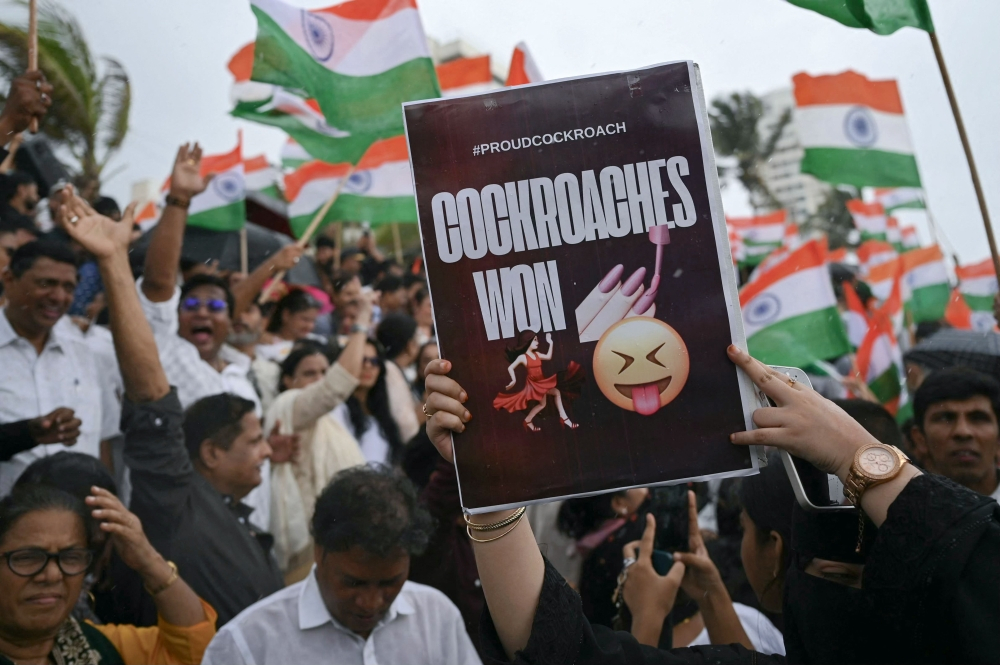
The demonstrations were led by the Cockroach Janta Party (CJP), which gained strong nationwide support from students frustrated by repeated examination scandals. The movement quickly became a significant political challenge for Prime Minister Narendra Modi’s administration, with young people demanding not only accountability but meaningful reforms to India’s examination system.
During the parliamentary debate, senior minister Jitendra Singh emphasized that the proposed legislation reflects the government’s commitment to protecting students and ensuring fairness in competitive examinations. According to Singh, the amendments are designed to make the law more effective while ensuring faster justice so that the credibility of India’s examination process can be restored.
The debate, however, remained highly contentious. Opposition lawmakers questioned whether stricter punishments alone would solve the problem, arguing that repeated paper leaks point to deeper structural failures within the examination system.
Opposition leader Abhishek Banerjee accused the government of failing to prevent repeated examination scandals and argued that simply introducing harsher penalties does not absolve authorities of responsibility. Several opposition members called for comprehensive reforms that would make examination fraud significantly more difficult rather than relying solely on stronger criminal penalties.
Congress leader Shashi Tharoor echoed those concerns, urging lawmakers to focus on creating an examination system that prevents such crimes before they occur. He stressed that systemic reform would be more effective than responding only after examination papers have already been leaked.
The controversy also extended beyond Parliament. During the current monsoon session, opposition lawmakers repeatedly disrupted proceedings while demanding answers over the police response to student demonstrations.
In a separate development, India’s Supreme Court ordered the release of detained protesters under the age of 18 who have no previous criminal record. While many welcomed the interim decision, the Cockroach Janta Party stated that investigations against some protesters could still continue, creating uncertainty for many young participants.
The organization argued that allowing legal proceedings to continue contradicts assurances previously given to students by the government. It warned that nationwide protests could resume if authorities fail to honor their commitments regarding those who participated in the demonstrations.
Examination paper leaks have remained a persistent challenge within India’s highly competitive education system for many years. Intense competition for limited educational and career opportunities has fueled a large coaching industry while also creating opportunities for organized criminal networks to profit by selling leaked examination papers.
Although authorities have repeatedly introduced measures to combat examination fraud, paper leaks continue to affect both national and state-level examinations, raising ongoing concerns about fairness, transparency, and equal opportunity for students across the country.
The issue reached a critical point on July 20 when demonstrations in New Delhi turned violent after thousands of protesters attempted to march toward Parliament from Jantar Mantar. Police used tear gas and batons to disperse crowds, resulting in clashes and numerous detentions.
As Parliament continues debating the proposed legislation, millions of students, parents, and educators will be watching closely to see whether stronger laws are accompanied by meaningful reforms capable of restoring public confidence in India’s education system.