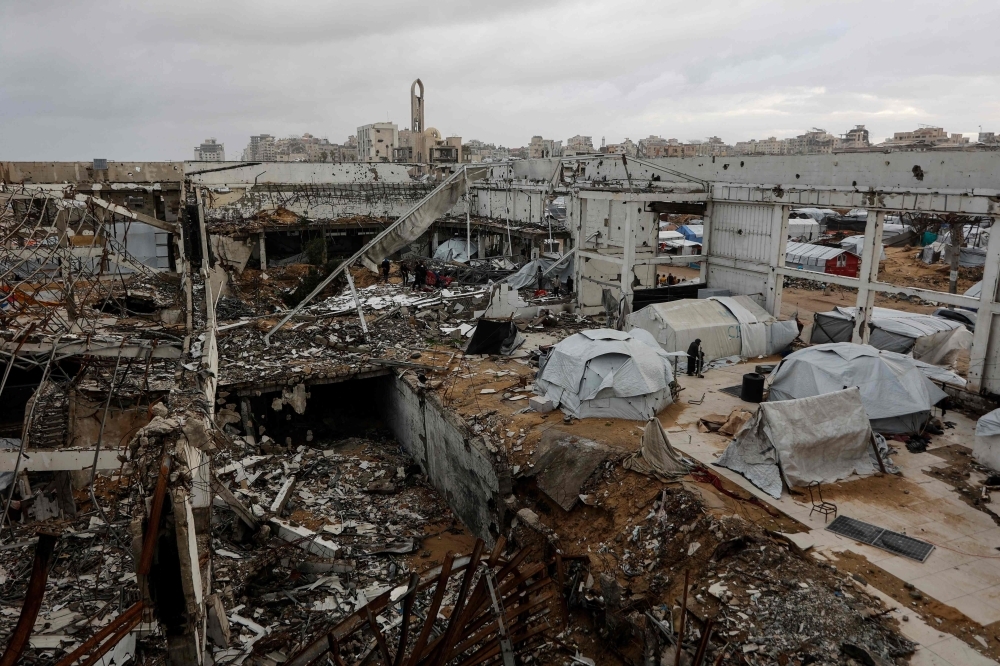
A top United Nations official has issued a stark warning about the humanitarian crisis in Gaza, urging the world to accelerate reconstruction efforts as Palestinians continue to live in what he described as “inhumane” conditions. The plea comes as a US-backed truce entered its second phase, offering a rare window to address the territory’s devastation.
“I wouldn’t have imagined what I saw today—total destruction, barely anything standing,” said Jorge Moreira da Silva, head of the UN Office for Project Services (UNOPS), after visiting the Gaza Strip. “We can’t wait, we can’t procrastinate. People are living in conditions that no human should endure.”
The conflict between Hamas and Israeli forces over the past two years has left Gaza in ruins, with residential neighborhoods, hospitals, schools, and critical infrastructure heavily damaged or destroyed. Hundreds of thousands of residents are now surviving in makeshift shelters amid debris and rubble.
Phase two of the Gaza truce has been hailed as a “historical” opportunity to jumpstart reconstruction. According to da Silva, rebuilding the territory will require approximately US$52 billion, based on assessments by the World Bank, UN, and the European Commission. However, he emphasized that immediate early recovery efforts, costing millions rather than billions, cannot wait.
US Middle East envoy Steve Witkoff announced the commencement of phase two of the ceasefire on Wednesday, highlighting that the plan aims to facilitate reconstruction and demilitarize all armed factions in Gaza.
The war was triggered by Hamas’ unprecedented attack on Israel on October 7, 2023. The subsequent Israeli offensive has devastated Gaza, home to around 2.2 million people, a region already suffering from repeated conflicts and an Israeli blockade that has been in place since 2007.
Da Silva described Gaza as being “flooded with rubble and debris,” noting that about 60 million tonnes of rubble litter the territory. He warned of additional dangers: unexploded ordnance, hazardous waste, and human remains among the destruction, making cleanup both urgent and complex.
Key priorities include ensuring a reliable fuel supply for electricity, demining, repairing water networks, lifting aid restrictions, and allowing essential spare parts into Gaza. Humanitarian groups have long struggled to bring in the necessary equipment and supplies, citing Israeli restrictions. Israel maintains that these controls are necessary for security.
At the heart of the crisis are the people of Gaza, who face a daily struggle just to survive. Children play among rubble, families seek shelter in damaged homes, and hope for a return to normalcy feels distant. Da Silva’s message is clear: the world cannot wait while Gaza rebuilds; every day counts for those who have already lost so much.
The devastation is overwhelming, but so is the resilience of the Gazan people. Their courage, even amid rubble and uncertainty, reminds the global community that reconstruction is not just about buildings—it’s about restoring lives, dignity, and hope.