European leaders have issued a united and unusually sharp rebuke after US President Donald Trump threatened to impose new tariffs on several close allies over their opposition to his long-standing ambition to bring Greenland under US control.
The warning from Washington targets Denmark, Norway, Sweden, France, Germany, the United Kingdom, the Netherlands, and Finland. Trump announced that a 10% tariff on goods from these countries would take effect on 1 February, with the possibility of rising to 25% later in the year, remaining in place until what he described as a “deal” over Greenland is reached.
Leaders across Europe were quick to condemn the move. UK Prime Minister Keir Starmer called the threat “completely wrong,” arguing that punishing allies for acting in line with NATO’s collective security principles undermines the very foundation of the alliance. French President Emmanuel Macron went further, calling the tariff threat “unacceptable” and warning that Europe would not yield to intimidation.
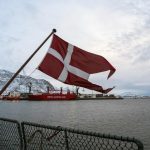
Trump has repeatedly claimed that Greenland, an autonomous territory within the Danish realm, is strategically vital to US security. Its Arctic location makes it important for missile detection systems and regional monitoring, and the island is also rich in natural resources. Despite firm opposition from Denmark, Greenland’s own leadership, and the majority of its population, Trump has refused to rule out using economic or even military pressure to achieve his goal.
The escalation prompted the European Union to convene an emergency meeting in Brussels, bringing together ambassadors from all 27 member states. EU leaders warned that the issue goes beyond trade, touching on sovereignty, territorial integrity, and international law.
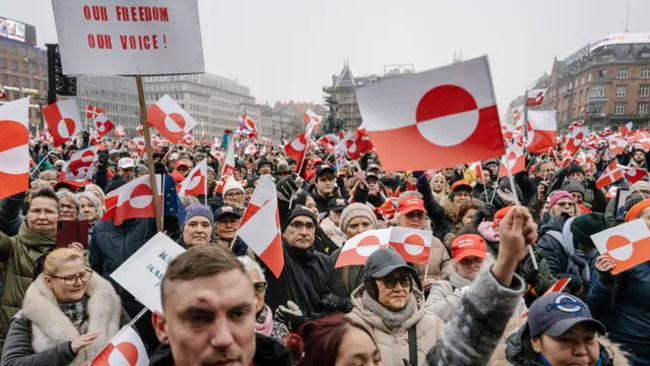
At the same time, public anger has spilled onto the streets. Thousands of protesters gathered in Greenland and Denmark, holding signs reading “Greenland is not for sale” and “Hands off Greenland.” In Nuuk, Greenland’s capital, Prime Minister Jens-Frederik Nielsen joined demonstrators, reinforcing the message that the island’s future must be decided by its own people. Opinion polls show that an overwhelming majority of Greenlanders oppose becoming part of the United States.
European Commission President Ursula von der Leyen cautioned that tariffs would risk triggering a dangerous spiral in transatlantic relations, while Sweden’s Prime Minister Ulf Kristersson rejected what he described as economic blackmail. EU foreign policy chief Kaja Kallas warned that internal divisions among Western allies only serve the interests of rival powers such as China and Russia.
The dispute has also cast a shadow over the still-unratified EU–US trade agreement negotiated last year. Senior European lawmakers have suggested that approval should be frozen until Washington steps back from its threats.
From the US side, officials including the ambassador to the United Nations have argued that Denmark lacks the resources to manage Greenland’s strategic challenges, claiming the territory would be safer and more prosperous under US control. Critics in Washington, however, have accused Trump of manufacturing a foreign crisis while ignoring domestic economic pressures facing Americans.
What makes this moment particularly striking is its timing. Just days earlier, US and Danish officials had agreed to form a high-level working group to discuss Greenland’s future, a move seen by diplomats as a path toward de-escalation. Instead, the tariff announcement has reignited tensions and raised questions about the reliability of long-standing alliances.
At its core, this controversy is no longer just about Greenland. It is about how power is exercised in a world built on alliances, rules, and mutual respect. For many in Europe, the message from the streets of Nuuk to the halls of Brussels is clear: sovereignty is not a bargaining chip, and pressure tactics against allies risk weakening the very partnerships that have shaped global stability for decades.