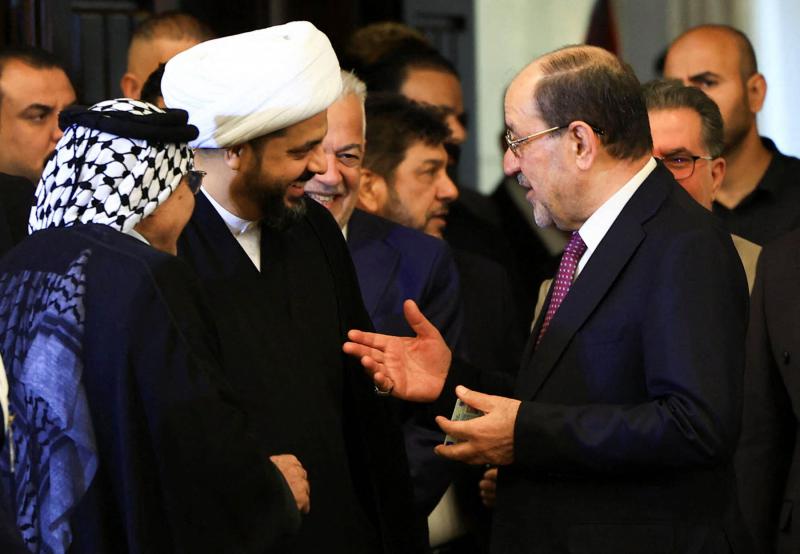
Iraq’s political landscape is entering another tense chapter after the Coordination Framework, the country’s largest parliamentary bloc, announced it has chosen former prime minister Nouri al-Maliki as its nominee to lead the next government. The decision is already stirring controversy at home and is widely expected to draw firm opposition from the United States.
The move followed the withdrawal of caretaker Prime Minister Mohammed Shia al-Sudani earlier this month. Al-Sudani’s bloc emerged with the largest number of seats in the November parliamentary elections, but internal competition within the Coordination Framework ultimately cleared the path for al-Maliki. The bloc, made up largely of influential pro-Iran political forces, said the nomination came after extended leadership discussions focused on current political conditions and the future direction of the country.
In a statement reported by the Iraqi News Agency, the Coordination Framework said al-Maliki was selected through a majority vote after what it described as deep and detailed deliberations. Supporters pointed to his long political record, administrative experience, and previous role in running state institutions as reasons for backing his return.
Iraq’s constitution now requires parliament to elect a president, who will then formally appoint a prime minister responsible for forming a cabinet. The Coordination Framework has urged lawmakers to convene quickly, arguing that completing these constitutional steps is essential to restoring political momentum.
Al-Maliki previously served as prime minister from 2006 to 2014, a period marked by both consolidation of power and deep political divisions. He remains the only Iraqi leader since the 2003 US-led invasion to have secured a second term. His earlier attempt to return to office failed amid criticism that his leadership style sidelined rivals and intensified sectarian and regional tensions, particularly concerns over Iran’s growing influence in Iraq.
Reactions to his nomination have been sharply divided. The Iraq National Political Council warned against bringing back leaders whose past governance, it argued, failed to deliver stability or rebuild public trust. The council called on the Coordination Framework to take what it described as a historic responsibility in shaping the country’s future. In contrast, the influential Sunni Azm Alliance dismissed those concerns and publicly endorsed al-Maliki, highlighting the fragmented nature of Iraq’s political scene.
Beyond internal politics, the next Iraqi government is expected to face mounting pressure from both Washington and Tehran. One of the most sensitive issues is the future of Hashd al Shabi, the powerful paramilitary force that played a key role in defeating extremist groups such as Daesh and Al Qaeda. The United States has repeatedly urged Baghdad to move toward disarming or restructuring the group, a demand that faces strong resistance due to Hashd’s political influence and Iran’s backing.
These debates are unfolding alongside regional security concerns. Iraqi officials fear that instability in neighboring Syria could fuel a resurgence of Daesh, making any attempt to weaken security forces politically and socially risky. Against this backdrop, the US military recently confirmed it has begun transferring some of the roughly 9,000 suspected Islamic State detainees held in northeast Syria to detention facilities inside Iraq.
Adding another layer of complexity, reports have emerged of direct US pressure on Iraqi leaders over the composition of the next cabinet. According to Reuters, Washington has warned that including certain political factions could trigger financial consequences. The report, citing multiple sources, said US officials have raised the possibility of sanctions against the Iraqi state, including restrictions on access to oil revenues, if specific lawmakers are granted cabinet positions.
The warnings were reportedly delivered over the past two months by US Chargé d’Affaires Joshua Harris to senior Iraqi figures, including Prime Minister al-Sudani, prominent Shia leader Ammar al-Hakim, leaders of the Fatah Alliance, and Kurdish officials. Sources said the United States specifically objected to the inclusion of 58 members of parliament it has previously targeted, warning that their participation would lead to a freeze in diplomatic engagement and a halt in dollar transfers.
Iraq’s oil revenues are held in an account at the Federal Reserve Bank of New York, making the threat particularly serious. While past US administrations have sanctioned individual Iraqi banks, a broader suspension of dollar transfers linked to oil income would mark a major escalation. One Iraqi official summed up the message bluntly, saying Washington made it clear it would not engage with a government that includes those lawmakers and would suspend access to dollar transfers if its warnings were ignored.