The final nuclear arms control treaty between the United States and Russia officially expired on Thursday, ending decades of limits on their nuclear arsenals and sparking global concern over a renewed arms race.
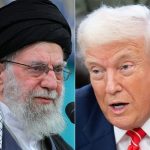
The New START Treaty, originally signed in 2010 during a period of warmer relations, lapsed on February 5, after former President Donald Trump did not act on Russian President Vladimir Putin’s proposal to extend it for one more year.
UN Secretary-General Antonio Guterres described the moment as “grave” for international peace and security, urging both nations to return to the negotiating table without delay.
“For the first time in more than half a century, we face a world without any binding limits on the strategic nuclear arsenals of the Russian Federation and the United States of America,” Guterres said.
“The risk of a nuclear weapon being used is the highest in decades.”
The timing of the treaty’s expiration is particularly concerning, coming after Russia’s early suggestions of using tactical nuclear weapons during the Ukraine conflict.
Pope Leo XIV also weighed in, emphasizing that both nations must do everything possible to prevent a new arms race.
“I urge you not to abandon this instrument without seeking to ensure that it is followed up in a concrete and effective manner,” he said during his weekly general audience.
Russia’s foreign ministry confirmed that the country no longer feels bound by the treaty’s obligations but said it would act “responsibly and prudently,” while remaining ready to take “decisive” action if national security is threatened.
Meanwhile, the US has repeatedly called for China’s involvement in nuclear agreements, noting the rapid growth of Beijing’s arsenal. China is estimated to possess 550 strategic nuclear launchers, while the United States and Russia had been capped at 800 each under New START.
Observers suggest that the treaty’s expiration reflects not only political differences but also a lack of diplomatic bandwidth in the Trump administration, which sidelined career diplomats and failed to negotiate extensions or risk reduction measures.
Former Secretary of State Marco Rubio emphasized that “true arms control in the 21st century” must include China, citing the country’s growing nuclear capabilities.
Analysts like Daryl Kimball, executive director of the Arms Control Association, have questioned whether meaningful steps were ever taken to involve China.
“Despite talk about including China in nuclear negotiations, there is no clear evidence that the Trump administration made serious attempts to propose risk reduction talks with Beijing,” Kimball said.
President Joe Biden previously agreed to a five-year extension of New START after defeating Trump in 2020, but rising tensions with Russia over Ukraine complicated arms control efforts.
The treaty, signed by then presidents Barack Obama and Dmitry Medvedev in Prague, had limited each side to 1,550 deployed strategic warheads, nearly 30% fewer than under the 2002 agreement. Its expiration marks not just a technical lapse, but a moment that highlights how fragile global peace can be when diplomacy stalls.
For ordinary people, this may feel distant, but the implications are real: without limits, the world inches closer to a risk it has spent decades trying to avoid. It is a stark reminder that global security is not just a matter of politics—it touches the future safety of every community on Earth.