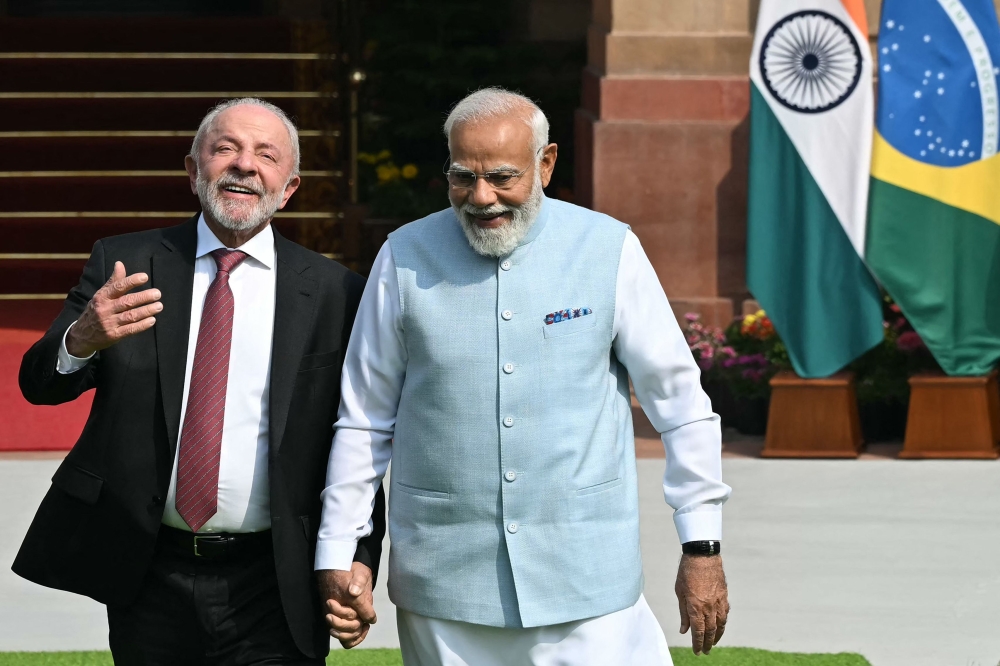
As the world races toward clean energy, advanced technology, and stronger supply chains, two major democracies are stepping closer together. India’s Prime Minister Narendra Modi and Brazilian President Luiz Inacio Lula da Silva are set to meet in New Delhi this Saturday, with rare earth minerals and critical resources at the heart of their discussions.
Brazil holds the world’s second-largest reserves of rare earth elements — materials that quietly power modern life. From electric vehicles and solar panels to smartphones, jet engines, and even guided missile systems, these minerals are the invisible backbone of today’s technological and industrial revolution.
For India, the stakes are high. As one of the fastest-growing major economies, the country is working to reduce its dependence on China, currently the dominant global exporter of rare earths. New Delhi has been ramping up domestic production, investing in recycling technologies, and actively searching for trusted international partners. Brazil, rich in resources and strategically aligned, could become a vital piece of that puzzle.
President Lula arrived in New Delhi on Wednesday, leading a delegation that includes more than a dozen ministers and prominent business leaders. The visit signals more than diplomatic courtesy — it reflects a deepening strategic partnership. During their meeting, Modi and Lula are expected to sign a memorandum of understanding on critical minerals and explore ways to expand trade and economic cooperation.
The economic relationship between the two nations is already significant. India is currently the 10th largest market for Brazilian exports, with bilateral trade surpassing US$15 billion in 2025. Both countries have set an ambitious target of US$20 billion in trade by 2030, underlining their long-term commitment to strengthening ties.
With China holding a near-monopoly in rare earth production, countries across the globe are urgently seeking diversified supply chains. According to Rishabh Jain of the Delhi-based Council on Energy, Environment and Water, India’s cooperation with Brazil complements recent engagements with the United States, France, and the European Union. While partnerships with developed economies offer advanced technology and financing, collaboration within the Global South ensures direct access to physical resources and greater influence in shaping the evolving rules of global trade.
Beyond minerals, the leaders are also expected to address global economic challenges. Both India and Brazil faced US tariffs in 2025, prompting calls for stronger multilateral cooperation. Although Washington has pledged to roll back duties on Indian goods under a newly announced trade agreement, uncertainties in global trade continue to loom.
Brazil remains India’s largest trading partner in Latin America. Key Brazilian exports to India include sugar, crude oil, vegetable oils, cotton, and iron ore. India’s infrastructure boom and rapid industrial expansion have fueled strong demand for iron ore, as the country positions itself to become the world’s fourth-largest economy.
Business collaborations are also accelerating. Brazilian aerospace company Embraer and India’s Adani Group recently announced plans to manufacture aircraft in India — a move that reflects both industrial ambition and strategic trust.
During his visit, Lula also addressed the AI Impact Summit in Delhi, advocating for an inclusive and multilateral global governance framework for artificial intelligence. His diplomatic tour will continue in South Korea, where he is scheduled to meet President Lee Jae Myung and participate in a business forum.
But beyond trade figures, mineral reserves, and geopolitical strategy, this meeting carries a human dimension. At its core, it is about jobs created in factories, cleaner energy powering homes, affordable technology reaching rural communities, and two diverse nations choosing cooperation over competition. It is about families whose livelihoods depend on stable trade, young engineers dreaming of innovation, and citizens hoping for resilient economies in uncertain times.
When leaders meet to secure minerals, they are ultimately securing futures. And for India and Brazil, that future may well be built on trust, shared growth, and the courage to reshape global partnerships together.