
A fresh technical setback has pushed back one of NASA’s most anticipated space missions.
NASA chief Jared Isaacman has officially ruled out a March launch for the Artemis 2 mission, the first crewed lunar flyby in more than five decades. The decision follows the discovery of a helium flow problem within the powerful Space Launch System (SLS) rocket — a critical issue that engineers say makes the planned March window no longer viable.
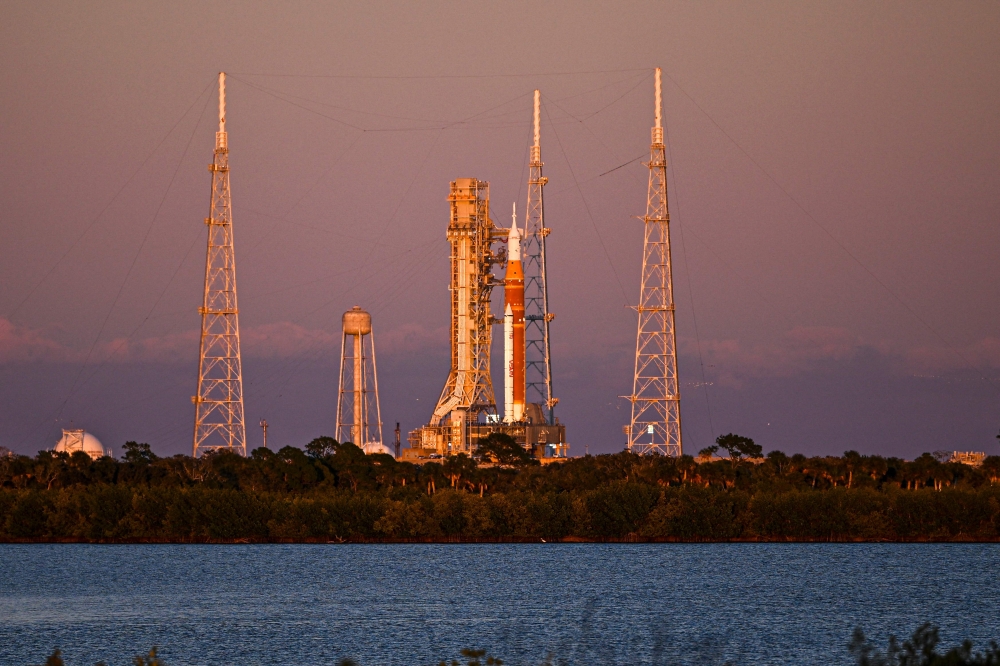
Workers identified the issue during final preparations, prompting NASA to take immediate action. The towering SLS rocket and its companion spacecraft, Orion, will now be rolled back into the Vehicle Assembly Building at the Kennedy Space Center in Florida for further investigation and necessary repairs.
Isaacman acknowledged public disappointment but emphasized that safety and mission integrity remain the top priorities.
“I understand people are disappointed by this development. That disappointment is felt most by the team at NASA, who have been working tirelessly to prepare for this great endeavor,” he shared.
He also reminded the public that setbacks have always been part of space exploration. During the 1960s — the golden era of lunar missions — NASA faced repeated technical hurdles before achieving what many once believed impossible.
What Artemis 2 Means for the Moon Mission
The Artemis 2 mission is designed to send three American astronauts and one Canadian astronaut on a 10-day journey around the Moon. Unlike its predecessor, Artemis 1 — which flew uncrewed in November 2022 after multiple delays — this mission will carry humans for the first time since the Apollo era.
NASA had previously identified March 6 as the earliest possible launch date. However, the helium issue now shifts timelines once again, continuing a pattern of delays that have followed the Artemis program since its inception.
The uncrewed Artemis 1 mission itself faced several postponements and two failed launch attempts before finally lifting off successfully. More recently, technical complications — including a liquid hydrogen leak — disrupted a critical “wet dress rehearsal” for Artemis 2 earlier this month. That full launch simulation was only completed earlier this week.
The wet dress rehearsal simulates real launch conditions, filling the rocket’s tanks and running through all procedures engineers would use during liftoff. It is one of the most crucial steps before a human spaceflight.
The Global Space Race Intensifies
The delay also unfolds against the backdrop of renewed international competition. The United States aims to return astronauts to the lunar surface as part of a long-term strategy that includes preparing for future missions to Mars.
Meanwhile, China is moving forward with its own ambitious lunar timeline. Its uncrewed Chang’e 7 mission is expected to launch in 2026, targeting the Moon’s south pole. Testing of its new crewed spacecraft, Mengzhou, is also scheduled to advance this year. China has stated its goal of sending astronauts to the Moon by 2030.
Last year, NASA surprised many observers when it suggested Artemis 2 could launch as early as February — a timeline acceleration reportedly influenced by the desire to stay ahead in the evolving space race.
But space exploration does not bend to political urgency. Rockets operate on precision, not pressure.
More Than Just a Delay
While this setback postpones liftoff, it does not ground the mission’s ambition. Artemis 2 represents a symbolic and practical step toward humanity’s return to deep space exploration.
NASA hopes that future lunar missions will establish sustainable exploration on and around the Moon, using it as a testing ground for technologies required for eventual crewed missions to Mars.
For now, engineers will comb through every valve, line, and system of the SLS rocket to resolve the helium issue. A new launch timeline is expected to be announced after a comprehensive review.