
A political standoff in Washington is continuing to disrupt airports across the United States after House Republicans moved to block a Senate proposal designed to end the ongoing pay crisis affecting Transportation Security Administration employees. The situation has stretched on for weeks, leaving thousands of airport security workers doing their jobs without pay while travelers face growing delays and uncertainty.
House Speaker Mike Johnson strongly criticized the Senate’s bipartisan proposal, calling it inadequate and signaling that Republicans in the House plan to introduce their own legislation. According to Johnson, the alternative plan would fully fund TSA officers while also ensuring financial support for immigration agents and Border Patrol personnel, which he argued are essential to national security.
Meanwhile, the White House stepped in to address the growing pressure surrounding the issue. President Donald Trump signed a memorandum directing his administration to treat the situation as an emergency and find ways to compensate TSA workers who have been left without pay during the funding lapse. Officials say the goal is to stabilize airport operations and support frontline workers who have continued to report for duty despite the financial strain.
The Department of Homeland Security, which oversees TSA and several other federal agencies, announced that TSA officers could begin seeing paychecks as early as Monday, March 30. However, questions remain about where the funds will come from and whether a longer-term solution will be reached soon.
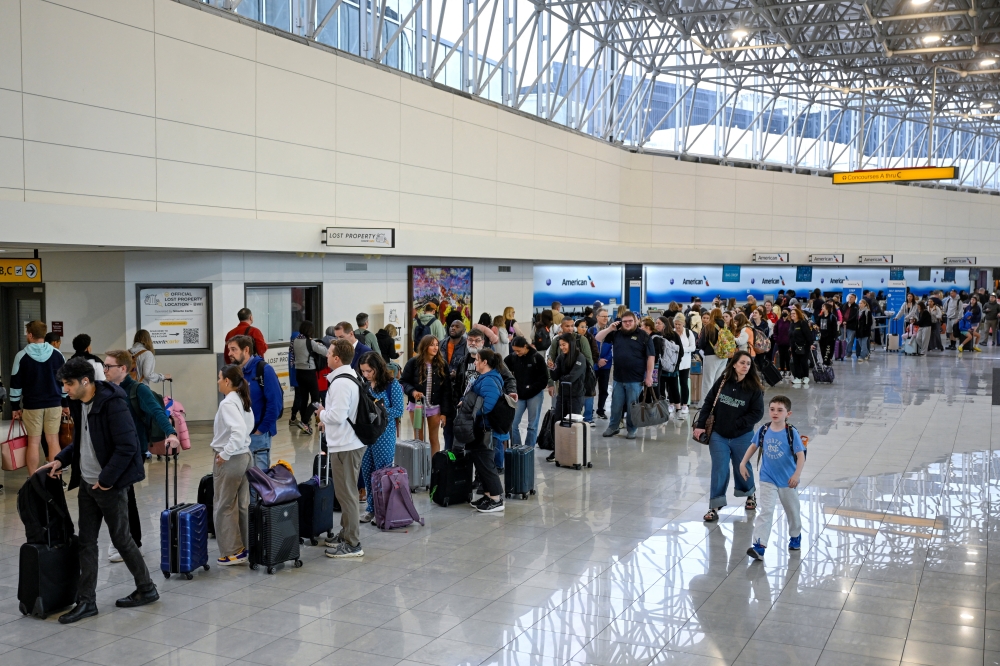
The crisis began after a partial government shutdown in mid-February halted funding for certain federal operations. Since then, TSA officers responsible for screening passengers, baggage, and cargo have been working without pay. The effects have been visible at airports across the country. At Houston’s international airport, for example, security lines reportedly stretched far beyond normal lengths, with staff handing out water to passengers waiting for extended periods.
At the center of the dispute is a broader political disagreement over immigration enforcement. Democratic lawmakers have been pushing for reforms to Immigration and Customs Enforcement, an agency that has faced widespread criticism for its enforcement tactics. In response, the Senate passed a funding measure that would support many Department of Homeland Security operations, including TSA, the US Coast Guard, and the Federal Emergency Management Agency, while excluding funding for ICE and Border Patrol in the 2026 proposal.
Despite that exclusion, those agencies would still be able to operate because Congress previously approved additional funding for them in 2025. However, the proposal quickly became a point of contention among House Republicans.
Speaker Johnson dismissed the Senate move and confirmed that Republicans intend to push a separate bill that would extend current funding levels for all DHS agencies until May 22. He also said he had spoken directly with President Trump, who supports the House approach.
The challenge now is timing. Both the Senate and the House are entering scheduled breaks, meaning any agreement could take longer to finalize. That delay could continue to affect air travel and the workers keeping airports running.
Adding to the tension, President Trump has previously indicated he would only sign a broader funding agreement if Congress also passes a controversial proposal related to voter registration in US elections. Because of Senate rules, budget bills require some support from Democrats even though Republicans hold the majority in both chambers of Congress.
Democratic leaders, however, have made their stance clear. Senate Minority Leader Chuck Schumer said that a funding bill that maintains current policies without reforms would not move forward in the Senate. He emphasized that Democrats are willing to fund critical Homeland Security operations but are unwilling to approve what they describe as unchecked support for immigration enforcement without changes.
House Democratic leader Hakeem Jeffries also said his party is working to push a vote in the House on the Senate’s bipartisan funding measure, hoping to break the deadlock.
Beyond the political arguments, the real impact is being felt by workers and travelers. The White House reported that nearly 500 TSA officers have already resigned during the shutdown period, and unscheduled absences have risen significantly. Many employees are facing financial pressure while continuing to perform critical duties that keep millions of passengers safe every day.
For travelers, the delays and uncertainty highlight how deeply airport operations depend on the people working behind the scenes. For TSA officers, the crisis is not just about policy debates in Washington — it is about paying bills, supporting families, and being recognized for the essential role they play in national security.
As lawmakers continue their negotiations, millions of Americans are hoping for a solution that restores stability to airports and fairness to the workers who keep them moving.