
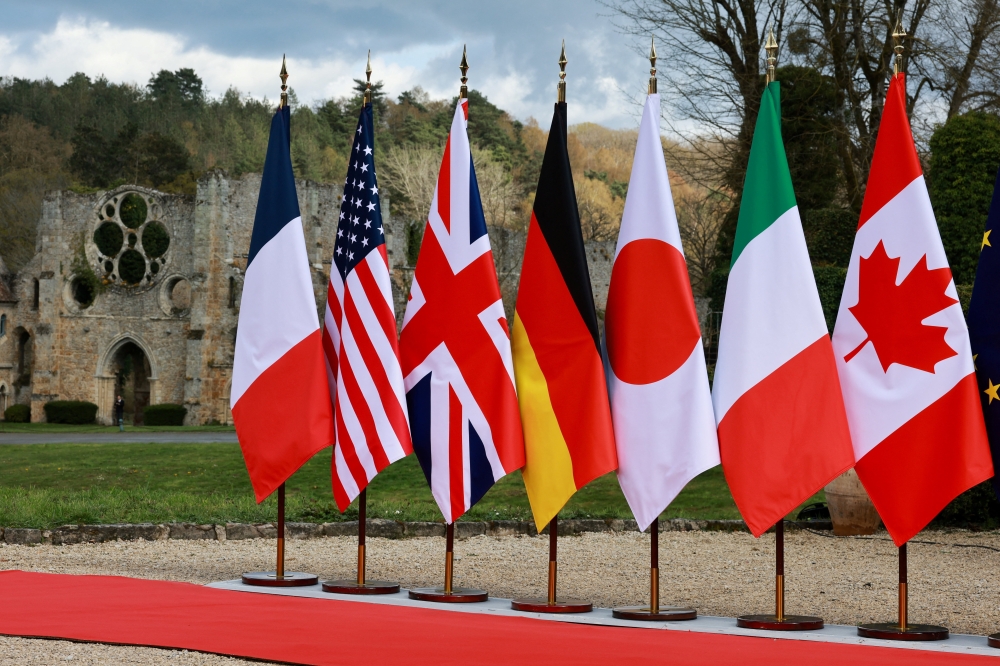
Ministers from the G7 are meeting today to discuss the growing economic fallout from the war in the Middle East, the French government confirmed. The surge in oil and gas prices has sent shockwaves through global markets, affecting industries and households worldwide.
The tensions escalated after the United States and Israel launched strikes on Iran in late February, prompting Tehran to retaliate by targeting crude-exporting nations and halting shipments through the Gulf. The resulting squeeze on energy supplies has sent oil and natural gas prices soaring, with ripple effects felt across supply chains everywhere.
French Finance Minister Roland Lescure explained that the meeting, conducted via videoconference, brings together energy and finance ministers, central bank heads, and leaders from other international agencies. “Differences in national exposure to the crisis are already significant,” Lescure said, highlighting Asia’s vulnerability to the ongoing turmoil.
The goal of the G7 gathering is to share insights on the war’s impact on financial markets and the global economy. Lescure noted that this format—uniting finance, energy, and central banks—is being used for the first time in half a century.
The G7, consisting of the United States, Canada, Britain, France, Germany, Italy, and Japan, plays a key role in shaping policies among the world’s wealthiest nations. The United States has appealed to the group for support in reopening the Strait of Hormuz, a critical shipping route blocked by Iran. Last week, G7 foreign ministers called for free passage through the strait and an end to attacks on civilian infrastructure.
Governments around the world are under pressure to respond. Rising energy costs and uncertain supply have forced many nations to roll out emergency measures. Yet the lack of clarity around US objectives, the conflict’s duration, and potential regional escalation has left officials scrambling for coherent strategies.
US officials, including President Donald Trump, have suggested that key objectives are nearly met, but a significant military buildup has sent thousands of personnel to the region. Meanwhile, activists outside Iran report that more than 3,000 people have died in the country, over half civilians, with over 1,000 fatalities in Lebanon since early March. Casualty numbers reported by Israel and Gulf nations remain much lower.
Amid the numbers, strategies, and statistics, the human cost of the conflict is undeniable. Families face uncertainty, communities face disruption, and nations confront economic pressures that touch everyday lives. These global decisions, made in conference rooms far from the frontlines, ripple down to impact ordinary people in real, tangible ways.