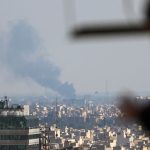

Global oil markets jolted sharply on Thursday after Donald Trump signaled that the United States would continue its military operations against Iran, without offering a clear timeline for when the conflict might end. The uncertainty has intensified fears across financial markets, particularly around prolonged disruptions to global oil supply.
Benchmark crude prices reacted immediately. Brent crude surged by $6.84, marking a 6.8% increase to reach $108 per barrel. Meanwhile, West Texas Intermediate crude climbed $6.40, or 6.4%, settling at $106.52 per barrel. This sharp rise came after both benchmarks had earlier dipped by more than $1 before Trump’s televised address, reflecting just how sensitive markets are to geopolitical signals.
In his speech, Trump emphasized determination without clarity. He stated that the U.S. was close to achieving its objectives, suggesting the conflict could wrap up within two to three weeks. However, the absence of any concrete roadmap—particularly around ceasefire discussions or diplomatic engagement—left investors uneasy.
Market analysts were quick to point out that the lack of a defined exit strategy is fueling volatility. According to industry experts, markets are reacting not just to the continuation of military action, but to the uncertainty surrounding how and when it will end. This ambiguity is forcing traders to price in the risk of prolonged instability in one of the world’s most critical oil-producing regions.
Concerns have also escalated due to rising threats to maritime security. As tensions deepen, vital shipping routes are increasingly at risk. In a significant escalation, an oil tanker leased to QatarEnergy was reportedly struck by an Iranian cruise missile in Qatari waters, highlighting the growing dangers to global energy logistics.
Adding to the pressure, the International Energy Agency has warned that supply disruptions could soon begin to impact Europe’s economy. Until now, the region had been somewhat insulated thanks to pre-existing energy contracts signed before the conflict intensified. However, those buffers are expected to wear thin in the coming weeks.
Energy economists also note that without a clear diplomatic off-ramp, markets will remain in a state of heightened alert. Investors are now closely watching for any signs of escalation or resolution, knowing that even minor developments could trigger major price swings.