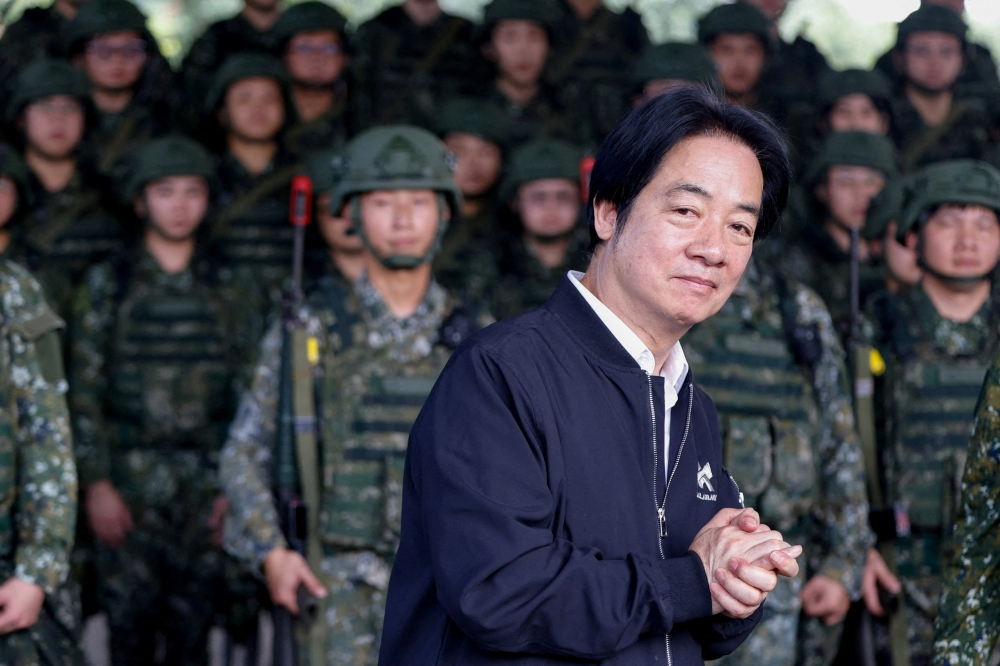
China has publicly commended three African nations for denying overflight access to the aircraft of Taiwan’s President Lai Ching-te, reinforcing what it describes as the widely accepted “one-China principle” in global diplomacy.
During a routine press briefing in Beijing, a spokesperson from China’s Taiwan Affairs Office emphasized that the decision by these countries aligns with international norms. The spokesperson dismissed claims that China exerted economic pressure to influence the outcome, instead expressing appreciation for what was described as a firm and consistent stance by the nations involved.
Taiwan, however, has raised concerns, alleging that China may have influenced Seychelles, Mauritius, and Madagascar to withdraw previously granted airspace permissions for the president’s flight. The route was intended to facilitate Lai’s planned visit to Eswatini, one of the few nations that continues to maintain formal diplomatic relations with Taiwan.
The trip was expected to coincide with the 40th anniversary of the reign of King Mswati III, a significant national milestone. However, the disruption of travel plans highlights the ongoing geopolitical tensions surrounding Taiwan’s international engagements.
This development follows closely on the heels of recent diplomatic movements between China and Taiwan. Notably, opposition figure Cheng Li-wun met with Chinese President Xi Jinping in Beijing, after which China introduced new incentives aimed at Taiwan, including relaxed restrictions on certain food imports.
While official narratives differ, the situation underscores the delicate balance of diplomacy, influence, and sovereignty that continues to shape relations across the Taiwan Strait and beyond.
At its core, this story isn’t just about airspace or politics—it reflects the everyday reality of how global decisions ripple across nations and people. Behind every diplomatic move are real consequences, shaping travel, relationships, and the future of international cooperation. In a world that is increasingly interconnected, moments like these remind us how complex—and human—global politics truly is.