
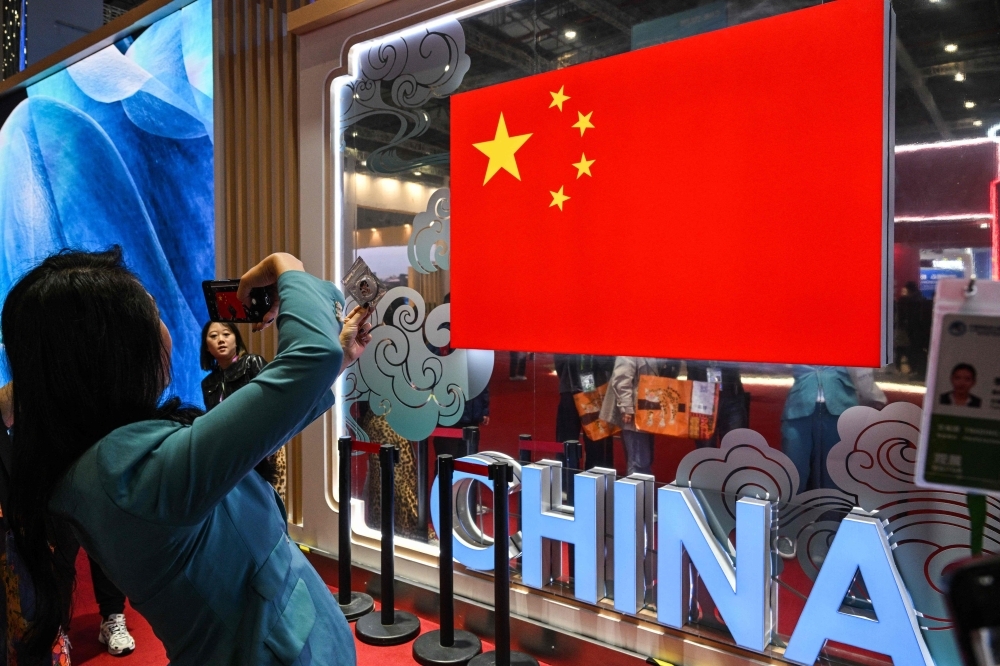
As relations between Washington and its allies remain under strain, China is quietly reshaping its image on the global stage — positioning itself as a more predictable and reliable trade partner at a time of growing uncertainty around the United States.
When US President Donald Trump returned to office with a renewed “America First” agenda, many economists expected fresh headwinds for China’s already slowing economy. Instead, Beijing responded by strengthening ties beyond Washington, easing tensions with other major economies and posting a historic trade surplus in the process.
Analysts note that as Trump’s policies unsettled long-standing US partnerships, China redirected its focus toward expanding cooperation with countries such as Canada, India, and parts of Europe. The result was striking: in 2025, China recorded a record trade surplus of US$1.2 trillion, while monthly foreign exchange inflows reached an all-time high of US$100 billion. At the same time, global usage of the Chinese yuan continued to rise.
This shift comes as British Prime Minister Keir Starmer arrives in China for a four-day visit, aiming to reset business relations that have cooled in recent years. His trip follows a recent visit by Canadian Prime Minister Mark Carney — the first by a Canadian leader to Beijing since 2017 — during which both nations signed a deal to reduce trade barriers and deepen strategic cooperation. Carney publicly described China as “a more predictable and reliable partner.”
Backed by a US$20 trillion economy and vast stock and bond markets worth an estimated US$45 trillion, China is increasingly being viewed as a stabilising force in global trade. Aleksandar Tomic, an economics professor at Boston College, said Beijing has been effective in presenting itself as a steady alternative at a time when US policy appears more volatile.
Investment professionals echo that view. Derrick Irwin of Allspring Global Investments said China is offering something many countries currently crave: consistency. With US trade policy shifting rapidly, Beijing is positioning itself as a partner that prioritises long-term predictability.
China’s strategy mirrors a broader global trend. Nations are actively diversifying trade ties to reduce reliance on the US. Earlier this week, India and the European Union finalised a long-awaited trade agreement expected to sharply reduce tariffs and potentially double European exports to India by 2032.
Despite escalating tensions with Washington — particularly after tariffs on Chinese goods briefly exceeded 100 percent in April 2025 — China adapted quickly. While exports to the US fell by 20 percent last year, shipments surged to other regions, including Africa, Southeast Asia, Latin America, and the European Union.
China’s economy also proved more resilient than many expected. Even as domestic consumption weakened and the property sector struggled, the country still met its official growth target of 5 percent in 2025. To bolster confidence, Beijing rolled out new measures to attract foreign investors, expanding market access in industries such as healthcare, telecommunications, and education.
Financial indicators reinforced this momentum. China’s foreign exchange reserves climbed to a 10-year high of US$3.36 trillion, while the Shanghai stock index rose 27 percent over the past year, outperforming US markets. Meanwhile, efforts to internationalise the yuan accelerated, with more than half of China’s cross-border transactions now settled in its own currency.
Still, not everyone is convinced. Some analysts warn that skepticism toward the US does not automatically translate into trust in China. Concerns remain over Beijing’s trade practices, use of economic pressure, and unresolved geopolitical disputes.
Yet for many governments and businesses navigating an increasingly fragmented global economy, the immediate calculation is practical rather than ideological. In a world where policies can shift overnight, predictability carries real value.
At its core, this moment reflects a deeper human reality behind the headlines: nations, like people, seek stability when the ground feels uncertain. As global leaders weigh their options, China’s message is clear — it wants to be seen not just as a powerful economy, but as a partner that offers steadiness in a time of change.