China’s highest court has overturned the death sentence of a Canadian man convicted on drug smuggling charges, a move widely seen as a significant signal of improving relations between Beijing and Ottawa.
Robert Schellenberg, a Canadian national, was arrested in China in 2014 and convicted in 2018 for drug-related offences. He was initially sentenced to 15 years in prison. However, in January 2019, a retrial resulted in a much harsher outcome a death sentence that drew international attention and criticism. The timing of that ruling, coming shortly after the arrest of Huawei executive Meng Wanzhou in Canada on a United States warrant, further intensified diplomatic tensions between the two countries.
On Friday, China’s Supreme People’s Court ruled to overturn the death sentence handed down by a lower court, according to Schellenberg’s Beijing-based lawyer, Zhang Dongshuo. The case will now be sent back to the Liaoning Provincial High People’s Court for a retrial.
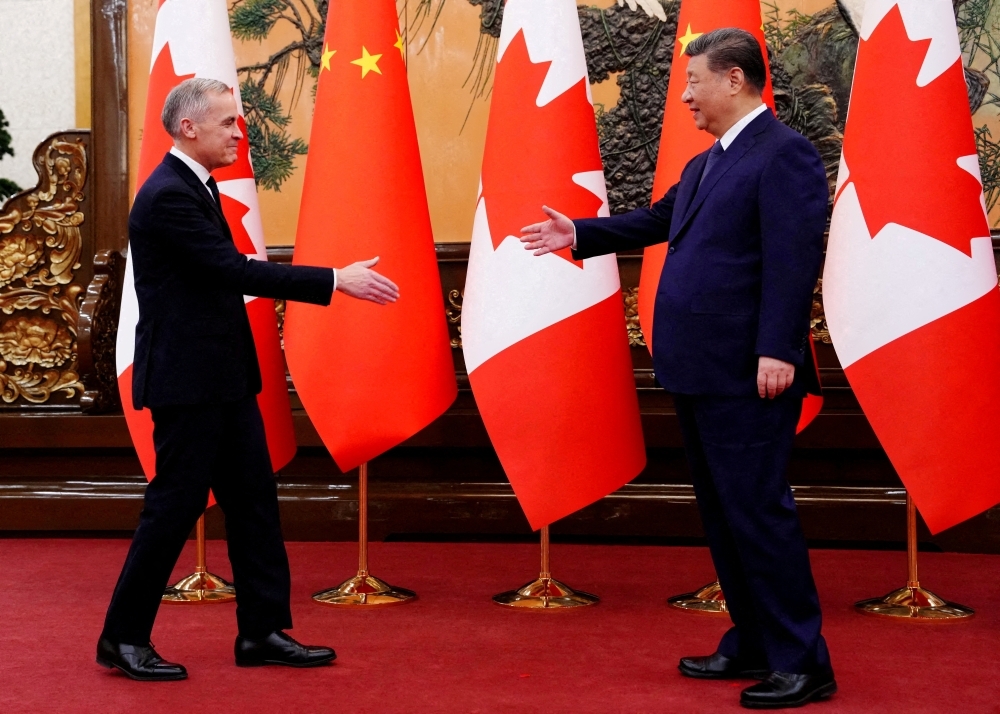
The decision comes less than a month after Canadian Prime Minister Mark Carney concluded a four-day visit to China, during which he publicly acknowledged an improvement in bilateral ties. Relations between the two nations had deteriorated in recent years, particularly under the previous Canadian administration led by Justin Trudeau.
Canada’s foreign ministry confirmed awareness of the Supreme Court’s ruling and stated that consular support would continue to be provided to Schellenberg and his family, though officials declined to comment further on the court’s reasoning.
According to Zhang, the timing of the ruling suggests a strong link to the recent diplomatic engagement between the two governments. However, he cautioned that a full acquittal remains unlikely given the seriousness of the charges. China executed four Canadian citizens on drug smuggling charges last year, underscoring the country’s strict stance on narcotics-related crimes.
Schellenberg’s death sentence had previously been upheld by the Liaoning court in 2021, prompting strong condemnation from Ottawa. The case became emblematic of broader tensions after China detained two Canadian citizens on espionage allegations shortly after Meng Wanzhou’s arrest. Their release in 2021 coincided with the United States dropping its extradition request for Meng, allowing her to return to China.
Trade disputes also weighed heavily on bilateral relations. Canada imposed tariffs on Chinese electric vehicles in 2024, mirroring similar measures taken by the United States. China responded with tariffs on billions of dollars’ worth of Canadian agricultural products, including canola oil, meal, and seed.
Following Prime Minister Carney’s recent visit, both countries agreed to significantly reduce tariffs on electric vehicles and canola products, marking a sharp reversal of earlier policies. Analysts believe this thaw could influence the broader geopolitical landscape, particularly amid ongoing Sino-US rivalry, though Canada is still expected to maintain close ties with Washington.
At its core, this development is not just about trade or diplomacy. It is about how political relationships can directly affect real human lives. For families waiting across borders, court decisions are more than legal procedures they are moments of hope, fear, and uncertainty. As Canada and China cautiously rebuild trust, the world is watching to see whether this shift leads to lasting change or remains a rare exception shaped by global politics.