China’s sweeping military overhaul has taken another dramatic turn.
Just days before thousands of delegates gather in Beijing for the country’s most important annual political meetings, three senior generals have been removed from China’s top political advisory body. The decision signals that the leadership’s anti-corruption drive within the armed forces is not slowing down — it is accelerating.
State media confirmed that the Chinese People’s Political Consultative Conference voted to remove retired generals Han Weiguo, Liu Lei, and Gao Jin during a Standing Committee meeting. Alongside them, two additional members were removed, and ten others were formally ousted.
The move follows a separate decision last week when the National People’s Congress removed 19 delegates, including nine military officials. No official explanation has been provided for the removals, leaving observers to interpret the broader implications of this widening purge.
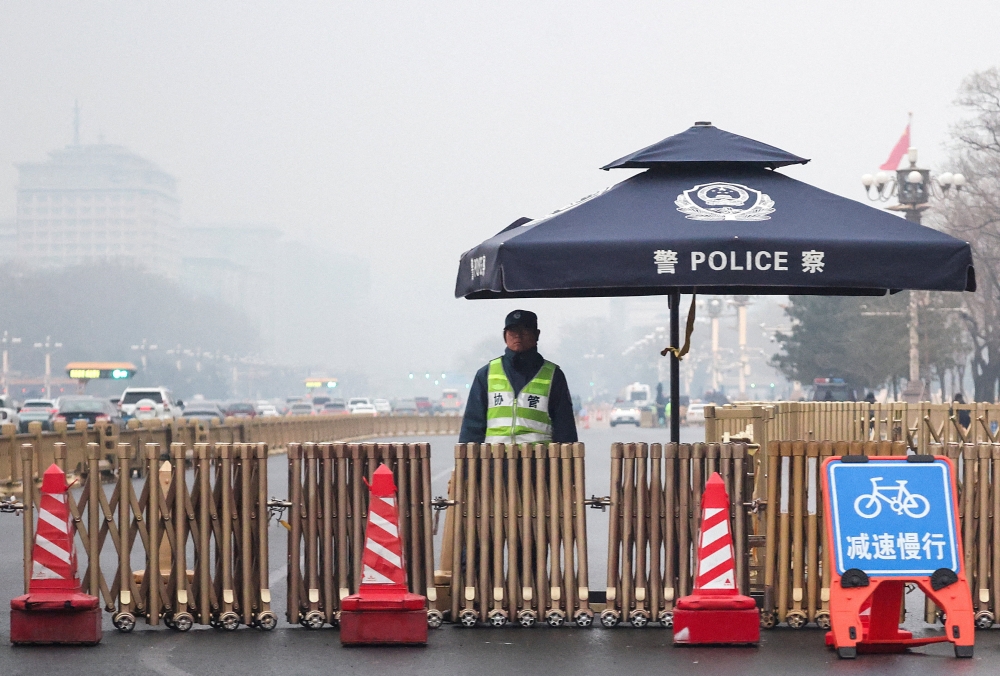
These developments unfold on the eve of China’s highly anticipated “Two Sessions” — the simultaneous meetings of the National People’s Congress and the Chinese People’s Political Consultative Conference. The annual gatherings serve as a key stage where policy directions, economic priorities, and national strategies are outlined for the year ahead.
But this year, the focus is shifting beyond policy speeches and economic targets. The repeated removals within the People’s Liberation Army suggest deeper structural tensions.
The shake-up did not stop with legislative removals. Wang Xiangxi was removed as minister of emergency management following an investigation by the country’s anti-corruption watchdog. Meanwhile, Liu Shaoyun was removed from his position as head of the PLA’s military court.
Since assuming power more than a decade ago, President Xi Jinping has launched one of the most extensive anti-corruption campaigns in modern Chinese political history. Initially targeting party officials and state administrators, the campaign has increasingly focused on the military establishment.
Last month, Xi publicly praised the military’s fight against corruption — a rare and direct acknowledgment of internal challenges within the armed forces. Weeks earlier, Beijing escalated its scrutiny by probing senior military leadership.
In January, China’s defence ministry announced investigations into Zhang Youxia, vice chairman of the Central Military Commission, and Liu Zhenli, chief of staff of the commission’s joint staff department responsible for combat planning. These investigations marked one of the most significant signals that no rank is beyond review.
The People’s Liberation Army has long been central to China’s national strategy, not only as a defence force but as a pillar of political authority. Any restructuring within its leadership carries strategic weight.
While the official reasons for the removals remain undisclosed, the timing — immediately before the Two Sessions — sends a clear message: discipline and control within the military remain a top priority.
Political analysts suggest that such decisive moves ahead of major state gatherings reinforce the image of firm governance and centralized authority. At the same time, they underscore the scale of internal reform efforts underway.
For the international community, these developments raise questions about military stability, leadership continuity, and the broader implications for regional security dynamics.
For citizens within China, the message is framed differently — a continuation of a long-running effort to strengthen institutional integrity and eliminate corruption from within.
As Beijing prepares to host one of its most important political weeks of the year, the military purge adds a powerful undertone to the proceedings. It highlights that reform is not symbolic — it is active, visible, and ongoing.
Beyond policy debates and economic forecasts, this moment reflects something larger: a leadership determined to reshape its institutions, even at the highest levels.
In times of global uncertainty, internal restructuring of this magnitude reminds the world that power structures are never static. They evolve, recalibrate, and sometimes, reset entirely.
And as the summit begins, one thing is clear — the story unfolding in Beijing is not just about meetings and speeches. It is about control, accountability, and the future direction of one of the world’s most influential military forces.