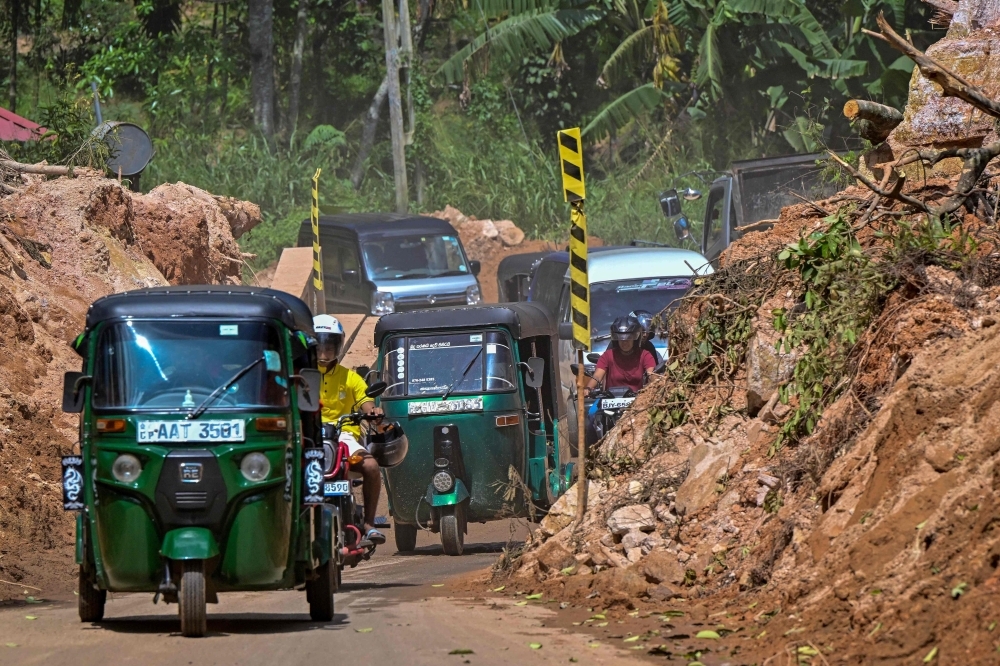
Heavy rains pounded Sri Lanka again today, slowing down a massive clean-up effort already stretched thin after last week’s catastrophic floods and landslides that claimed nearly 500 lives. Officials reported that southern regions received up to 132 millimetres of rainfall within just 15 hours, adding fresh pressure to communities still reeling from Cyclone Ditwah.
While the latest downpour was heavy, authorities say that the widespread flooding that engulfed the country since last week has finally begun to ease. Yet the toll remains staggering. The Disaster Management Centre (DMC) confirmed 486 deaths, with another 341 people still missing. At the height of the disaster, 225,000 people were displaced; that number has now decreased to 170,000 as water levels recede around Colombo and other affected districts.
The cyclone triggered record rainfall, unleashing floods and devastating landslides across several provinces. Sri Lankan President Anura Kumara Dissanayake called it the most severe natural disaster the island has ever faced.
In the central highlands, authorities are urging evacuated residents not to return to their homes—even those spared by the slides—because the mountainsides remain dangerously unstable. In Gampola, communities have begun scraping away thick mud and clearing water-logged homes. Volunteers from surrounding towns have stepped in to help.
Muslim cleric Faleeldeen Qadiri, speaking from the Gate Jumma Mosque, shared how overwhelming the situation truly is. A volunteer named Rinas added, “It takes 10 men a whole day to clean one house. No one can do this without help.”
To ease the burden, Commissioner-General of Essential Services Prabath Chandrakeerthi announced that the government will pay 25,000 rupees (US$83) per household for cleaning, and up to 2.5 million rupees (US$8,300) to begin rebuilding destroyed homes. More than 50,000 houses have already been reported damaged, and reconstruction costs may reach US$6–7 billion.
Electricity is slowly returning—three-quarters of the national power supply has been restored—but some communities in the hardest-hit Central Province remain without electricity or phone services.
President Dissanayake declared a state of emergency on Saturday and affirmed that Sri Lanka will rebuild stronger, with help from the international community.