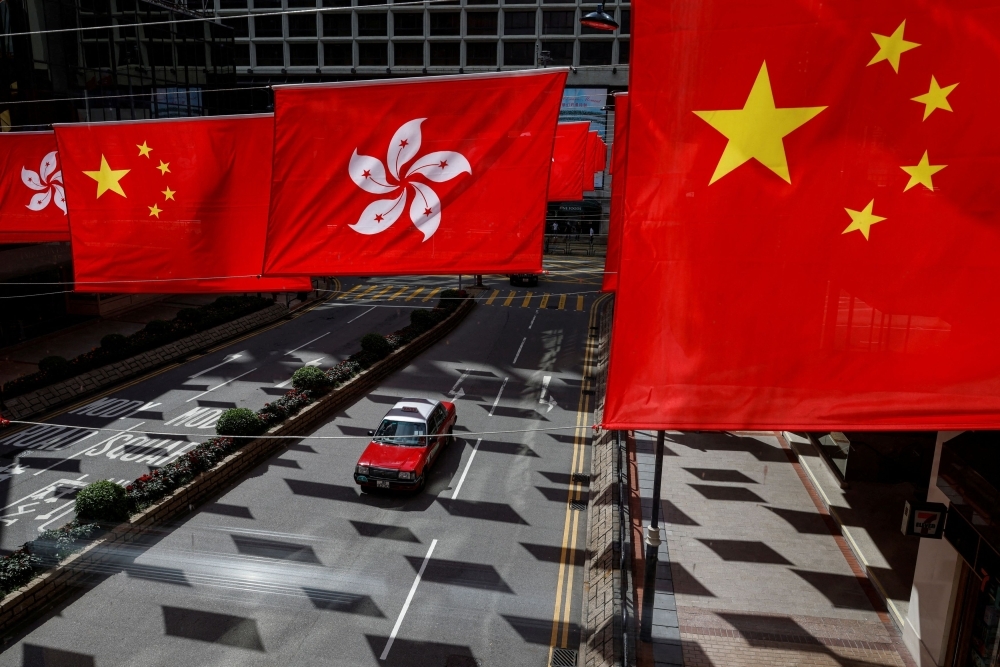
Hong Kong is standing at a historic crossroads as its last major opposition party prepares to decide its own fate. On Sunday, the Democratic Party will hold a final vote on whether to disband, marking what could be the end of organised mainstream opposition politics in the city after years of intensified national security enforcement by Beijing.
Founded in 1994, three years before Hong Kong’s handover from British to Chinese rule, the Democratic Party once symbolised the city’s democratic aspirations. For decades, it dominated legislative elections, challenged Beijing on political reform, and championed civil liberties that defined Hong Kong’s identity under the One-Country, Two-Systems framework.
According to an official party statement, a Special General Meeting at its headquarters will confirm arrangements for the party’s dissolution and liquidation. Senior members have revealed that Chinese officials or intermediaries warned the party to disband or face serious consequences, including possible arrests.
Over the past six months, a dedicated committee has been working behind the scenes to manage the technical and legal steps required for disbandment. This includes handling accounting matters and preparing the sale of the party’s Kowloon property, which currently serves as its headquarters. For the decision to pass, at least 75 percent of party members must vote in favor.
The timing of the vote is deeply symbolic. It comes just a week after Hong Kong held a legislative council election restricted to “patriots only,” and one day before the expected verdict in the high-profile national security trial of media tycoon and outspoken Beijing critic Jimmy Lai.
While Hong Kong is officially promised a high degree of autonomy under Chinese rule, critics argue that the city’s political landscape has dramatically narrowed. Since the introduction of the national security law in 2020, dozens of pro-democracy figures have been arrested, civil society groups have dissolved, and independent media outlets have shut down.
In 2021, Beijing’s overhaul of Hong Kong’s electoral system further marginalised the Democratic Party by barring candidates who were not vetted as loyal to China. This effectively pushed the party out of mainstream politics. In June this year, the League of Social Democrats, another pro-democracy group, also announced its closure, citing overwhelming political pressure.
Several senior Democratic Party figures, including Wu Chi-wai, Albert Ho, Helena Wong, and Lam Cheuk-ting, have been jailed or remain in custody under the national security law. Western governments such as the United States and the United Kingdom have criticised the law, saying it suppresses dissent and erodes freedoms. Beijing, however, maintains that no freedom is absolute and insists the law has brought stability back to the city.
At its core, this vote is not just about dissolving a political party. It is about the closing of a chapter that once allowed open debate, political pluralism, and hope for gradual reform. For many Hong Kong residents, the Democratic Party’s final decision represents a quiet but profound moment of loss. An era shaped by ballots, speeches, and peaceful opposition is fading, leaving behind unanswered questions about the city’s future and the space left for differing voices in public life.