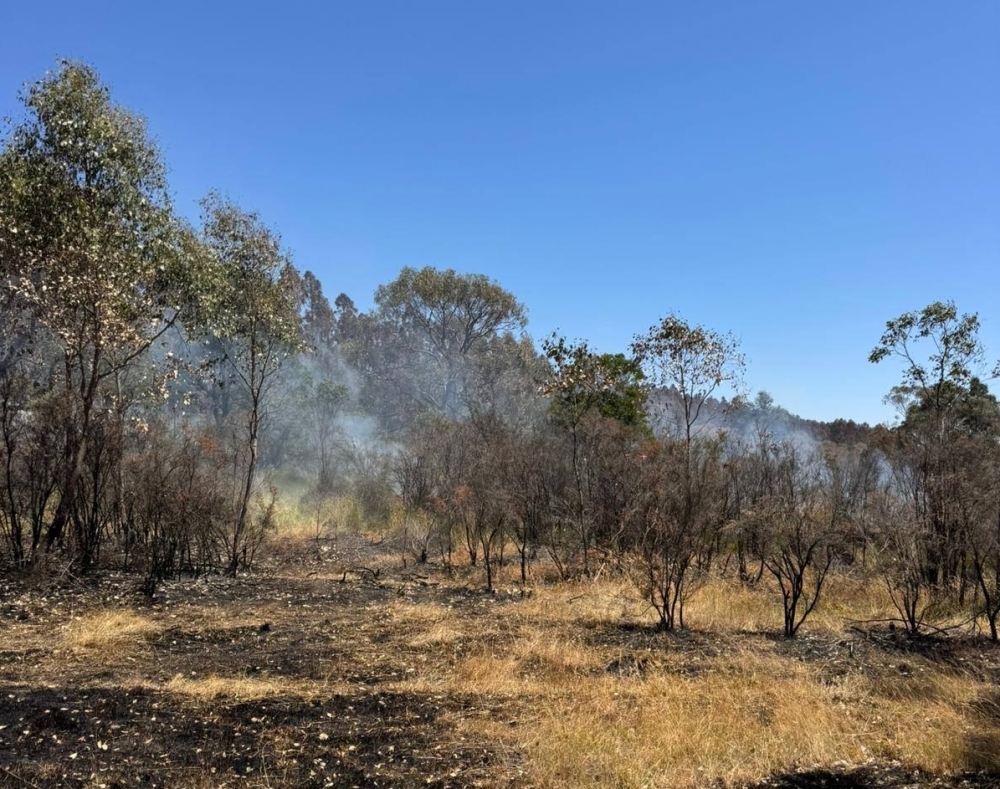
Australia is battling a severe heatwave that has pushed temperatures to record levels and triggered dangerous bushfires, forcing firefighters to order urgent evacuations in parts of the country.
In southeast Australia, residents were told to flee an out-of-control bushfire as extreme heat and strengthening winds created highly volatile conditions. Preliminary data shows the eastern state of Victoria recorded its hottest day on record, underscoring the scale of the emergency.
“Conditions are heating up across the state, and we’re seeing those 40-degree temperatures roll in,” said Country Fire Authority chief officer Jason Heffernan. Speaking to public broadcaster ABC, he warned that firefighters were already feeling the impact on the ground, with rising temperatures and winds increasing fire intensity and spread.
Authorities issued an immediate emergency evacuation warning for hundreds of people in four country towns threatened by the blaze in the Otways region, southwest of Melbourne. Residents in three additional nearby rural areas were also urged to leave, with officials cautioning that the fire was expected to rapidly expand due to extreme weather.
A total fire ban was enforced across Victoria as at least six major bushfires burned simultaneously. In the northwestern towns of Walpeup and Hopetoun, temperatures peaked at an extraordinary 48.9°C, according to the Bureau of Meteorology. This figure slightly surpassed the previous state record of 48.8°C, though officials said the reading would need formal verification.
The intense heat has disrupted major events as well. At the Australian Open, organisers closed the roof over the centre court to protect players and spectators, as Melbourne braced for temperatures forecast to reach 45°C.
Hot air has blanketed large parts of Victoria, South Australia, and New South Wales, prompting serious public health warnings. Victoria’s chief health officer, Caroline McElnay, cautioned that prolonged heat can be dangerous for anyone, but especially for the elderly, children, and those with underlying health conditions.
“Prolonged heat can affect anyone, and when high heat continues for a number of days it can affect your health,” she said. McElnay warned that extreme heat can lead to life-threatening conditions such as heat exhaustion, heat stroke, heart attacks, and strokes.
Authorities urged people to stay indoors where possible, keep hydrated, and watch for warning signs including dizziness, muscle cramps, rapid pulse, high body temperature, and loss of consciousness.
As firefighters continue to battle the blazes and communities face evacuation, the crisis highlights how vulnerable everyday lives become when extreme weather strikes. Behind every warning and temperature record are families leaving their homes, firefighters pushing their limits, and communities hoping the winds will ease and the heat will break soon. — AFP