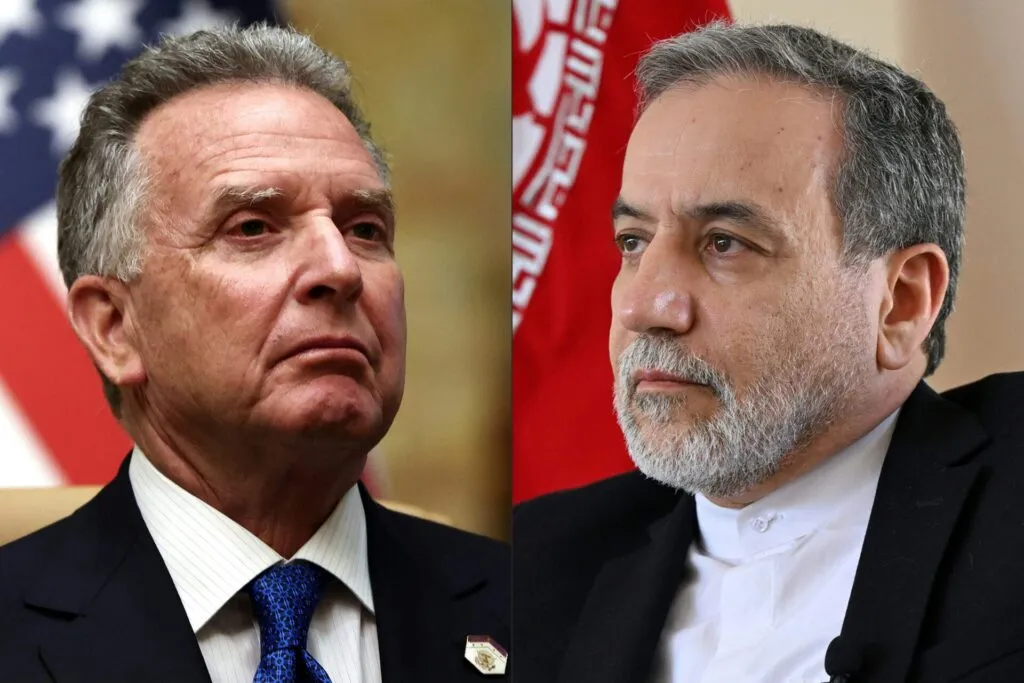
Iran and the United States have reopened sensitive negotiations in Muscat, Oman, marking a cautious return to diplomacy after weeks of sharp rhetoric and visible military posturing that had raised alarms across the region.
Iran’s delegation is led by Foreign Minister Abbas Araghchi, while the US side is represented by special envoy Steve Witkoff and presidential adviser Jared Kushner. The choice of Oman once again reflects its long-standing role as a quiet mediator when trust between Washington and Tehran runs thin.
Tehran insists the talks are limited strictly to the nuclear issue. Iranian officials say their objective is a fair, balanced, and dignified agreement, making it clear that topics such as regional security or missile capabilities are not on the table. Araghchi emphasized that Iran is negotiating with a clear memory of past experiences, stating that any lasting deal must be built on equality, mutual respect, and shared interests.
Washington, however, appears to be keeping its options open. While diplomacy is described as the preferred route, US officials have hinted that negotiations could extend beyond uranium enrichment, pushing for broader limits that Iran has repeatedly rejected as an infringement on its sovereignty.
The talks were moved to Muscat after Iran objected to holding them in Istanbul, a change that briefly threatened to derail the process altogether. Behind the scenes, several regional players—including Saudi Arabia, Qatar, Egypt, the UAE, and Pakistan—are encouraging continued dialogue. Some have even floated the idea of a wider non-aggression framework, though analysts caution that such a plan would be extremely complex, particularly if Israel were involved.
These discussions are unfolding against a tense backdrop. The US has increased its military presence in West Asia, while Iran has showcased new missile capabilities. Memories of last year’s direct exchanges—strikes, counterstrikes, and near-escalation—are still fresh, fueling anxiety about what could come next.
For now, the Muscat talks represent a narrow but crucial opening. Whether they lead to compromise or collapse back into confrontation could shape not only US–Iran relations, but also the stability of the wider region in the months ahead.
At its core, this moment is about more than policy and power. It is about whether dialogue can still outweigh distrust, and whether two long-time rivals can choose conversation over conflict when the stakes are this high.