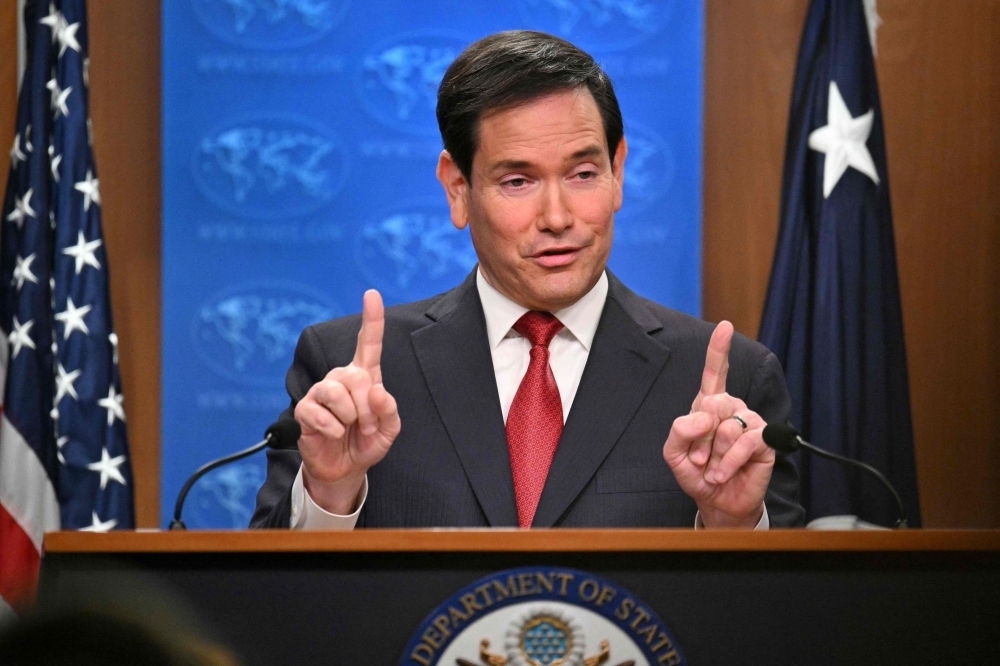
US Senator Marco Rubio has called for the disarmament of Hamas, emphasizing that a lasting peace in Gaza hinges on the militant group’s relinquishment of weapons. His comments came as US and regional officials gathered to discuss the next stage of the Gaza ceasefire, a truce that has held since October following the release of hostages.
Top diplomats from Qatar, Egypt, and Turkey — key players in mediating the ceasefire — traveled to Miami on Friday to meet US envoys, including Steve Witkoff, a close associate of former President Donald Trump. Rubio acknowledged the complexity of achieving peace, describing the October ceasefire as nothing short of a “miracle.”
“Every day brings new challenges, and we recognize these challenges come from all sides,” Rubio told reporters in Washington.
The second stage of the ceasefire outlines Israel’s gradual withdrawal from positions in Gaza, the establishment of an interim authority to govern the territory instead of Hamas, and deployment of an international stabilization force. Rubio stressed that these steps could falter if Hamas remains armed.
“If Hamas is ever in a position to threaten or attack Israel, there will be no peace. That’s why disarmament is critical,” he said.
Hamas, however, maintains that it has a “legitimate right” to retain weapons. Khalil al-Hayya, Hamas’s Gaza chief, reiterated this stance, while Bassem Naim, a senior Hamas official, called on the talks to end what they describe as Israeli violations of the truce. “Our people expect these talks to result in an agreement that halts ongoing lawlessness and compels compliance with the Sharm El-Sheikh agreement,” Naim said.
Hope for International Troop Support
Rubio expressed optimism that several countries would contribute troops to the Gaza stabilization force. He specifically mentioned Pakistan, which, despite not recognizing Israel, is exploring participation in the peacekeeping effort. “We’re grateful to Pakistan for considering this role,” Rubio noted.
Indonesia, the world’s most populous Muslim-majority nation, has also offered to contribute 20,000 peacekeepers, though Israel has opposed Turkey’s involvement, citing concerns over its president, Recep Tayyip Erdogan’s vocal criticism of Israeli actions in Gaza.
Rising Casualties and the Call for Pressure
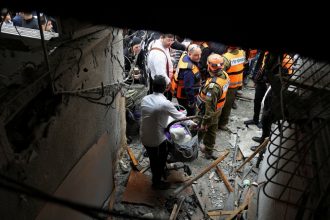
Gaza’s civil defense reported that five people were killed in Israeli shelling of a shelter, bringing the death toll in the territory to around 400 since the October ceasefire. Israel, meanwhile, has accused Hamas of violating the agreement, including incidents that led to the deaths of three Israeli soldiers.
Egyptian Foreign Minister Badr Abdelatty called for stronger international pressure to enforce the ceasefire. Hamas also stressed that discussions should focus on facilitating humanitarian aid into Gaza.
The first phase of the ceasefire involved the release of hostages, while the upcoming third phase will address the reconstruction of Gaza, which suffered heavy damage during Israel’s retaliatory campaign in response to Hamas’s October 2023 attack.