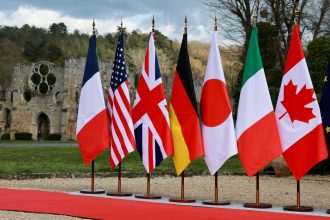
Senior officials from France, Saudi Arabia, and the United States are set to meet today in Paris with the head of the Lebanese army, aiming to finalize a practical roadmap for the disarmament of Hezbollah, according to diplomatic sources. The talks come at a critical moment, as concerns mount that the fragile ceasefire between Israel and Lebanon could collapse.
Israel and Lebanon reached a U.S.-brokered ceasefire in 2024, bringing an end to more than a year of intense fighting between Israel and the Iran-backed Hezbollah group. While the truce reduced large-scale hostilities, it left Hezbollah significantly weakened and the region deeply unstable. Since then, both sides have accused each other of breaching the agreement, with Israel openly questioning whether the Lebanese army has done enough to curb Hezbollah’s military capabilities.
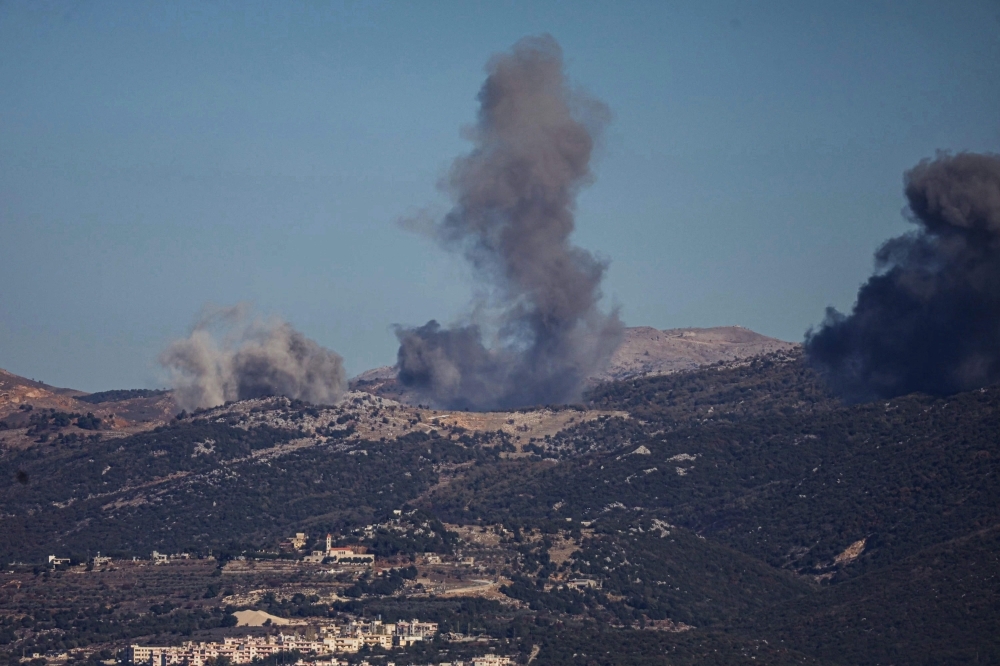
Israeli airstrikes have continued, particularly in southern Lebanon and even parts of Beirut, heightening fears that the ceasefire may be unraveling. Diplomats say today’s Paris meeting is designed to strengthen the existing ceasefire framework by creating clearer mechanisms to identify, support, and verify the disarmament process, while also discouraging Israel from further escalation.
The political backdrop in Lebanon adds another layer of complexity. With parliamentary elections scheduled for 2026, diplomats warn that political deadlock and party rivalries could worsen instability. There are also concerns that President Joseph Aoun may be reluctant to push aggressively for disarmament, fearing backlash and internal unrest.
“The situation is extremely precarious, full of contradictions, and it won’t take much to ignite it,” one senior official said on condition of anonymity. Another diplomat noted that President Aoun prefers to keep any disarmament efforts low-profile, wary of provoking tensions within the Shi’ite community in southern Lebanon.
Given the Lebanese army’s limited capacity to disarm Hezbollah on its own, officials are discussing reinforcing the ceasefire mechanism with French, U.S., and possibly other international military experts, alongside United Nations peacekeeping forces. Plans are also being considered for two major conferences early next year, one focused on strengthening the Lebanese army and another aimed at funding reconstruction, particularly in southern Lebanon.
Even as talks were underway in Paris, violence continued on the ground. Lebanon’s state news agency NNA reported multiple Israeli strikes hitting towns in southern Lebanon and areas of the Bekaa Valley. The Israeli military said it targeted Hezbollah facilities used for training, weapons storage, and artillery launches, arguing these activities violated the ceasefire understandings and posed a direct threat to Israel. It also reported killing a Hezbollah militant near Taybeh in southern Lebanon.
Reacting to the strikes, Lebanese parliament speaker and Hezbollah-allied Amal Movement leader Nabih Berri described the attacks as an “Israeli message” directed at the Paris conference.
Beyond the diplomacy and military statements lies a sobering reality: ordinary people on both sides of the border continue to live under constant uncertainty. As global powers debate frameworks and mechanisms, families in southern Lebanon and northern Israel remain caught between politics, security calculations, and the hope that dialogue will prevail over another cycle of destruction.