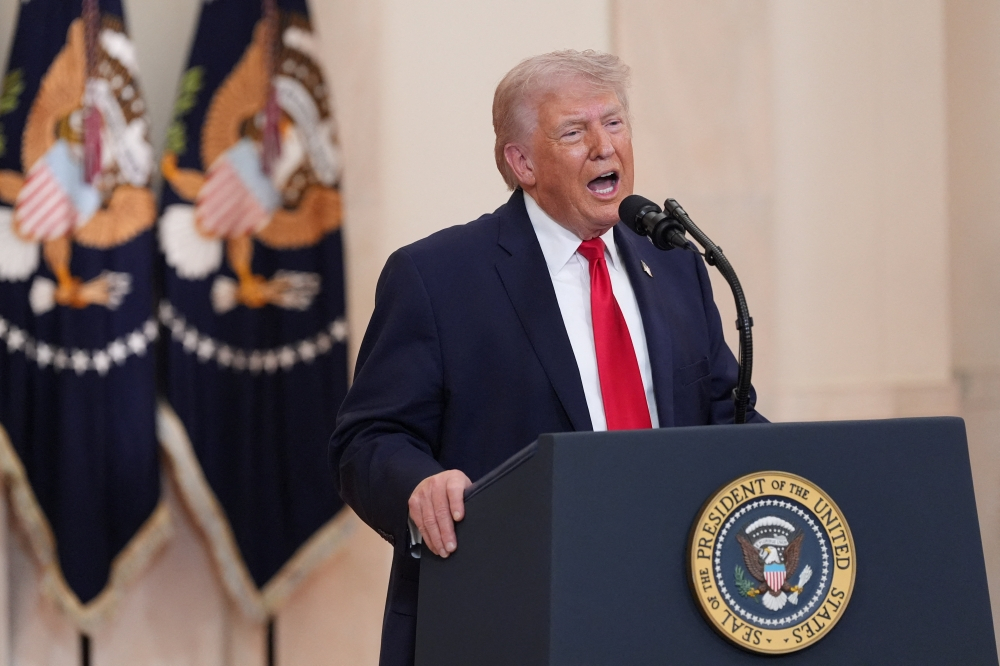
In a highly charged prime-time speech, Donald Trump issued a stark warning toward Iran, declaring that the nation could be “bombed back to the Stone Ages” if tensions continue to escalate. The statement, delivered with urgency and intensity, signals a significant hardening of rhetoric at a time when global audiences are already on edge.
While the speech emphasized strength and deterrence, it notably lacked clarity on one crucial aspect: how and when the ongoing conflict might come to an end. Trump did not provide a defined timeline, strategy for de-escalation, or conditions under which military action would cease. This absence of detail has left analysts, policymakers, and citizens questioning the long-term direction of the situation.
Observers note that such strong language could further inflame tensions in an already volatile geopolitical landscape. Allies and adversaries alike are closely monitoring developments, as any shift in military posture could have far-reaching consequences beyond the immediate region.
Critics argue that rhetoric of this nature risks escalating conflict rather than containing it, while supporters claim it demonstrates necessary resolve in the face of perceived threats. Meanwhile, international leaders are urging restraint, emphasizing the importance of diplomacy and measured responses to avoid further destabilization.
As the situation unfolds, uncertainty remains the dominant theme. With no clear roadmap for peace or resolution outlined, the world is left watching closely, hoping that dialogue and strategic decision-making will prevail over escalation.