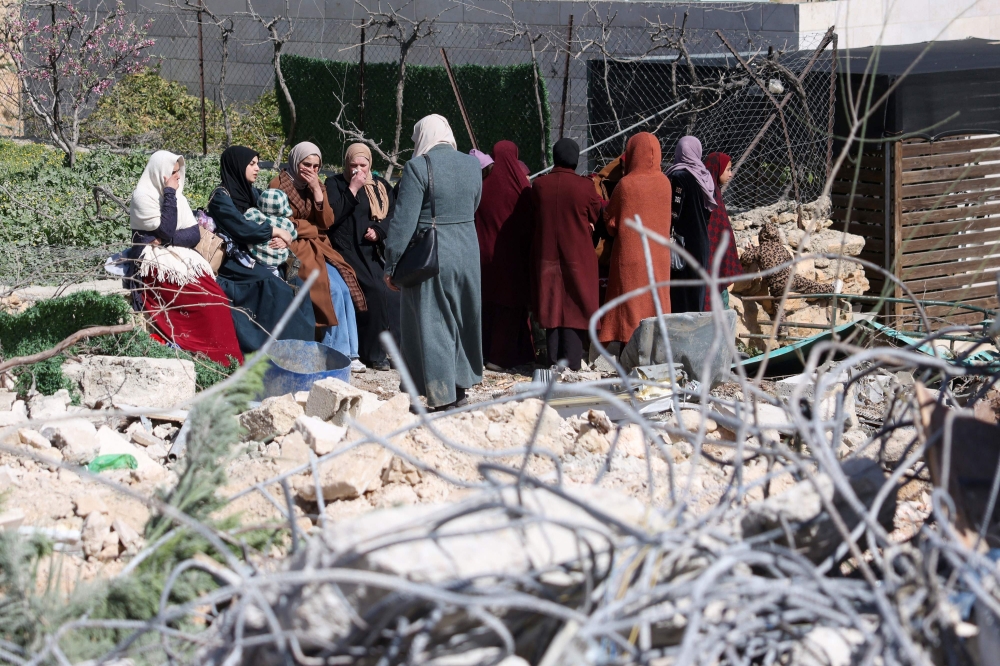
Tensions over the future of the West Bank have once again moved to the center of global debate. On Wednesday, a senior United Nations official cautioned that Israel’s recent actions in the territory amount to what she described as a “gradual de facto annexation.”
Speaking before the Security Council, Rosemary DiCarlo, the UN Under-Secretary-General for Political and Peacebuilding Affairs, said the international community is witnessing steady and unilateral changes that could significantly alter the political and geographic landscape of the occupied territory.
According to her remarks, the latest measures approved by Israel — many supported by far-right ministers — are designed to consolidate and expand Israeli civil authority in parts of the West Bank currently administered by the Palestinian Authority.
“We are witnessing the gradual de facto annexation of the West Bank, as unilateral Israeli steps steadily transform the landscape,” DiCarlo said.
She warned that if fully implemented, these moves could expand Israeli governance into sensitive areas, including Hebron, potentially removing bureaucratic barriers for settlement expansion and easing land purchases and building permits.
What Is Changing on the Ground?
Under the Oslo Accords, signed in the 1990s, the West Bank was divided into three administrative zones:
Area A – Under full Palestinian Authority control
Area B – Under mixed Israeli-Palestinian control
Area C – Under full Israeli control
The West Bank is widely seen as forming the core of any future Palestinian state. However, many on Israel’s religious right consider the territory part of Israel’s historical homeland.
Recent Israeli initiatives are reportedly set to increase Israeli oversight even in areas where the Palestinian Authority currently exercises governance, raising international concern.
Global Reaction: Condemnation and Calls for Stability
A coalition of UN missions representing 85 member states issued a joint statement condemning what they described as unilateral decisions aimed at expanding Israel’s presence in the West Bank.
Meanwhile, Israel’s Foreign Minister Gideon Sa’ar defended the country’s stance, arguing that Jewish historical ties to the land are deeply rooted and documented.
“No other nation in any other place in the world has a stronger right than our historical and documented right to the land of the Bible,” he said.
On the other side, Palestinian ambassador to the UN Riyad Mansour criticized what he called a “colonial narrative” underpinning Israeli policies.
The meeting was chaired by Yvette Cooper, the UK Foreign Secretary, who urged the international community to act carefully and decisively.
“We must prevent the destabilization of the West Bank and preserve the viability of a Palestinian state,” she said, adding that economic pressures on the Palestinian Authority are worsening the situation.
A Broader Political Shift?
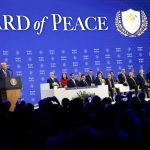
The Security Council meeting comes amid reports that former US President Donald Trump is preparing to convene his so-called “Board of Peace” in Washington. Originally intended to oversee Gaza’s post-war reconstruction following the Hamas-Israel conflict, the initiative is now said to be expanding its focus to broader international conflicts.
US Ambassador to the UN Mike Waltz dismissed criticism of the board, saying it is action-oriented rather than symbolic.
Notably, the United Nations will not be represented at the upcoming board meeting — a move that has sparked questions about shifting diplomatic strategies and the evolving role of international institutions.
Why This Matters
The West Bank issue is not only a regional matter — it carries global consequences.
Changes in governance, territorial control, and settlement policies affect the possibility of a two-state solution, regional stability, and international diplomatic relations.
For many Palestinians, the West Bank represents the heart of a future independent state. For many Israelis, it holds deep historical and religious significance.
At the center of this debate are millions of ordinary people whose daily lives are shaped by political decisions far beyond their control.