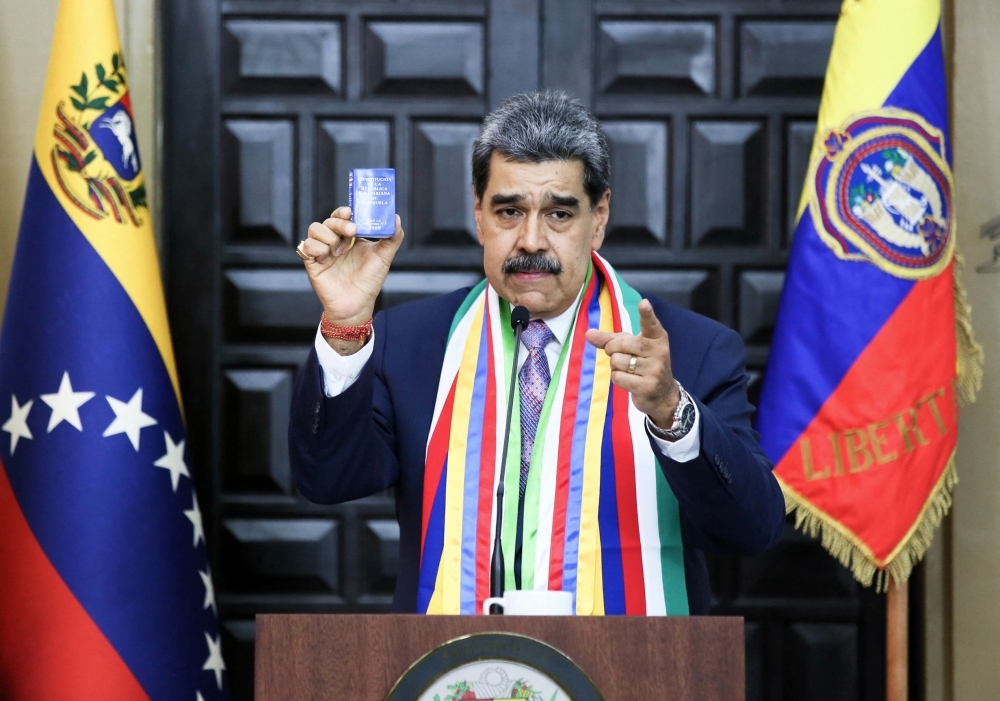
Venezuela has pushed back strongly against fresh threats from former US President Donald Trump, insisting that its crude oil exports continue without disruption despite his warning of a sweeping blockade.
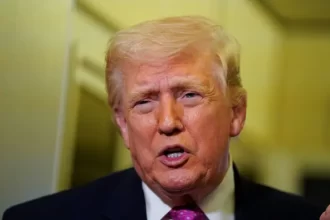
Trump’s announcement, made on Tuesday, represents a sharp escalation in his long-running campaign of economic and military pressure against Venezuela’s leftist government led by President Nicolas Maduro. He declared what he called a “total and complete blockade” of all sanctioned oil tankers entering or leaving Venezuelan waters, framing it as part of a broader effort to reclaim what he described as America’s lost energy interests.
Caracas, however, struck a defiant tone. Venezuela, home to the world’s largest proven oil reserves, said its oil sector was operating as usual and dismissed the threat as political intimidation rather than a practical disruption.
“Export operations for crude and byproducts continue normally. Oil tankers linked to PDVSA operations continue to sail with full security,” Venezuela’s state oil company, Petroleos de Venezuela (PDVSA), said in a statement.
Trump doubled down on his rhetoric by pointing to a heavy US military presence in the Caribbean, including an aircraft carrier, warning that Venezuela was “completely surrounded.” He later reiterated that US forces would block unauthorized vessels and accused Venezuela of having taken “all of our oil,” an apparent reference to the country’s decision years ago to nationalize its oil industry.
In response to what it described as an “escalation of threats,” the Maduro government reached out to the United Nations. President Maduro held a phone call with UN Secretary-General Antonio Guterres, discussing the potential implications for regional peace and stability. Guterres urged both sides to show restraint and work to de-escalate tensions.
‘We Are Not Intimidated’
Oil remains the backbone of Venezuela’s fragile economy, which has suffered a prolonged collapse over the past decade. Trump’s strategy appears designed to weaken Maduro’s domestic support by tightening economic pressure. Still, Venezuela’s military echoed the government’s defiance, saying it was “not intimidated” by the threats.
China, Venezuela’s primary oil customer, also weighed in. In a phone conversation with Venezuelan Foreign Minister Yvan Gil, China’s foreign minister criticized what he described as unilateral bullying and voiced support for national sovereignty and dignity.
Tensions have risen sharply following recent US actions in the region. Last week, the seizure of the oil tanker M/T Skipper during a helicopter raid signaled a more aggressive phase in Washington’s approach. Earlier, the US deployed its largest Caribbean military presence since the 1989 invasion of Panama, officially citing counter-narcotics operations.
Those operations have already resulted in dozens of deaths, with the latest incident claiming four lives. Caracas argues that the anti-drug campaign is a pretext for a broader attempt to destabilize its government and gain control of its oil resources.
The situation has alarmed regional leaders. Mexican President Claudia Sheinbaum publicly criticized the lack of visible UN action and called for stronger international efforts to prevent bloodshed.
Oil Lifeline at Risk
Despite Venezuela’s confident messaging, analysts warn that a full blockade could deal a severe blow to its already weakened economy. Since 2019, US sanctions have forced Venezuela to sell oil at discounted prices, mainly to Asian markets, often through complex and opaque channels.
The country currently produces around one million barrels of oil per day, far below the more than three million it pumped in the early 2000s. According to Capital Economics, a blockade could cut off a critical economic lifeline in the short term, while the long-term impact will depend on how US–Venezuela relations evolve and what Washington’s ultimate objectives are.