
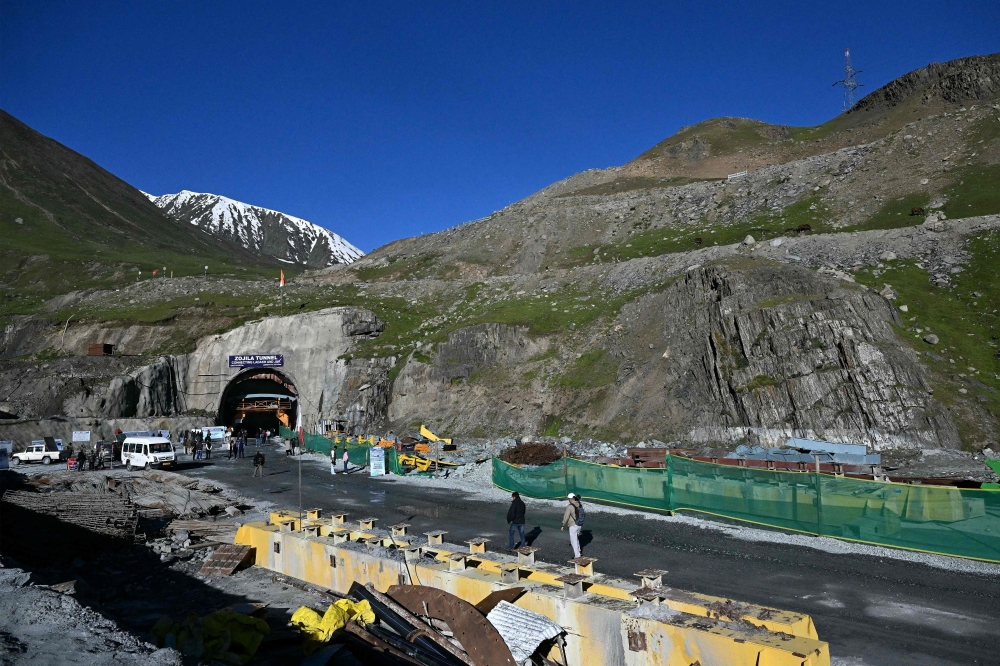
India has marked a significant milestone in one of its most ambitious infrastructure projects by successfully breaking through the final rock section of the strategically important Zojila Tunnel in the Himalayas. The achievement brings the nation one step closer to establishing year-round connectivity between Kashmir and the remote Ladakh region.
The Zojila Tunnel, stretching 13.14 kilometers beneath the rugged Himalayan terrain, is designed to overcome one of the region’s greatest challenges—harsh winter conditions that frequently cut off Ladakh from the rest of the country. Heavy snowfall at the Zojila Pass often blocks road access for months, disrupting transportation, trade, tourism, and essential supply chains.
Speaking during the breakthrough ceremony, India’s Minister for Road Transport and Highways, Nitin Gadkari, described the tunnel as far more than an engineering accomplishment.
“This is not just a tunnel but a lifeline,” he said, emphasizing the project’s importance in connecting Srinagar, the largest city in Indian-administered Kashmir, with Leh, the principal city of Ladakh.
The breakthrough was achieved when engineers completed excavation from both ends of the tunnel, finally connecting the two sections beneath the mountain. The moment was celebrated as a major engineering success, particularly given the challenging weather and high-altitude conditions faced throughout construction.
Work on the tunnel began in 2020, and more than 3,000 workers have contributed to the project. The tunnel runs beneath the Zojila Pass at an altitude of 3,528 meters, making it one of India’s most challenging infrastructure undertakings.
Project engineer Manmohan Singh highlighted the dedication of the workforce throughout the construction process.
“We have worked day and night in difficult weather conditions and completed this stage without any accidents,” he said.
Once completed, the Zojila Tunnel will become India’s longest road tunnel and a crucial component of a broader infrastructure network aimed at strengthening connectivity in the northern Himalayan region. The project is expected to facilitate uninterrupted movement of goods, emergency services, civilian traffic, and military logistics throughout the year.
The tunnel is also part of a larger transportation development initiative that includes four major tunnels and extensive road improvements. Among these projects is the Sonamarg Tunnel, a 6.5-kilometer route expected to further improve accessibility across the region.
In addition to road infrastructure, India has invested heavily in railway development. The recently inaugurated railway line connecting the plains to Kashmir includes the Chenab Rail Bridge, recognized as the world’s highest railway arch bridge. Opened by Prime Minister Narendra Modi in June 2025, the rail corridor links Udhampur with Srinagar and enhances connectivity across the region.
The infrastructure expansion comes amid ongoing geopolitical significance surrounding Ladakh and the broader Himalayan frontier. India and China share a lengthy border that has historically experienced periods of tension, although relations have shown signs of improvement in recent years.
For residents, businesses, travelers, and security forces, the Zojila Tunnel represents more than a transportation project. It promises greater economic opportunities, improved accessibility, faster emergency response capabilities, and enhanced regional development.
As construction progresses toward final completion, the tunnel stands as a symbol of engineering determination and a transformative step toward ensuring that Ladakh remains connected to the rest of India regardless of season or weather conditions.
Human Perspective:
Beyond the statistics, machinery, and engineering achievements, the Zojila Tunnel represents hope for thousands of families living in remote mountain communities. For decades, harsh winters have isolated people from healthcare, education, business opportunities, and even loved ones. This tunnel is expected to change daily life in meaningful ways, reducing travel hardships and creating new possibilities for economic growth and tourism. It is a reminder that infrastructure is not only about roads and tunnels—it is ultimately about connecting people, improving lives, and building stronger communities.