Canada is preparing to announce its next response to new US tariffs as tensions between two of North America’s closest trading partners continue to intensify.
The Canadian government is expected to outline new measures designed to protect Canadian workers, businesses and key industries after negotiations with Washington failed to produce an agreement to prevent additional US tariffs.
The latest escalation marks another difficult chapter in the trade relationship between Canada and the United States, with businesses on both sides now facing greater uncertainty over costs, supply chains and future investment.
Canada prepares retaliation against new US tariffs
Canadian officials said finance, industry, labor and other ministers would address the country’s response during a press conference in Ottawa.
The announcement follows the failure of Canada and the United States to reach a deal after weeks of negotiations. New US tariffs on selected Canadian products have now taken effect, prompting Ottawa to prepare retaliatory measures.
Prime Minister Mark Carney has said Canada’s objective throughout the negotiations was to secure the strongest possible agreement for Canadians rather than accept a deal simply to end the dispute.
Canada has indicated that its response could target important US industries, including steel and dairy, while additional measures could affect products connected to agriculture, manufacturing, paper and electronics.
For Canadian companies that depend heavily on access to the US market, the situation is becoming increasingly difficult to predict.
Trump threatens higher tariffs on Canadian automobiles
The dispute has also moved deeper into the automotive industry.
US President Donald Trump has announced plans to increase tariffs affecting Canadian automobiles, adding further pressure to a sector that is deeply integrated across the US-Canada border.
The automotive supply chain between the two countries is highly interconnected, meaning tariffs can have consequences far beyond the company or country directly paying them.
Higher costs can eventually affect manufacturers, suppliers, workers and consumers.
The development has drawn strong criticism from Canadian officials and provincial leaders, who argue that continued tariff escalation could damage industries on both sides of the border.
Canada looks beyond the US for future trade
Prime Minister Carney has emphasized that Canada cannot rely entirely on its relationship with the United States.
According to Carney, strengthening domestic industries and expanding Canada’s trade relationships with other countries has been part of the government’s broader strategy.
That approach could become increasingly important as Canada faces the reality that its economy has historically been deeply connected to the US market.
Canadian exports to the United States account for a significant majority of the country’s total exports, making the current dispute particularly consequential.
But the tariff confrontation is also forcing Canadian policymakers and businesses to consider a bigger question: what happens when dependence on one major trading partner becomes a vulnerability?
Political tensions continue to rise
The trade dispute has moved beyond tariffs and into increasingly heated political exchanges.
Carney has accused US negotiators of pushing for terms that Canada considered unacceptable, including issues affecting major Canadian industries and concerns surrounding Canada’s ability to develop trade relationships with other countries.
He has also raised concerns about proposals and statements involving Quebec’s French-language identity and culture.
US Vice President JD Vance, meanwhile, has criticized Canada for what Washington described as unreasonable demands during the final stages of negotiations.
The increasingly confrontational rhetoric demonstrates how quickly an economic dispute can develop into a broader political conflict.
Canadian public supports a tougher approach
The tariff dispute is also influencing public opinion inside Canada.
Recent polling reported strong support among Canadians for the government’s decision to walk away from negotiations rather than accept an agreement it considered unfavorable.
At the same time, economic uncertainty remains a major concern.
Many Canadians are worried about the potential effect of tariffs on employment, particularly in industries closely connected to international trade and manufacturing.
That creates a difficult balancing act for the Canadian government: defend national economic interests while limiting the damage that a prolonged trade war could cause to workers and businesses.
Ontario warns of further consequences
Ontario Premier Doug Ford has also strongly criticized Trump’s tariff threats, particularly those affecting the automotive sector.
Ontario plays a central role in Canada’s automotive industry, making developments in US trade policy particularly important for the province.
Ford has previously indicated that Canada could consider additional measures, including potential actions involving electricity exports to the United States.
The possibility of further economic retaliation raises concerns that the dispute could expand into multiple sectors.
What began as a disagreement over tariffs could therefore develop into a much broader confrontation involving energy, manufacturing, agriculture, technology and other areas of cross-border commerce.
Washington says Canada needs the United States
The Trump administration has defended its tariff strategy by arguing that Canada has benefited unfairly from its relationship with the United States.
Trump has repeatedly claimed that the United States does not need Canada and has argued that Canada is more dependent on the American market than the other way around.
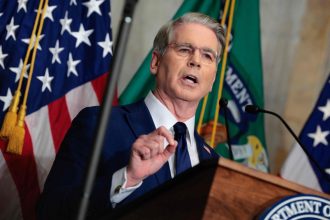
US Trade Representative Jamieson Greer has also said Washington offered concessions during negotiations, including possible reductions in tariffs affecting Canadian softwood lumber, automobiles and steel.
Canada ultimately rejected the proposed terms.
The two governments now face the difficult task of determining whether negotiations can restart before the economic consequences become even more significant.
USMCA adds another layer of uncertainty
The tariff dispute is unfolding alongside another major issue: the future of the United States-Mexico-Canada trade agreement.
The three countries are expected to deal with revisions to the agreement, commonly known as USMCA, adding another layer of uncertainty to North American trade.
For companies that have spent decades building cross-border supply chains around relatively predictable trade rules, the current environment represents a major change.
Manufacturers may need to reconsider sourcing strategies, exporters may need to explore alternative markets, and businesses may have to prepare for higher costs.
What happens next?
The next stage of the dispute will depend heavily on how Canada structures its retaliation and whether Washington responds with additional tariffs.
If both countries continue escalating, the economic impact could spread across industries and eventually reach consumers through higher prices and increased business costs.
If negotiations resume, however, the current pressure could eventually create an opportunity for both sides to negotiate a broader agreement.
For now, businesses are being forced to prepare for uncertainty.
A trade war is never just about tariffs
Behind every tariff announcement are real companies making difficult decisions.
A manufacturer may have to reconsider where it buys materials. A supplier may have to find a new customer. A worker may worry about whether production will continue. A consumer may eventually pay more for products affected by rising costs.
That is why the Canada-US trade dispute matters far beyond government press conferences and political statements.
Canada and the United States have spent decades building one of the world’s most deeply connected economic relationships. When that relationship comes under pressure, the consequences can travel through supply chains, communities and households on both sides of the border.
The question now is not simply who will impose the next tariff.
The bigger question is how far both countries are willing to go before the cost of the trade war becomes greater than the cost of compromise.