India’s National Security Advisor Ajit Doval has arrived in Beijing for a two-day visit focused on the long-running India-China Himalayan border dispute, as both countries continue efforts to stabilize relations ahead of the upcoming BRICS summit in New Delhi.
Doval, who serves as India’s Special Representative for the India-China Boundary Question, is scheduled to hold talks with Chinese Foreign Minister Wang Yi on Tuesday. During his visit, he is also expected to meet Chinese Vice President Han Zheng.
The discussions come more than six years after the deadly 2020 border clash that severely strained relations between the two Asian powers. Since then, officials from both countries have held multiple rounds of talks aimed at reducing tensions and maintaining peace along their disputed frontier.
China’s Foreign Ministry said the two sides would continue discussions based on agreements reached by their leaders, with a focus on addressing the boundary issue and protecting peace and stability in border areas.
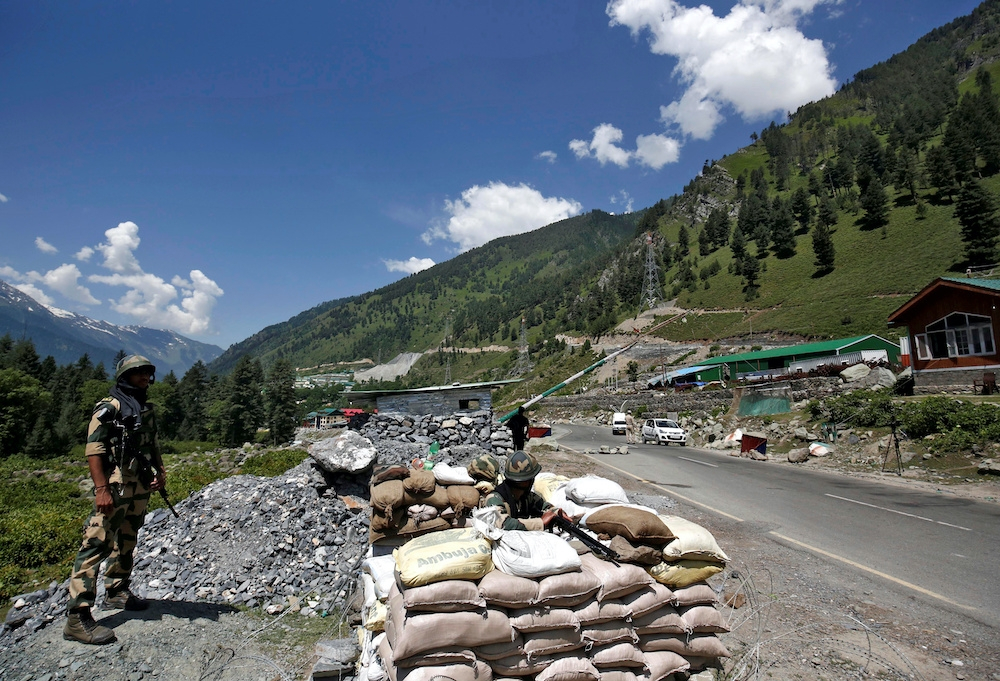
India and China share a roughly 3,500-kilometre disputed border, stretching across some of the world’s most challenging mountainous terrain. Both nations have historically accused the other of attempting to change the status quo along the frontier.
The border issue remains particularly sensitive in Arunachal Pradesh, a northeastern Indian state claimed by China as part of southern Tibet. India firmly maintains that Arunachal Pradesh is an integral part of the country.
Earlier this month, India’s main opposition party raised concerns over media reports alleging that Indian and Chinese military patrols had encountered each other in Arunachal Pradesh in late July. The Indian government rejected those reports.
Despite the unresolved territorial dispute and continued strategic mistrust, relations between New Delhi and Beijing have shown signs of gradual improvement. Direct flights have resumed, while steps toward restoring border trade have also indicated an effort to rebuild practical engagement between the two countries.
The timing of Doval’s visit is significant. India is preparing to host the BRICS summit in New Delhi on September 12 and 13, where global issues including the Middle East conflict, international trade and the rapidly changing global power structure are expected to dominate discussions.
China’s President Xi Jinping is among the key leaders whose participation India hopes to see at the summit.
BRICS was established in 2009 by Brazil, Russia, India, China and South Africa as a platform for major emerging economies seeking a stronger voice in global institutions. The group has since expanded to include additional member countries, increasing its geopolitical and economic significance.
For India and China, however, the border question remains impossible to ignore. Every diplomatic meeting carries significance because stability along the Himalayan frontier can influence not only bilateral relations but also wider cooperation between two of Asia’s most powerful countries.
For people living in the border regions, these diplomatic discussions are about much more than official statements and political strategy. Peace along the frontier means greater security for communities, fewer fears of military confrontation and more room for trade, development and everyday life to continue without the shadow of conflict.
Doval’s Beijing visit therefore comes at an important moment. Whether these talks produce a major breakthrough or simply keep tensions under control, the message is clear: continued dialogue remains essential when the stakes are this high.