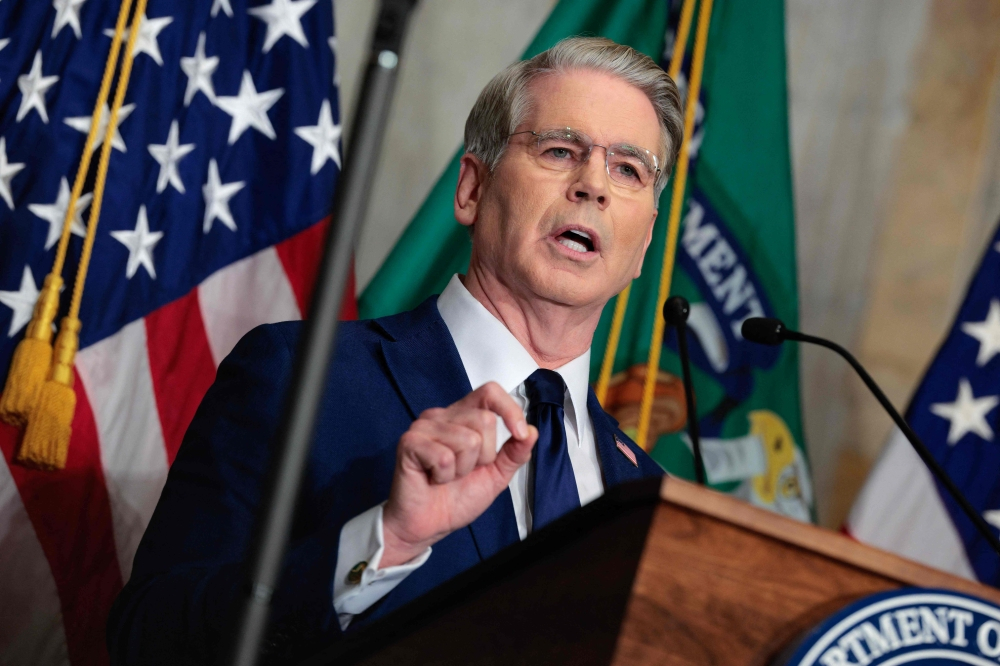
The United States is moving to intensify economic pressure on Iran, with Treasury Secretary Scott Bessent warning that Washington intends to cut off the financial lifelines supporting Tehran and impose serious consequences on countries and businesses that continue dealing with the Iranian government.
Speaking to journalists, Bessent described the strategy as an effort toward the “economic asphyxiation” of Iran, saying the United States wants to isolate Tehran economically until it can no longer rely on the international networks that have helped sustain its economy.
The announcement comes after months of conflict, stalled peace efforts and growing uncertainty around the Strait of Hormuz, one of the world’s most important routes for global energy shipments.
Washington expands its sanctions strategy
Bessent said the United States would broaden its use of secondary sanctions, potentially affecting companies and financial institutions outside Iran that continue to conduct business connected to Tehran.
The expanded measures are expected to focus on several important sectors, including digital assets, technology, gold, aviation and shipping.
Washington has also announced sanctions against 60 individuals, companies and vessels accused of helping Iran generate oil revenue, obtain weapons or support cyber operations.
The measures extend beyond Iran’s borders, affecting entities connected to countries and financial centers including the United Arab Emirates, Hong Kong, China, Singapore and parts of Europe.
Bessent also issued a particularly strong warning to organizations involved in financial transactions on behalf of Iran, saying entities facilitating money laundering could lose access to the US dollar financial system.
For international businesses, banks and trading companies, the message is clear: dealing with Iran could increasingly involve significant financial and regulatory risks.
Trump administration pressures international partners
Bessent said President Donald Trump had been contacting world leaders and encouraging them to reduce or end interactions with Tehran.
The strategy reflects Washington’s attempt to make the sanctions campaign broader than previous rounds of restrictions. Rather than focusing only on Iranian entities, the United States is seeking to pressure international companies and financial institutions that help Iran maintain access to global markets.
The approach could create difficult choices for countries that maintain important commercial relationships with Tehran while also relying heavily on access to the US financial system.
Iran says it is prepared
Tehran has rejected the latest US threats and signaled that it has been preparing for increased economic pressure.
Iranian Economy Minister Ali Madanizadeh said the government had anticipated such measures and had developed a long-term plan to manage the consequences.
Iran has lived under extensive international sanctions for decades and has developed complicated financial and trading networks to continue selling goods and generating revenue.
Before the latest escalation, Iran was still exporting millions of barrels of oil, with China remaining a major destination.
The country’s experience with sanctions has also shaped its expectations about the latest US campaign.
Ali Vaez of the International Crisis Group said Washington has several ways to impose significant economic pressure, but Tehran has already experienced many forms of sanctions and believes it can absorb substantial economic damage.
The danger, however, is that economic pressure could lead to further confrontation rather than a quick political settlement.
Strait of Hormuz becomes a critical pressure point
The economic dispute is unfolding alongside growing tension around the Strait of Hormuz.
According to maritime tracking data cited in the report, Iranian oil exports through the strategic waterway have fallen dramatically from approximately two million barrels per day before the war to around 400,000 barrels per day by mid-August.
The Strait of Hormuz is particularly important because disruption there can affect energy markets far beyond the Middle East.
The risks were highlighted again when an oil tanker was reportedly struck by an unknown projectile off the coast of Oman. The vessel suffered damage, although there were no reported casualties.
Any further disruption around the waterway could increase pressure on energy markets and create new concerns for international shipping companies.
Military action has not been ruled out
Despite the growing emphasis on economic measures, Washington has not removed the possibility of military action.
US Defense Secretary Pete Hegseth said that the shift toward economic pressure should not be interpreted as an end to military options.
He indicated that the United States was not ruling out potential strikes in or around the Strait of Hormuz or Iran.
That warning adds another layer of uncertainty to an already fragile situation.
For governments and businesses watching the crisis, the question is no longer simply whether sanctions will increase. It is whether economic pressure, diplomatic negotiations and military threats can coexist without triggering another escalation.
Ordinary Iranians face the consequences
Behind the geopolitical confrontation are millions of ordinary people already struggling with the effects of years of inflation and economic instability.
For many Iranian families, another wave of sanctions could mean higher prices, reduced purchasing power, fewer economic opportunities and greater uncertainty about the future.
A 32-year-old pharmacist in Tehran, Sarah Hassanbeigi, expressed the frustration felt by many ordinary citizens, saying she did not believe people could continue absorbing this level of pressure for much longer.
That human dimension is easy to lose when sanctions are discussed in terms of governments, banks, oil exports and international diplomacy.
But every restriction imposed on an economy can eventually reach households, workplaces, shops and families.
Pakistan attempts to keep diplomacy alive
While Washington increases economic pressure, regional diplomatic efforts continue.
Pakistan’s army chief, Asim Munir, visited Iran and held separate meetings with Iran’s president, chief negotiator and the head of its highest national security body.
Pakistan has played an important role in previous mediation efforts and was involved in talks that helped produce an April ceasefire before the agreement eventually collapsed.
Islamabad’s position is particularly delicate because Pakistan has significant economic and regional interests connected to Iran.
Any new US sanctions affecting Iranian trade could therefore create difficult choices for Pakistan and other neighboring countries that maintain commercial relationships with Tehran.
Oman’s foreign minister was also expected to travel to Iran as Muscat and Tehran continued discussions over arrangements governing passage through the Strait of Hormuz.
What happens next could affect more than Iran
The latest US strategy represents more than another round of sanctions.
It is a warning to international companies, banks, shipping operators, technology firms and governments that maintaining commercial links with Iran could become increasingly costly.
At the same time, Iran’s long experience with sanctions suggests that economic isolation may not automatically produce political surrender.
The greatest concern is what happens when economic pressure meets military tension, diplomatic deadlock and growing frustration among ordinary people.
The world will now be watching three developments closely: whether negotiations can restart, whether the Strait of Hormuz remains open to international shipping and whether the expanding sanctions campaign triggers further retaliation.
For ordinary people in Iran and across the region, the stakes are deeply personal. Higher prices, disrupted trade, uncertainty and fear do not remain confined to government offices or diplomatic meetings. They eventually find their way into homes and everyday lives.
The coming weeks could determine whether the latest pressure campaign becomes a pathway toward negotiations or another step toward a much wider confrontation.