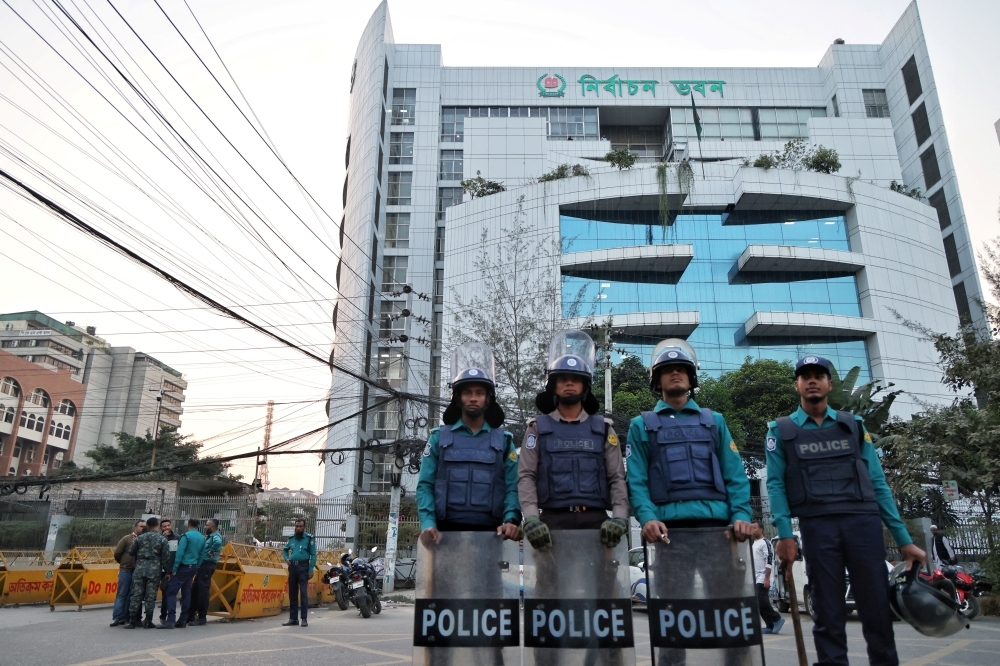
Bangladesh has officially scheduled its next national election for February 12, the Election Commission announced on Thursday. This pivotal vote marks the nation’s first general election since the student-led uprising that brought down former prime minister Sheikh Hasina last year.
On the same day, citizens will also vote on a historic democratic reform charter, according to Chief Election Commissioner AMM Nasir Uddin, who addressed the nation in a televised broadcast.
Bangladesh, a Muslim-majority country with a population of 170 million, has faced intense political turbulence since Hasina was ousted in August 2024, ending her 15-year grip on power, often criticized as autocratic. Her party, the Awami League, has since been barred from contesting in the upcoming polls.
Leading the country through its transition has been Nobel Peace Prize laureate Muhammad Yunus, who returned from exile to head the caretaker government at the request of protest leaders. He will step down once the election is completed.
The Chief Election Commissioner urged all parties and voters to commit to this critical democratic moment, calling the election a chance to “play a historical role in our democratic journey.”
BNP Expected to Dominate, Amid Leadership Challenges
The Bangladesh Nationalist Party (BNP), led by former three-time prime minister Khaleda Zia, is predicted to come out ahead. However, the party’s leadership faces significant hurdles.
Zia, 80, remains in critical condition in intensive care in Dhaka, battling long-term health issues compounded by her imprisonment under Hasina’s government.
Her son and political successor, Tarique Rahman, has lived in exile in Britain for 17 years, claiming he fled due to political persecution. Despite insisting he will contest the election and being widely viewed as a favorite for the premiership, he has not returned to visit his ailing mother.
A Crowded and Consequential Ballot
Voters will select representatives for 300 parliamentary constituencies, with an additional 50 seats reserved for women, allocated proportionally to each party’s win total. The country has 127 million registered voters, including over four million first-time voters.
Despite its ban, the Awami League still holds a strong loyal base. Human Rights Watch criticized the ban as “draconian.”
Hasina, 78, remains in hiding in India after being sentenced to death in absentia for crimes against humanity. She has warned that elections without her party could “sow the seeds” of further division.
Other major contenders include:
Jamaat-e-Islami, the largest Islamist party
Jatiya Party, once aligned with Hasina
National Citizens Party, founded by student leaders who drove the uprising
The previous election, held in January 2024, delivered Hasina a fourth consecutive term—a result dismissed by opposition groups as illegitimate.
“Bangladesh Stands at the Threshold of a New Future”
Caretaker leader Muhammad Yunus, 85, welcomed the announcement of the election date, calling it a critical opportunity for citizens to shape the future.
“Bangladesh is standing at the threshold of a new future,” he said. “With your active and responsible participation, we can build a modern, just, and prosperous country.”