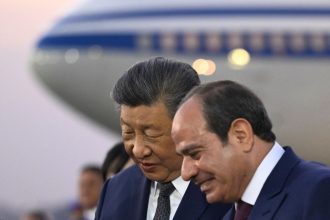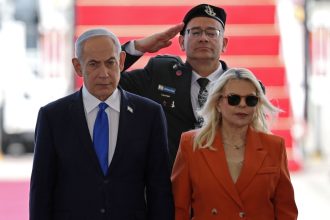
Israel’s Prime Minister Benjamin Netanyahu has agreed to join a new international initiative led by former US President Donald Trump, known as the “Board of Peace,” according to an official statement released by Netanyahu’s office today.
The statement confirmed that Netanyahu accepted Trump’s invitation to become a member of the board, which is expected to include global leaders brought together with the stated aim of addressing and resolving conflicts around the world.
Originally, the concept of the Board of Peace was linked to overseeing the reconstruction of Gaza in a post-war scenario. However, the charter circulated among invited countries suggests a much broader mandate. The document does not limit the board’s role to the Palestinian territory and outlines ambitions that extend to conflict-affected and conflict-prone regions globally. According to the charter, permanent membership reportedly requires a financial commitment that can reach up to US$1 billion.
The board’s mission, as described in the charter’s preamble, is to promote stability, restore lawful and dependable governance, and secure lasting peace in regions facing ongoing or potential conflict. Trump is set to chair the board and will also serve separately as the representative of the United States.
Invitations have reportedly been sent to dozens of countries and leaders, including close US allies as well as long-standing adversaries. France, a traditional ally of Washington, has indicated that it does not plan to participate.
Alongside the announcement of the Board of Peace last week, Trump also revealed plans for a “Gaza Executive Board” that would function under the broader body. This proposed executive board would include Turkish Foreign Minister Hakan Fidan and Qatari diplomat Ali Al-Thawadi, a move that has drawn strong objections from Netanyahu.
Relations between Israel and Turkey have significantly worsened since the war in Gaza began in October 2023, following an unprecedented attack by Hamas on Israel, further complicating regional diplomacy.
In parallel, a separate committee made up of 15 Palestinian technocrats has been formed to manage Gaza’s day-to-day administration as part of the second phase of a truce plan announced by Trump in October. This committee is led by Ali Shaath, a Gaza native and former deputy minister in the Palestinian Authority, and has begun its initial work in Cairo this week.
Beyond official statements and political maneuvering, this development highlights how global power dynamics are continuing to shift. For people living in conflict zones, decisions made in distant rooms by world leaders are not abstract diplomacy, they shape daily life, safety, and the hope for a future without war. Whether this new board becomes a genuine path toward peace or another contested global forum remains to be seen, but the stakes for the region and the world are undeniably high.