In a move that many are calling historic and unprecedented, Lebanon’s government has officially banned all military and security activities carried out by Hezbollah outside the authority of the state. The decision, announced after an emergency cabinet meeting, has sent shockwaves through the country and across the region.
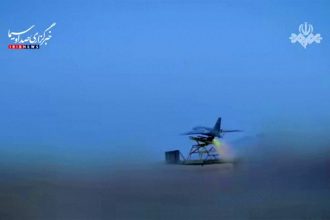
Hezbollah, which holds seats in both parliament and government, strongly condemned the decision. The announcement came just hours after the group said it had launched rockets and drones toward Israel, describing the action as retaliation for the killing of Iran’s Supreme Leader in US-Israeli attacks.
The situation escalated quickly.
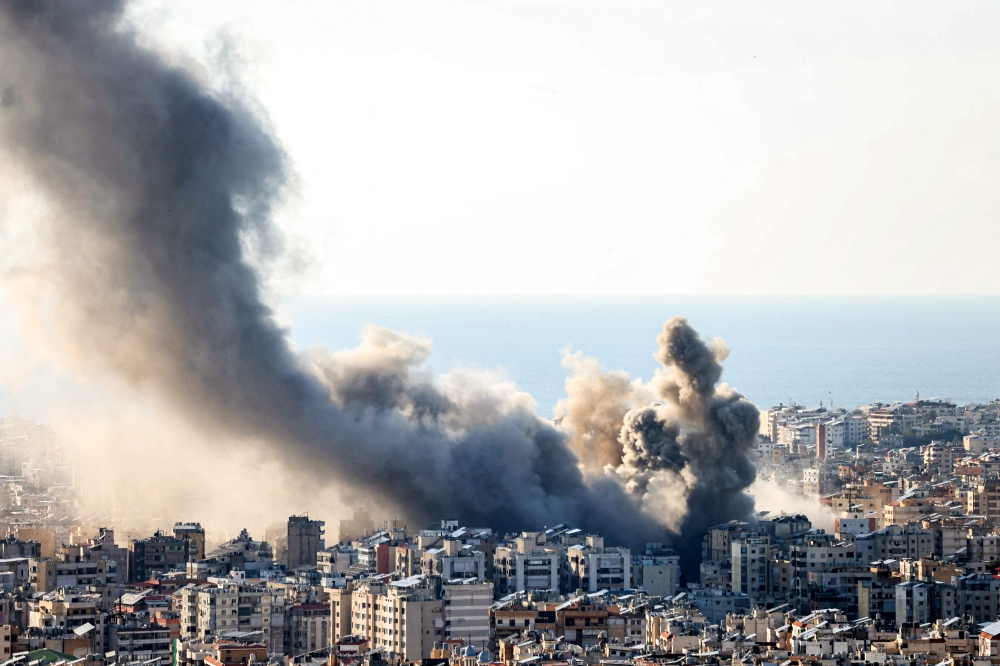
Israel responded with a wave of airstrikes targeting Beirut’s southern suburbs and dozens of villages in southern Lebanon. Officials vowed to make Hezbollah pay a “heavy price.” According to the Lebanese government, at least 52 people were killed and more than 150 wounded in the bombardment.
The Israeli military later stated it had completed a broad series of strikes on Hezbollah targets, claiming that over 70 weapons storage sites, missile launchers, and related facilities were hit.
Government Takes a Firm Stand
Prime Minister Nawaf Salam addressed the nation following the emergency meeting, making the government’s position clear.
He declared that Lebanon “absolutely and unequivocally rejects any military or security actions launched from Lebanese territory outside the framework of legitimate state institutions.”
The cabinet’s decision requires Hezbollah to immediately cease all independent military and security operations and hand over its weapons, declaring such activities illegal.
The order also instructed the country’s military and security forces to take immediate steps to prevent further rocket or drone launches from Lebanese soil.
Justice Minister Adel Nassar confirmed that judicial authorities had directed security agencies to arrest those responsible for launching the rockets, as well as anyone involved in planning or instigating such attacks.
Interestingly, ministers affiliated with the Amal Movement — Hezbollah’s key ally — reportedly supported the cabinet’s decision, signaling a potentially significant political shift.
Hezbollah Pushes Back
Hezbollah’s parliamentary bloc leader, Mohammed Raad, criticized what he described as “rash decisions,” arguing that the Lebanese people had expected the government to reject Israeli aggression instead.
In a statement released early Tuesday, Hezbollah described its rocket and drone launches as defensive and justified. The group claimed diplomatic efforts had failed to force Israel to respect a ceasefire agreement reached 15 months ago.
Notably, this latest statement avoided direct reference to the broader US-Israeli conflict with Iran, marking a shift in tone compared to previous declarations.
Civilians Caught in the Middle
As the strikes intensified, panic spread through Beirut.
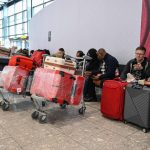
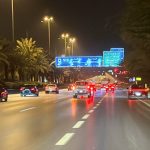
Families fled in cars and on motorcycles, carrying whatever belongings they could manage. Major roads were choked with traffic as residents scrambled to leave targeted areas.
One resident, Ali Deeb, shared his frustration online:
“My baby daughter and I have been in the car for three and a half hours… for what? Why? For whom?”
Schools, universities, and educational institutions were ordered closed due to deteriorating security conditions. The US Embassy in Lebanon renewed its urgent call for American citizens to leave the country immediately.
For many Lebanese families, this feels like history repeating itself — years of fragile peace shattered by renewed violence.
Renewed Strikes and Regional Fallout
Israeli airstrikes also hit buildings linked to Al-Qard al-Hassan, a Hezbollah-affiliated financial institution previously sanctioned by Washington. Evacuation warnings were issued for several towns in southern and eastern Lebanon, as well as Beirut’s southern suburbs.
Palestinian Islamic Jihad confirmed that its commander in Lebanon was killed during the strikes.
Explosions continued to echo across Beirut as additional raids were reported. The state-run National News Agency confirmed new Israeli attacks on southern districts of the capital.
Lebanese authorities have repeatedly stated that they do not want their country drawn further into regional conflict, which escalated following a massive US-Israeli strike on Iran.
A ceasefire reached in November 2024 after a year-long war between Israel and Hezbollah was meant to stabilize the border. However, Israel has continued targeted strikes, accusing Hezbollah of attempting to rearm.
The truce is overseen by an international monitoring committee that includes Lebanon, Israel, the United States, France, and UN peacekeepers.
Prime Minister Salam has called on the United States and France to secure a clear and final commitment from Israel to cease all attacks across Lebanese territory. He also expressed the government’s readiness to resume negotiations under international supervision, with civilian participation.
A Nation at a Crossroads
Lebanon now stands at a defining moment.
The government’s decision to formally ban Hezbollah’s independent military operations marks a turning point in the balance between state authority and armed political groups. Whether this move strengthens Lebanon’s sovereignty or deepens internal divisions remains uncertain.
What is clear is that ordinary people are paying the price.
Families sitting in gridlocked traffic. Parents explaining explosions to their children. Students unsure if schools will reopen. Business owners watching another cycle of destruction unfold.
Behind every headline is a human story — fear, exhaustion, resilience.
Lebanon’s future now depends not only on political negotiations and military calculations, but on whether leaders on all sides choose de-escalation over retaliation.
Because at the end of the day, it is not governments or armed groups who suffer most — it is the people trying to live ordinary lives in extraordinary times.