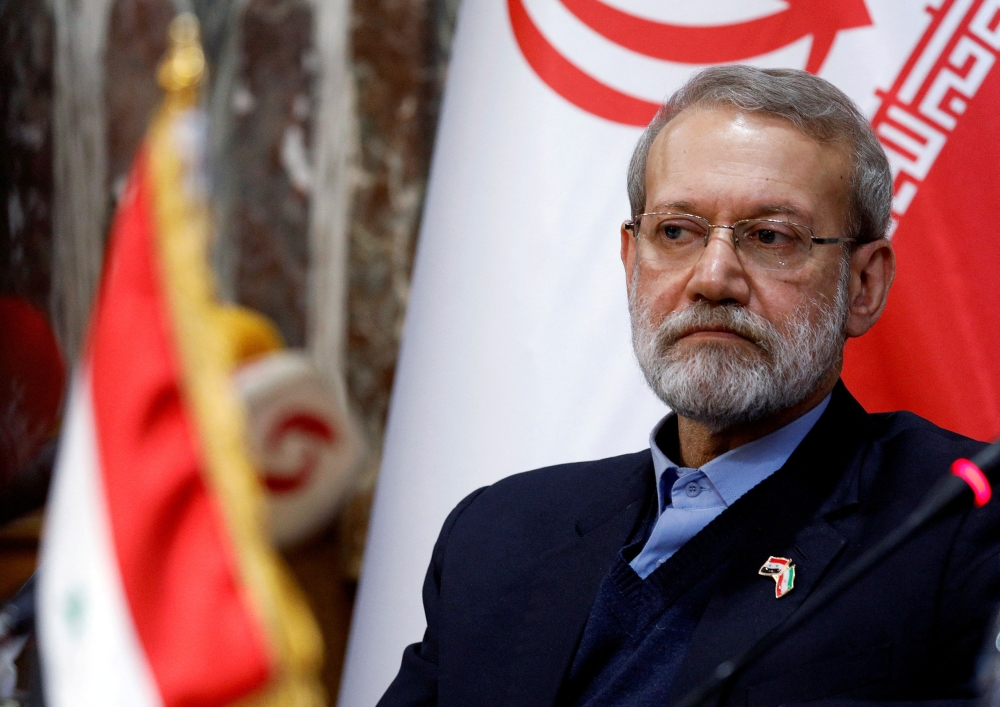
Iran is preparing to lay to rest one of its most powerful security figures, Ali Larijani, as tensions across the Middle East continue to spiral. The funeral, set to take place in Tehran, comes just hours after Iran launched a wave of missile strikes targeting Israel, marking a sharp escalation in an already volatile conflict.
The strikes, described as a direct act of retaliation, hit areas near Tel Aviv, leaving at least two people dead and causing significant damage. At the same time, multiple Gulf nations moved swiftly to intercept missiles and drones headed toward strategic locations, including areas housing United States military assets.
Larijani’s death, confirmed alongside that of Gholamreza Soleimani, has sent shockwaves through Iran’s political and military leadership. Both men were considered key pillars of Iran’s defense and regional strategy. Their funerals are expected to draw large crowds, reflecting their influence and the gravity of the moment.
The broader conflict intensified after the killing of Ali Khamenei in late February, an event that ignited a wider regional war involving multiple nations and armed groups. What began as targeted strikes has now evolved into a multi-front confrontation stretching from Israel to Lebanon and beyond.
In Beirut, Israeli airstrikes lit up the skyline, with plumes of smoke rising over central districts. The strikes are part of ongoing operations against Iran-backed Hezbollah forces, which entered the conflict following earlier escalations.
Iran’s military leadership has made its position clear. Army chief Amir Hatami warned that the country’s response would be “decisive and regrettable,” signaling that further retaliation is likely.
Meanwhile, the economic ripple effects are already being felt globally. Iran has moved to disrupt shipping through the Strait of Hormuz, a vital artery for the world’s oil supply. With crude prices hovering near $100 per barrel, concerns are mounting over the long-term impact on global markets.
Iranian Foreign Minister Abbas Araghchi cautioned that the consequences of the conflict are only beginning to unfold, warning of wider global disruption.
The United States has also stepped up its military involvement. Under the leadership of Donald Trump, American forces deployed powerful bunker-busting bombs against Iranian missile installations near the coast, aiming to secure maritime routes and deter further attacks.
On the Israeli side, Prime Minister Benjamin Netanyahu reiterated his hardline stance, while military officials confirmed ongoing efforts to target Iran’s new leadership, including Mojtaba Khamenei.
Regional voices have also weighed in. Turkey’s Foreign Minister Hakan Fidan condemned Israel’s actions, calling them unlawful assassinations that risk pushing the region further into chaos.
As missiles continue to fly and alliances are tested, the human cost of the conflict keeps rising. Lives lost in Israel, Lebanon, and beyond are a stark reminder that behind every headline are families, communities, and futures being torn apart.
At its core, this is no longer just a geopolitical struggle—it is a deeply human crisis. Ordinary people are waking up to fear, uncertainty, and loss, caught in the crossfire of decisions made far above them. As leaders trade warnings and weapons, the world watches, hoping for restraint, resolution, and a return to peace before the damage becomes irreversible.