
Bangladesh’s largest Islamist party has announced a seat-sharing deal with a political coalition made up of student leaders from last year’s popular uprising — a move that has triggered disagreement within the student group itself.
Jamaat-e-Islami, seeking to re-enter mainstream politics through next year’s general elections, has aligned with the National Citizen Party (NCP), a grouping that emerged from the 2024 student-led movement which ended the 15-year rule of former prime minister Sheikh Hasina. For Jamaat, the 12 February vote is seen as the biggest opening in decades after years of political restrictions.
The agreement was reached after prolonged negotiations, though several NCP members publicly cautioned against partnering with Jamaat. Alongside the NCP pact, Jamaat chief Shafiqur Rahman also confirmed a deal with the Liberal Democratic Party, saying the alliance had now expanded to 10 members.
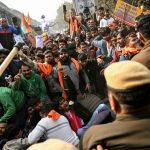
The coalition is largely composed of smaller Islamist parties that historically held only limited parliamentary representation. Meanwhile, the country of 170 million remains unsettled by political uncertainty after last year’s uprising. The resurgence of Islamist groups has raised concerns among minority communities — including Hindus and Sufi Muslims — who collectively constitute under 10 percent of the population. Some hardline factions have also called for curbs on cultural activities they deem “un-Islamic,” including festivals, women’s sports events, and traditional celebrations.
Before the alliance announcement, at least 30 NCP members wrote to party chief Nahid Islam, objecting to the partnership. They argued that NCP’s commitment to democratic and centrist politics conflicts with Jamaat’s ideology. Some NCP candidates stepped down in protest, and senior party members warned of potential political costs.
NCP leaders, however, framed the deal as pragmatic rather than ideological. They said the partnership aims to secure a competitive election and prevent the concentration of power. The party reiterated its agenda of reform, justice, and opposition to corruption and political domination.
With the Awami League barred from contesting, the Bangladesh Nationalist Party (BNP) is currently seen as the frontrunner. Its momentum has grown after acting chairman Tarique Rahman returned to Bangladesh last week following 17 years abroad.