Tensions across the Middle East surged again today after Iran launched a new wave of missiles and drones targeting multiple locations in the region. The attacks came only hours after United States President Donald Trump suggested that negotiations to end the conflict may be moving forward.
The war, which erupted on February 28 following joint United States and Israeli strikes on Iran, has rapidly expanded beyond its initial front lines. What started as a direct confrontation has now drawn several countries into the crisis and shaken global energy markets, leaving governments, businesses, and ordinary people bracing for uncertainty.
According to statements from Iran’s Revolutionary Guards, the latest strikes included precision-guided missiles and drones aimed at Israel as well as military bases hosting US forces in Kuwait, Jordan, and Bahrain.
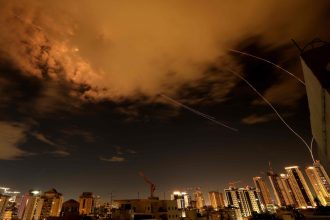
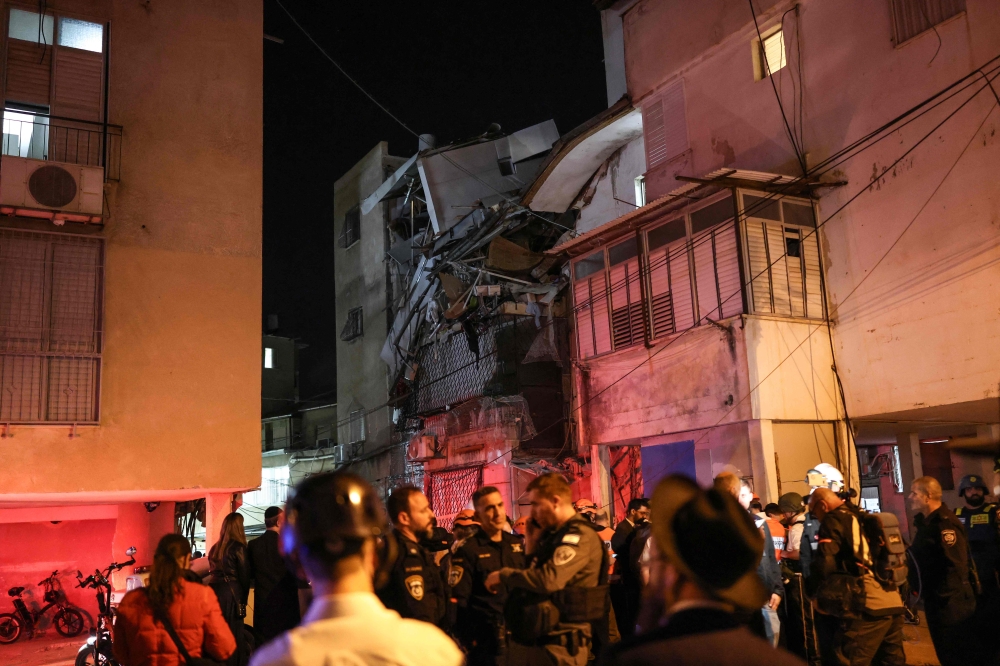
In Israel, residents witnessed streaks of rockets crossing the night sky over the coastal city of Netanya. Air raid sirens echoed across large parts of central Israel, sending families rushing into shelters as another tense chapter of the conflict unfolded.
Elsewhere in the region, the impact of the attacks was also felt. In Kuwait, a drone strike reportedly hit a fuel tank at Kuwait International Airport, triggering a large fire. Authorities in Jordan said debris from intercepted projectiles fell near the capital Amman, while Bahrain activated air raid warnings as a precaution.
For countries in the Gulf that have long positioned themselves as relatively stable hubs in a turbulent region, the attacks have been deeply unsettling. Tourism, international travel, and aviation routes have been disrupted, and major airports that normally connect the world are now operating under heightened security concerns.
The conflict has also spread into Lebanon. Israeli forces have intensified their military campaign against Hezbollah, an Iran-backed group, with operations extending deeper into Lebanese territory. Reports indicate Israel is seeking to push its presence toward the Litani River, roughly 30 kilometres from the border.
In the town of Sahel Alma, north of Beirut, scenes of destruction have become all too familiar. Buildings damaged by explosions, shattered glass across streets, and families dealing with fear and uncertainty illustrate how the war is affecting everyday life.
Local resident Gaia Khouiri described the emotional toll on civilians, explaining that even very young children are now living with the sounds of explosions and sirens. The conflict, according to Lebanese authorities, has already claimed more than a thousand lives in Lebanon and displaced over a million people.
Overnight, Israeli warplanes also carried out new strikes in the southern suburbs of Beirut, an area known as a stronghold for Hezbollah. Witnesses described streets littered with debris and damaged buildings after the attacks, adding to the growing humanitarian strain in the region.
Israel has said it is continuing operations aimed at weakening what it calls the infrastructure of Iran’s military and proxy networks.
Meanwhile, inside Iran, many residents say the constant threat of attacks has become part of daily life. One woman in Tehran described how explosions and missile warnings are now something people are learning to live with, even though the fear remains.
While the military exchanges show little sign of slowing, diplomatic efforts appear to be gaining attention again. President Trump told reporters that the United States is currently engaged in discussions with Iran and hinted that a development related to the Strait of Hormuz represents a significant step forward.
The Strait of Hormuz is one of the most critical shipping routes in the world, with roughly one fifth of global crude oil passing through it. Any disruption in the area can send shockwaves through global markets, affecting fuel prices, transportation, and economies worldwide.
Trump suggested that Iran had provided what he described as a “very big present,” though he did not go into detail. Reports from several media outlets indicate that a potential diplomatic framework may have been delivered to Tehran through intermediaries, with Pakistan reportedly offering to help mediate.
At the same time, there are signs that the United States is preparing for multiple scenarios. Reports suggest additional American troops could be deployed to the Middle East as a precaution, even as talks continue.
Iranian officials have not yet confirmed whether formal negotiations are underway.
Another key focus remains access to the Strait of Hormuz. In a message shared through the International Maritime Organization, Iran stated that safe passage would continue for ships considered neutral or non-hostile. However, vessels linked to countries it views as aggressors — specifically the United States and Israel — may face restrictions.
This uncertainty has already begun affecting economies across the globe. Governments are reviewing energy strategies, airlines are adjusting routes, and industries dependent on fuel supplies are watching closely.
Trade experts are also warning about longer-term consequences. If disruptions continue, essential sectors such as agriculture could be affected. Fertilizer supply chains, which rely heavily on global trade and stable shipping routes, may face pressure, potentially leading to rising food prices and reduced harvests in the coming years.
Despite the seriousness of the situation, some financial markets reacted cautiously optimistic after Iran’s assurance about shipping safety and the softer diplomatic tone from Washington. Oil prices dipped slightly during Asian trading, reflecting hopes that negotiations could prevent further escalation.
Beyond the political statements, military movements, and economic calculations, the human reality of the conflict remains clear. Families across several countries are dealing with fear, displacement, uncertainty, and loss. Children are growing up hearing sirens instead of silence, and communities that once thrived are now focused on survival.
Moments like these remind the world that wars are not just about strategies and negotiations between governments. They are about people — the parents trying to protect their families, the workers worried about their future, and the millions hoping that diplomacy will succeed before more lives are disrupted.
The coming days may prove critical. Whether the region moves toward deeper confrontation or a fragile path to peace will depend on decisions being made right now behind closed doors.