Vietnam’s ruling Communist Party convened on Monday for its highly anticipated twice-a-decade congress, a pivotal political gathering that could reshape the country’s leadership for years to come. At the center of attention is General Secretary To Lam, who is reportedly positioning himself to consolidate authority by holding both the party’s top post and the presidency.
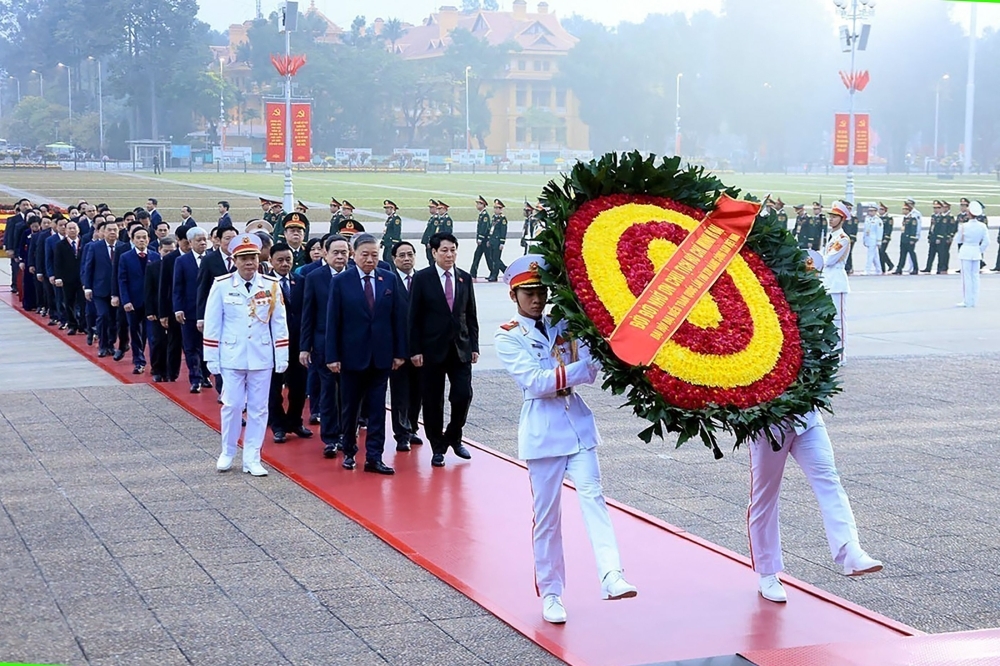
The congress brings together nearly 1,600 delegates representing more than five million party members, marking one of the most significant political moments in Vietnam’s tightly controlled one-party system. The event began with a solemn tribute to revolutionary leader Ho Chi Minh at his mausoleum in Hanoi, followed by a closed-door preparatory session.
The official opening ceremony is scheduled for Tuesday morning and will be broadcast live nationwide. State media reports indicate that To Lam is expected to deliver a keynote address outlining his vision for the party and the country.
Vietnam, a nation of around 100 million people, remains a politically restrictive state, yet it has emerged as one of Southeast Asia’s most dynamic economic performers. The Communist Party has long relied on sustained economic growth and stability to reinforce its legitimacy, particularly amid regional competition and global uncertainty.
Since assuming the role of general secretary just 17 months ago, To Lam has moved swiftly to leave his mark. His leadership has been defined by a sweeping anti-corruption campaign, efforts to slim down bureaucratic structures, and a push to fast-track major infrastructure projects. Party officials have described these changes as nothing short of a “revolution” in governance.
Push for a Dual Role:
According to sources familiar with internal party discussions, To Lam is expected to retain his position as the party’s top leader. More significantly, he is also seeking to become president, a move that would mirror the dual leadership model adopted by Chinese President Xi Jinping.
Insiders suggest that his bid for expanded authority has received provisional approval, although the final outcome remains uncertain. Vietnam’s leadership structure is collective by design, and all top appointments must be endorsed by the incoming politburo. Analysts note that resistance could still emerge, particularly from more conservative factions within the military and party establishment.
Some reports indicate that To Lam may have faced pressure to temper his presidential ambitions in order to secure broader backing for his reform agenda. As the week-long congress unfolds, the balance of power among senior leaders will become clearer.
If successful, To Lam would be the first leader in modern Vietnamese history to be simultaneously appointed to the party’s two most powerful roles directly by a party congress, rather than assuming one after an unexpected vacancy.