
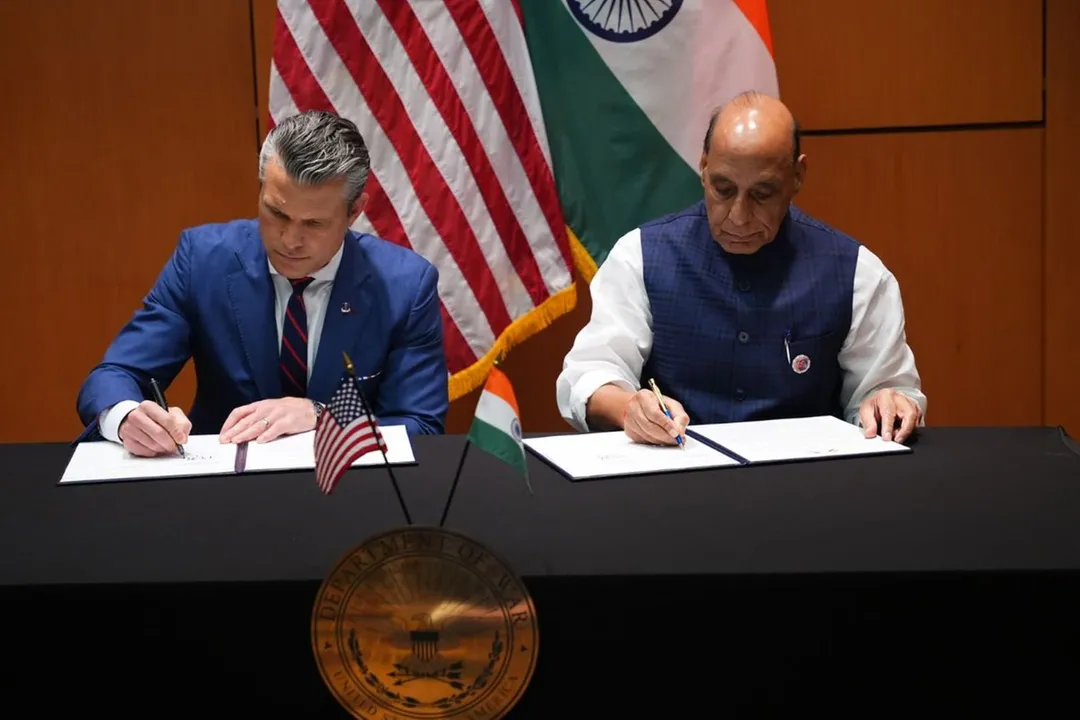
The latest US defence policy bill has signaled a stronger commitment to engaging with India, reinforcing the shared goal of a free and open Indo-Pacific region and addressing strategic challenges posed by China.
The National Defence Authorisation Act (NDAA) for Fiscal Year 2026, unveiled by Congressional leaders on Sunday, emphasizes the importance of defence alliances and partnerships in the Indo-Pacific. It specifically encourages the US Secretary of Defence to continue deepening cooperation with India, including through the Quadrilateral Security Dialogue (Quad), which also involves Japan and Australia.
The bill highlights a broad agenda of collaboration: bilateral and multilateral military exercises, expanded defence trade, humanitarian aid and disaster response, and maritime security initiatives with India. The Quad, established in 2017, has been a key platform to address China’s assertive actions in the region.
The NDAA also calls for the creation of a security initiative to strengthen defence industrial ties among the US and its Indo-Pacific allies, including India, Australia, Japan, South Korea, the Philippines, and New Zealand. This initiative aims to enhance capability, workforce, supply chain security, interoperability, and resilience among participating nations.
Another notable section focuses on US-India nuclear cooperation. The bill proposes a joint consultative mechanism under the US-India Strategic Security Dialogue to review the 2008 Agreement for Cooperation on Peaceful Uses of Nuclear Energy. The goal is to help India align its domestic nuclear liability rules with international norms and identify opportunities for bilateral and multilateral diplomatic engagement. The Secretary of State will provide reports on this assessment within 180 days of the Act’s enactment and annually for five years.
The bill defines “ally or partner nation” broadly, including members of the Organisation for Economic Cooperation and Development (OECD), India, and any other nation designated by the US Secretary of State.
At its core, this legislation reflects a growing recognition that global security and strategic partnerships are more crucial than ever. For India and the US, this is more than a policy—it’s a reaffirmation of shared values and long-term cooperation in a rapidly changing world.