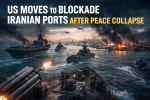

In a dramatic escalation of tensions, Donald Trump announced that the United States will begin a naval blockade targeting Iranian ports following the breakdown of ceasefire negotiations. The talks, held in Islamabad, ended without agreement after nearly 21 hours of intense discussions, leaving the fragile ceasefire hanging by a thread.
The United States Central Command confirmed that the blockade would take effect Monday at 10 a.m. EDT, focusing on vessels entering or leaving the strategically vital Strait of Hormuz. Officials stated that enforcement would be “impartial,” applying to ships of all nations, although vessels traveling strictly between non-Iranian ports will still be allowed to pass.
This development comes as the conflict, now entering its seventh week, continues to destabilize global markets and has already claimed thousands of lives.
Trump Signals Hardline Stance
Speaking to reporters upon returning to Washington, Trump made it clear he is in no rush to resume negotiations.
“I don’t care if they come back or not,” he said bluntly, signaling a shift toward a more uncompromising approach.
He also reiterated concerns over Iran’s nuclear ambitions, stating firmly that Iran “will not have a nuclear weapon,” further intensifying the already strained diplomatic climate.
War of Words Expands Beyond Politics
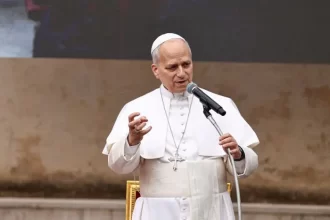
In an unexpected turn, Trump also lashed out at Pope Leo XIV, criticizing the pontiff’s recent remarks calling for peace and restraint in the conflict.
The Pope had warned against what he described as a “delusion of omnipotence” driving the war, urging global leaders to pursue diplomacy over escalation. While he did not name specific countries, his message appeared to resonate globally amid growing fears of prolonged instability.
Trump, however, dismissed the criticism, stating he was “not a fan,” further widening the divide between political and moral leadership voices on the crisis.
Shipping Disrupted, Markets on Edge
Following the blockade announcement, maritime intelligence reports indicated that shipping activity through the Strait of Hormuz briefly halted. Some vessels reportedly turned back, highlighting the immediate impact of the decision on global trade routes.
Despite Trump’s earlier sweeping statements about blocking “any and all” vessels, military officials later clarified that the blockade would be more targeted, suggesting a scaled-back operational approach.
Meanwhile, Iran is reportedly holding approximately 21 million barrels of oil in floating storage near the Gulf of Oman, potentially as a strategic move to manage exports amid rising uncertainty.
Iran Pushes Back
Iranian Foreign Minister Abbas Araghchi accused the United States of derailing what he described as “productive” negotiations.
According to Araghchi, talks were nearing a memorandum of understanding before being disrupted by shifting demands and the sudden blockade decision. He warned that continued hostility would only lead to further escalation, emphasizing that “enmity begets enmity.”
Experts Question Feasibility
Security analysts, including those from King’s College London, have raised doubts about the long-term effectiveness of the blockade. Experts argue that Iran may be better positioned to endure prolonged pressure compared to the United States and its allies.
Energy markets are already reacting. Analysts suggest oil prices could surge by $5 to $10 per barrel, adding further strain to an already volatile global economy.
Human Cost Continues to Rise
Beyond geopolitics and economics, the human toll of the conflict continues to grow. Reports from the Lebanese Red Cross confirmed another deadly drone strike in southern Lebanon, adding to the mounting casualties among medical personnel.