In a dramatic escalation that sent shockwaves across the Gulf region, Dubai’s key landmarks and critical infrastructure were affected after overnight retaliatory strikes attributed to Iran extended beyond military targets and reached major civilian hubs.
A concourse at Dubai International Airport, one of the world’s busiest aviation hubs, sustained minor damage during the incident, according to Dubai’s media office. Authorities confirmed that the situation was quickly contained. Four individuals were reported injured at the airport.
Officials later revealed that a drone had been intercepted, and falling debris caused a small fire on the outer facade of Burj Al Arab, the iconic sail-shaped hotel that has long symbolized Dubai’s global luxury identity. Emergency teams responded swiftly, and the fire was extinguished without major structural damage.
Dubai, regarded as the Middle East’s leading tourism and trade gateway, has built its reputation on connectivity, stability and world-class infrastructure. The airport serves as a vital east-west transit point, linking continents and facilitating millions of passengers annually. Any disruption, even minor, sends ripple effects across global aviation networks.
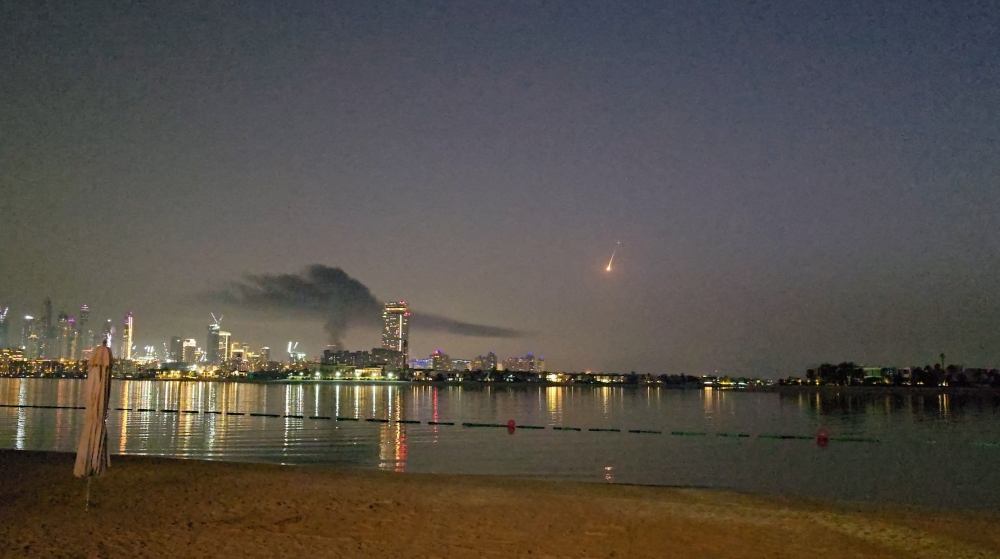
Meanwhile, a fire was reported near a hotel on Palm Jumeirah, the city’s renowned artificial island development. Though details remain limited, authorities indicated that emergency crews managed the situation promptly.
In a separate development, one of the berths at Jebel Ali Port, the region’s largest and most important maritime gateway, caught fire due to debris from aerial interceptions. The blaze was brought under control, and operations were being assessed.
Aviation sources had earlier suggested that one of the terminals at Dubai International Airport sustained damage during the overnight events. The broader impact was felt across the Gulf, as airspace over much of the region appeared nearly empty on flight-tracking maps.
In the UAE capital, Zayed International Airport reported an incident resulting in one fatality and seven injuries, according to an initial statement from Abu Dhabi Airports. That statement was later removed.
Reports indicate that missiles were launched toward Abu Dhabi, Dubai and Doha, all major aviation corridors linking Asia, Europe and Africa. Airlines responded by suspending flights across parts of the Middle East, including routes to and from Dubai and Abu Dhabi, creating immediate disruption for travelers worldwide.
The unfolding events underscore the fragility of regional stability and the far-reaching consequences when geopolitical tensions escalate. Airports and ports are more than transport facilities — they are lifelines of economies, symbols of ambition, and gateways connecting families, businesses and cultures.
Behind the headlines are real people — travelers stranded mid-journey, airport staff working under pressure, families awaiting loved ones, and communities hoping for calm. While infrastructure can be repaired and flights rescheduled, the human cost of uncertainty lingers longer.
As the region assesses the impact and strengthens security measures, the world watches closely. The hope across borders remains the same: de-escalation, stability and a return to safe skies.