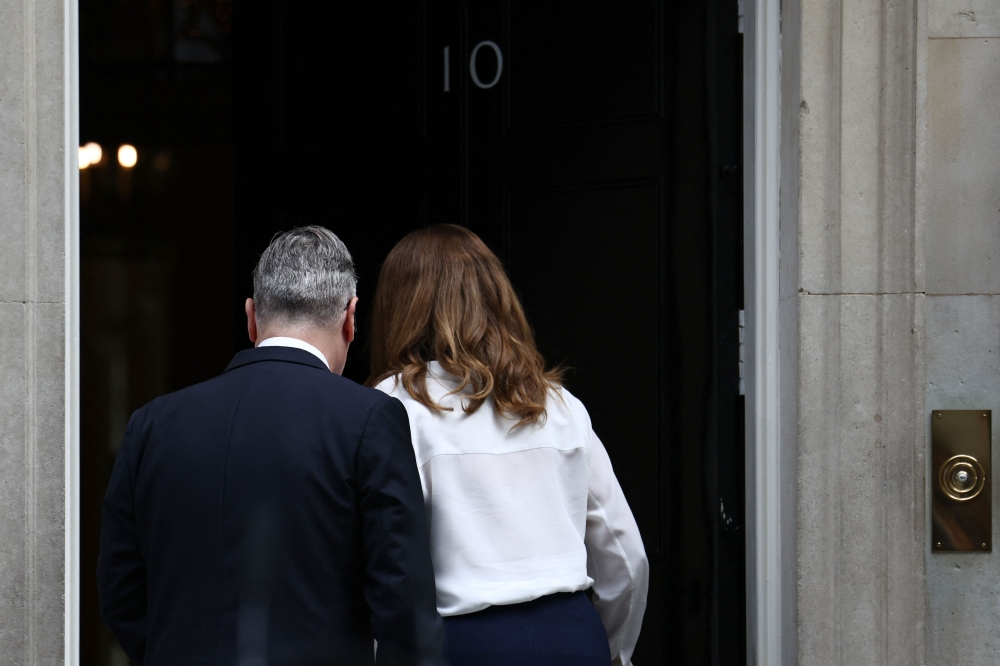
As British Prime Minister Keir Starmer announced his departure on Monday, reactions from across the world highlighted the contrasting views surrounding his time in office. While many European leaders praised his leadership and diplomatic efforts, critics from the United States and Russia used the moment to voice their dissatisfaction with his policies.
Starmer leaves office after facing declining approval ratings at home, despite initially securing a historic victory in 2024. As the first non-Conservative prime minister to lead the United Kingdom since the Brexit referendum era, he inherited a nation grappling with economic uncertainty, political division, and lingering tensions stemming from Britain’s exit from the European Union.
Although Starmer consistently ruled out the possibility of rejoining the European Union, he worked to rebuild trust and strengthen cooperation between the UK and its European neighbors. His efforts were widely appreciated across Europe, where leaders viewed him as a steady and pragmatic partner during a period of geopolitical instability.
European Commission President Ursula von der Leyen paid tribute to Starmer’s leadership, describing him as a statesman who quickly earned international respect. She emphasized that European and Ukrainian security had become stronger under his leadership and thanked him for his commitment to regional stability.
One of Starmer’s most notable foreign policy achievements was maintaining Britain’s strong support for Ukraine. Working closely with French President Emmanuel Macron and German Chancellor Friedrich Merz, he ensured that the UK remained a key ally of Kyiv throughout the ongoing conflict with Russia.
Ukrainian President Volodymyr Zelenskyy expressed his gratitude, praising Starmer for his consistent engagement and meaningful support. He noted that their discussions were always focused on practical solutions and reaffirmed that Starmer would always be welcomed in Ukraine.
Irish Prime Minister Micheál Martin also acknowledged Starmer’s contributions, highlighting his role in improving relations between Ireland and the United Kingdom, as well as strengthening cooperation between London and Brussels after years of post-Brexit tensions.
German government officials similarly described Starmer as a dependable and close partner. His diplomatic approach helped restore confidence among European allies who had often struggled with political uncertainty in the UK during previous administrations.
However, Starmer’s international standing contrasted sharply with the challenges he faced domestically. Like many leaders across Europe, he encountered growing voter frustration with traditional political parties. Rising living costs, economic concerns, and public dissatisfaction fueled support for anti-establishment movements that promised sweeping political change.
At home, critics frequently questioned Starmer’s ability to inspire voters, often portraying him as lacking the charisma and conviction needed to connect with an increasingly skeptical electorate.
Across the Atlantic, outgoing US President Donald Trump offered little sympathy. Trump claimed that Starmer had failed on major issues such as immigration and energy policy, areas where the two leaders held fundamentally different views.
Meanwhile, in Russia, reactions were even more hostile. Kirill Dmitriev, a special envoy to Russian President Vladimir Putin, suggested that critics of Starmer had played a role in weakening his political standing. Although a spokesperson later clarified that Dmitriev’s remarks reflected his personal opinion rather than an official government position, the comments underscored the strained relationship between Moscow and London.
Britain’s strong support for Ukraine has made it one of Russia’s most vocal opponents since the conflict escalated in 2022, a stance that Starmer maintained throughout his tenure.
As Keir Starmer steps away from office, his legacy remains a subject of debate. Supporters point to his efforts to repair international relationships, strengthen European cooperation, and stand firmly with Ukraine. Critics argue that he struggled to address domestic concerns and failed to win lasting public confidence.
Regardless of differing opinions, Starmer’s departure marks the end of a significant chapter in British politics and opens the door to a new era of leadership at a time when the United Kingdom continues to face major economic and geopolitical challenges.