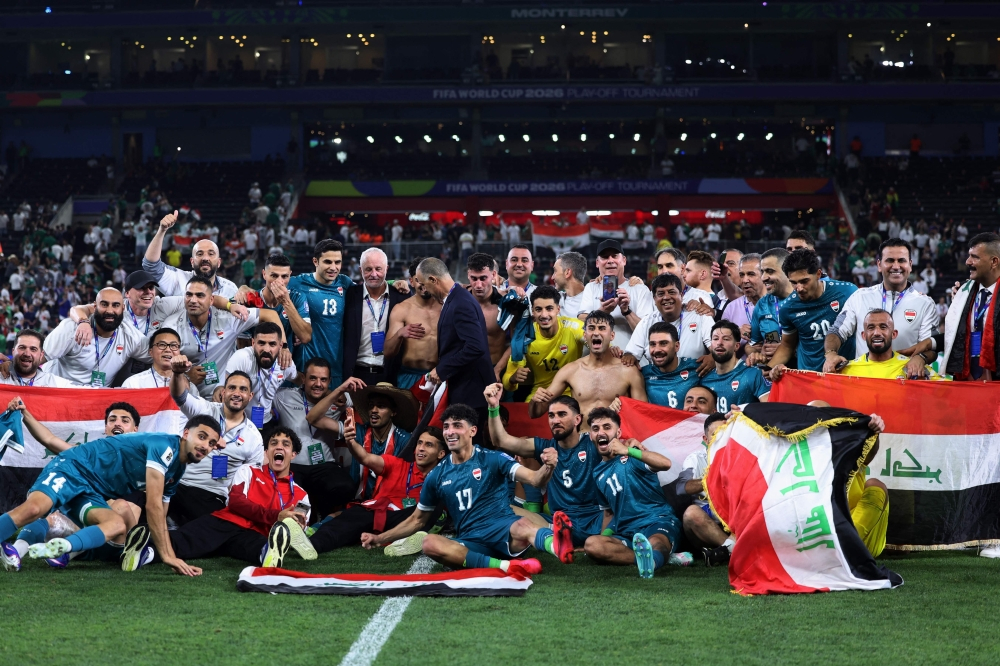
Iraq have officially sealed their place at the upcoming World Cup, ending a 40-year wait with a hard-fought 2–1 victory over Bolivia in an intercontinental play-off match held in Mexico. With this result, Iraq became the 48th and final team to qualify for the tournament, marking a powerful comeback to football’s biggest stage.
The qualification is especially significant for Iraqi football, considering the difficult circumstances surrounding the team’s preparations. Regional tensions and disruptions linked to conflict in the Middle East made travel and planning extremely challenging for the squad. Despite these hurdles, the players remained focused on their mission and delivered a performance filled with determination and resilience.
Iraq will now compete in World Cup Group I, where they are set to face France, Senegal and Norway. The group promises tough competition, but the team’s qualification story has already captured global attention and respect.
The match itself started strongly for Iraq. Just nine minutes into the game, striker Ali Al-Hamadi opened the scoring with a well-placed header. The goal came after midfielder Amir Al-Ammari delivered a precise corner kick following a dangerous free-kick that had already tested Bolivia’s goalkeeper Guillermo Viscarra. Al-Hamadi rose above the defense and guided the ball into the net, giving Iraq an early advantage and energizing the team.
Iraq appeared confident and organized during the opening stages, controlling the tempo of the match and showing clear attacking intent. However, Bolivia gradually found their rhythm and pushed back, increasing pressure as the first half progressed.
Their persistence paid off in the 38th minute. Ramiro Vaca struck a shot from outside the penalty area, and Moises Paniagua reacted quickly, controlling the ball before firing it into the top of the net. The equalizer shifted momentum and briefly stunned the Iraqi side, as Bolivia ended the first half looking more dangerous.
When the second half began, Iraq regrouped and refocused. Their determination was evident as they pressed forward again, searching for the decisive moment that could send them to the World Cup.
That moment arrived eight minutes after the restart. A long forward ball was directed into the path of substitute Marko Lawk-Farji, who quickly delivered a cross into the penalty area. Captain Aymen Hussein met the ball perfectly and struck a first-time finish into the bottom corner, restoring Iraq’s lead and igniting celebrations among players and supporters.
From that point on, the match became a tense battle. Bolivia pushed aggressively in search of another equalizer that could force extra time. Iraq’s defense, however, remained disciplined and composed, successfully managing wave after wave of attacks.
The closing moments were particularly dramatic, with nine minutes of stoppage time testing the nerves of everyone involved. Bolivia threw everything forward, but Iraq’s defensive line held firm, protecting their lead until the final whistle confirmed a historic victory.
The triumph also represents a significant achievement for head coach Graham Arnold. The Australian manager had previously requested that the match be postponed due to the logistical challenges and disruptions affecting the Iraqi squad. Despite these concerns, the team overcame adversity and proved their readiness on the field.
Their journey to Mexico itself was exhausting. Many players undertook a demanding three-day trip from Baghdad, beginning with an overland journey into Jordan before continuing their travel to the match location. Yet, when the game began, there was little sign of fatigue as the team played with energy and belief.
Iraq’s last appearance at the World Cup dates back to the 1986 tournament, also held in Mexico. For many fans, this new qualification feels like a full-circle moment, symbolizing persistence and the revival of national football pride.
Beyond the result, the story reflects the human side of sport. Players who grew up during times of uncertainty and conflict have now helped deliver a moment of unity and celebration for millions of supporters. Ali Al-Hamadi’s journey is one example. After moving to Liverpool as a young child during the 2003 Iraq war, he has now scored one of the most important goals in modern Iraqi football history.
Football often goes beyond tactics and statistics. In this case, it represents hope, resilience and the belief that even in difficult circumstances, a team can rise together and achieve something unforgettable. For Iraq and its supporters, this qualification is not just about reaching the World Cup. It is about pride, perseverance and a new chapter for the country’s football future.