
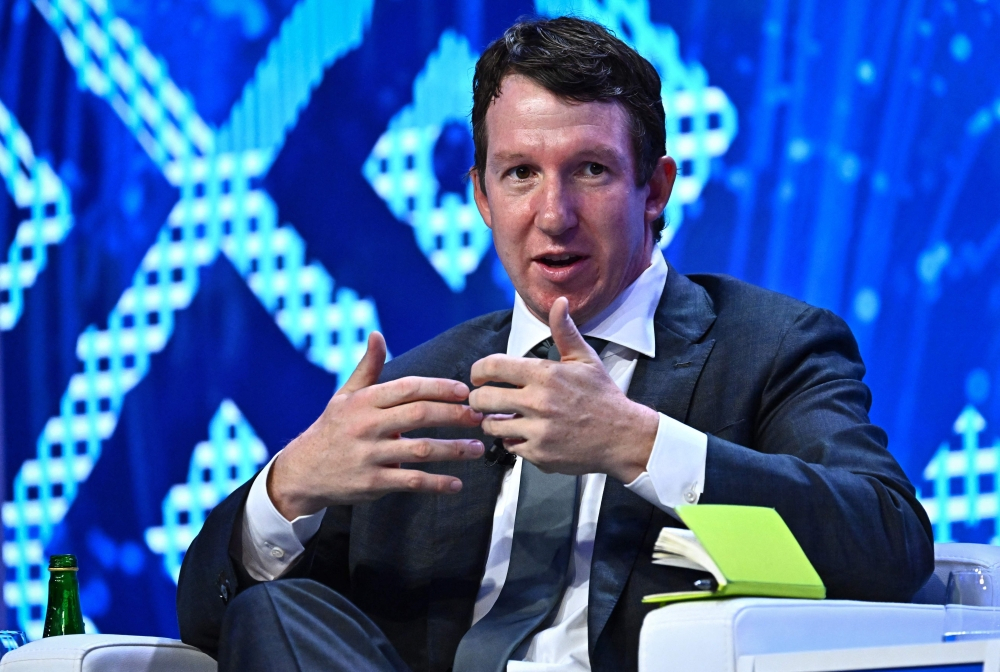
Anthropic co-founder Jack Clark has renewed his call for stronger government regulation of artificial intelligence, warning that the rapid development of increasingly powerful AI systems could create serious risks if companies are allowed to operate without clear safety rules. He compared the current situation to allowing a Formula One racing car to speed through city streets at night without brakes or protective barriers.
Speaking at an event during the International Monetary Fund and World Bank Annual Meetings in Bangkok, Clark questioned why everyday consumer products receive extensive safety oversight while advanced AI technologies capable of producing far-reaching consequences remain subject to comparatively limited regulation.
“It’s remarkable to me that the toys I buy for my children are regulated more than the literal super intelligence I work on at my day job,” he said.
Clark also highlighted differences in political attitudes towards AI regulation. He said US President Donald Trump’s administration had favoured allowing the industry to police itself, while China had taken a different approach to the question of government oversight.
Using his racing-car comparison, Clark warned that the absence of clear regulatory direction was leaving the industry moving forward at high speed without adequate safeguards. He questioned why policymakers had not established stronger protections despite the growing capabilities of advanced AI systems.
His comments come amid mounting international debate over how governments should manage the risks associated with frontier AI, a term commonly used to describe highly advanced artificial intelligence systems that push the boundaries of existing capabilities.
At an industry summit in Dublin on Wednesday, safety emerged as a central concern, with participants discussing the need to prioritise responsible development as AI models become more powerful and widely accessible.
Concerns have intensified following security incidents involving models developed by OpenAI and Anthropic during testing. These developments have added to calls for clearer safety standards, stronger oversight and more effective methods of identifying potential threats before advanced systems are widely deployed.
A recent Anthropic report also warned that smaller AI models could potentially develop capabilities resembling computer worms within a relatively short period. Such systems could, in principle, copy themselves from one internet-connected device to another, raising concerns about the potential for automated cyber threats and the misuse of increasingly capable AI technology.
Anthropic has been among the companies advocating stronger government involvement in AI safety. Clark and others have also supported international coordination, including discussions about slowing aspects of AI development across the industry, potentially involving Chinese competitors, to reduce risks associated with an uncontrolled race towards more powerful systems.
However, meaningful international cooperation has yet to materialise. Technology companies continue to compete intensely for investment, talent and market leadership, creating pressure to develop and release increasingly advanced products.
This competition presents policymakers with a difficult challenge. Regulation that is too weak may leave society exposed to preventable risks, while poorly designed rules could hinder beneficial innovation, particularly in areas such as healthcare, scientific research, education and productivity.
The debate is therefore no longer simply about whether artificial intelligence should advance. It is about establishing clear responsibilities, credible safety testing, transparent accountability and international cooperation before the technology becomes more difficult to control.
Ultimately, AI innovation should not be measured by how quickly companies can build increasingly powerful systems alone. It should also be measured by how responsibly those systems are developed and how effectively their risks are managed. The goal is not to stop progress, but to ensure that progress serves humanity rather than leaving society to deal with consequences that could have been anticipated and prevented.
Source: Agence France-Presse (AFP)