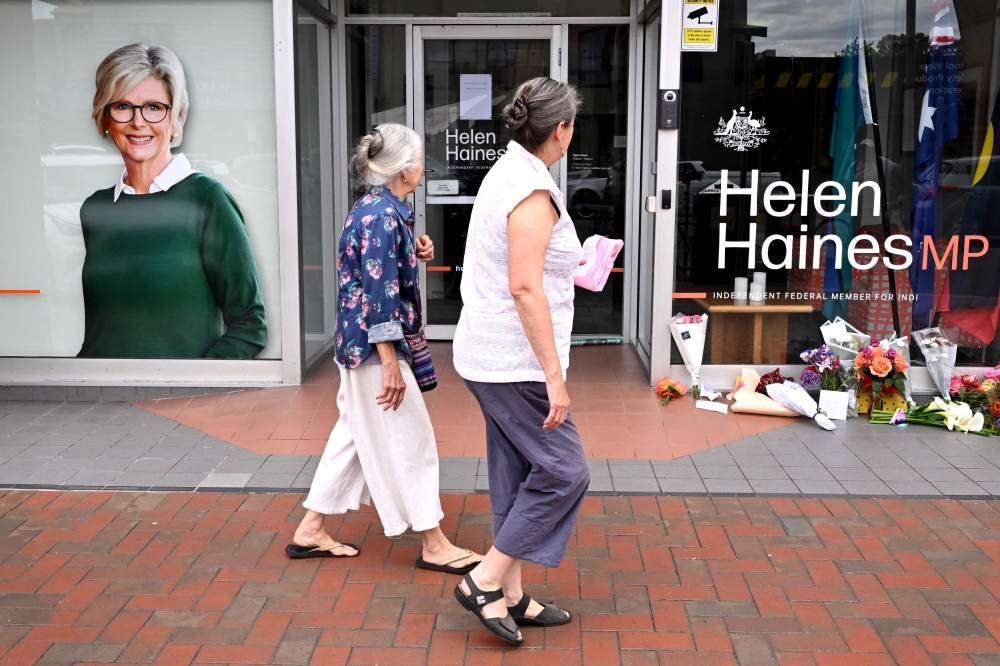
Australian independent lawmaker Helen Haines has reportedly lost a leg after being struck by a vehicle in what authorities are investigating as a deliberate attack outside her electorate office in Wangaratta, Victoria. The incident has shocked the country, prompted widespread political condemnation and renewed concerns about growing threats against elected representatives.
Prime Minister Anthony Albanese described the attack as a “test of our character” and expressed his support for Haines, her family and the wider community. The incident has also reignited discussions about the increasingly hostile atmosphere surrounding political debate in Australia.
According to reports, the 65-year-old MP was struck by a Toyota Land Cruiser at approximately 3.35 pm on Monday while collecting items from the boot of her car outside her office. Wangaratta is located more than 200 kilometres northeast of Melbourne.
Witnesses told the Australian Broadcasting Corporation (ABC) that they heard a loud impact and saw a woman trapped between two vehicles. Albanese said the driver appeared to have turned around and returned towards Haines after initially passing her, describing the incident as a deliberate act.
Haines sustained critical injuries and underwent surgery overnight at Melbourne’s Alfred Hospital. The ABC and The Sydney Morning Herald reported that she had lost a leg. At the time of Albanese’s public comments, she remained in critical condition in hospital.
The attack has prompted an outpouring of sympathy from across Australia’s political spectrum, with colleagues and supporters paying tribute to Haines and expressing concern for her recovery.
Bystanders praised for intervening
One of the most striking aspects of the incident was the response of local residents who stepped forward to help.
Ricky Jefferies, a 43-year-old local barber, restrained the driver until police could take control of the situation. His actions drew widespread praise, with members of the public describing him as a hero.
Speaking to journalists, Jefferies appeared shaken as he reflected on the incident. He said his immediate concern was for his family and stressed that other people present at the scene had also played important roles in helping.
His modest response highlighted the collective courage of ordinary people who acted during a frightening and potentially dangerous situation. Their intervention, alongside the efforts of emergency personnel, became an important part of the public response to the attack.
Suspect arrested as investigation continues
Police arrested the male driver following the incident and reportedly discovered a knife inside his vehicle. Australian media identified the suspect as Brendan Nugent, although the circumstances and alleged motive behind the attack remain under investigation.
Federal police, Victoria Police and counter-terrorism investigators are working together to establish what happened and determine whether criminal charges should be brought.
Authorities have been considering possible offences, including causing harm to a government official, which carries a maximum prison sentence of 10 years. The applicable charges and any subsequent legal proceedings will depend on the investigation and decisions by the relevant authorities.
Albanese has declined to speculate about the suspect’s motive, emphasising the importance of allowing investigators to establish the facts. No conclusion about the reasons behind the alleged attack should be drawn before the evidence is assessed.
Albanese warns against increasingly hostile political debate
Although political violence remains uncommon in Australia, authorities have documented growing concerns about threats, intimidation and abuse directed at elected officials.
Albanese said political disagreements were an essential part of democracy but warned that debate must not become an excuse to question opponents’ patriotism, character or personal motivations.
His comments reflect a wider concern that increasingly personal and aggressive political exchanges can undermine public trust and make elected representatives more vulnerable to harassment and threats.
Haines entered federal parliament in 2019 after a career as a nurse and midwife. She subsequently became known for advocating greater transparency in government, stronger accountability measures and action on climate change.
Her work on political integrity and corruption prevention has earned her recognition beyond her own electorate. The attack has therefore resonated with many Australians who see the safety of public representatives as an important issue for the country’s democratic institutions.
In a statement, Haines’s family confirmed that she was receiving medical care and thanked the bystanders, healthcare professionals and police officers who responded to the incident.
Opposition leader Angus Taylor described the attack as a shocking day for Australia, while Senator Pauline Hanson said violence against elected representatives was unacceptable regardless of their political beliefs or positions.
A moment for Australia to reflect
The attack has left a community shaken and a country waiting for answers. While investigators work to establish the facts, attention remains on Haines’s recovery and the wellbeing of her family.
Beyond the political headlines, the incident serves as a reminder that public service should never come at the cost of personal safety. Elected representatives can be challenged, criticised and held accountable, but disagreements must never become an excuse for violence.
Australia’s political strength depends not on the absence of disagreement, but on the ability to resolve differences without intimidation or harm. As the investigation continues, many Australians will be hoping for Haines’s recovery and for a political culture in which public debate remains firm, democratic and respectful.