Peru has been thrown into fresh political turbulence after a major defense deal with the United States was abruptly put on hold, sparking high-level resignations and raising concerns about the country’s global credibility.
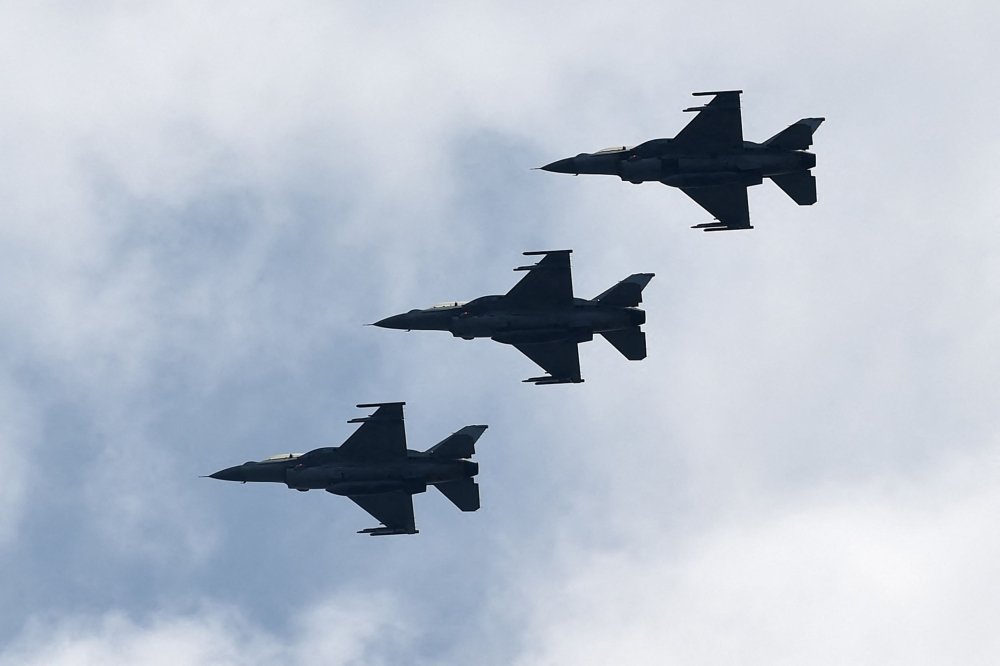
On Wednesday, Peru’s foreign minister Hugo de Zela and defense minister Carlos Diaz stepped down in protest after interim president Jose Maria Balcazar decided to suspend a $3.5 billion agreement to purchase 24 F-16 fighter jets. Both officials argued that the deal had already been finalized, warning that reversing course at this stage could damage Peru’s reputation as a reliable international partner.
Adding to the confusion, Peru’s Ministry of Economy confirmed that an initial payment of $462 million had already been transferred to Lockheed Martin, the US-based manufacturer behind the jets. This contradiction between political statements and financial action has only deepened uncertainty around the deal.
The situation unfolds against a backdrop of ongoing political instability in Peru. The country is preparing for a runoff election on June 7 after no candidate secured a majority in the first round—marking yet another chapter in a decade defined by frequent leadership changes.
President Balcazar defended his decision, stating that the suspension was not about confrontation with the United States, but about ensuring public funds are used responsibly. He emphasized the need to prioritize pressing social challenges facing the nation.
However, critics strongly disagree. Hugo de Zela warned that halting the deal could weaken national security and harm Peru’s international standing. Meanwhile, Carlos Diaz insisted the purchase was essential for defense readiness, not politics.
The United States has also signaled concern. US ambassador Bernardo Navarro issued a pointed warning, suggesting that undermining US interests could lead to consequences, though he later clarified details of the agreement, including a delivery timeline beginning in 2029.
Pressure is mounting domestically as well. Congressional leaders have urged the government to honor the agreement to avoid legal and geopolitical fallout, while some lawmakers are even calling for impeachment proceedings against the interim president.
Peru’s plan to modernize its aging air force had been in motion since 2024, with the F-16 ultimately selected over competing offers from France and Sweden. The country’s current fleet—comprised of Mirage 2000s, MiG-29s, and Sukhoi jets—is largely outdated or inactive, making the upgrade critical for national defense.
The controversy has now become entangled in a heated election cycle marked by allegations of fraud, delayed results, and rising political tension. With the final lineup for the runoff still unclear, uncertainty continues to grip the nation.