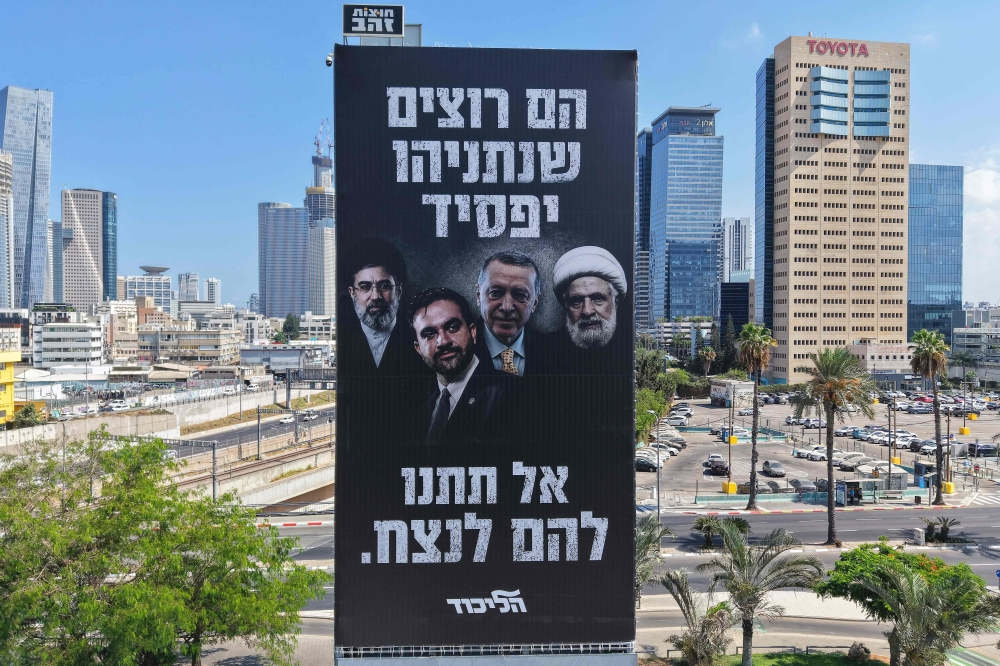
As Israel heads toward a closely watched October 27 election, Prime Minister Benjamin Netanyahu is increasingly turning his political and military attention toward Turkey, adding another layer of tension to an already volatile Middle East.
After more than two years of military operations and confrontations involving Israel’s regional adversaries, Netanyahu has begun portraying Turkey as a growing security concern. The development comes at a politically sensitive moment, with Netanyahu facing a difficult re-election campaign.
On Tuesday, Israeli warplanes struck a military base in northern Syria, located only a short distance from the Turkish border. Netanyahu said the strike was connected to concerns that Turkey was seeking to establish a military presence in the area.
According to Netanyahu, Israel had previously warned Turkey against such a move. After those warnings were allegedly ignored, he said Israel acted to make its position unmistakably clear.
The issue has also entered Israel’s election campaign. Netanyahu’s political campaign has displayed billboards featuring several foreign leaders, including Turkish President Recep Tayyip Erdogan, alongside the message: “They want Netanyahu to lose.”
Turkey becomes a new political focus
Erdogan has been one of Israel’s most outspoken critics since the Hamas-led October 7, 2023 attack and Israel’s subsequent military campaign in Gaza.
Relations between Ankara and Jerusalem have deteriorated significantly. Turkey has strongly condemned Israel’s actions in Gaza and has also criticized Israeli efforts to intercept activist flotillas originating from Turkey that attempted to deliver aid to Palestinians.
Yet Turkey is different from many of the countries Israel has confronted militarily.
It is a member of NATO, maintains important relationships with Western powers and has a particularly significant relationship with US President Donald Trump. Following the Israeli strikes in Syria, the US ambassador to Ankara criticized Israel’s actions.
That creates a more complicated strategic environment for Netanyahu.
Turkey and Israel also share a complicated history. Turkey was the first Muslim-majority country to formally recognize Israel, and the two countries once maintained substantial commercial and diplomatic ties. During the Gaza war, however, Turkey announced that it would halt trade with Israel.
Critics warn against turning security into election politics
Not everyone in Israel believes confronting Turkey is the right approach.
Yair Golan, leader of Israel’s centre-left Democrats, described the Syrian strike as provocative and dangerous. He argued that the move could bring Israel closer to a direct confrontation with Turkey while further damaging relations with important allies, particularly the United States.
Golan also accused the government of repeatedly using military force for political purposes, warning that such decisions could ultimately weaken Israel’s security rather than strengthen it.
The criticism reflects a broader debate inside Israel over Netanyahu’s approach to national security as the election approaches.
Growing Israeli concerns about Erdogan
Erdogan has long been viewed with suspicion by many Israeli politicians, particularly because Turkey has allowed senior Hamas figures to operate from its territory.
Naftali Bennett, a former Israeli prime minister and centre-right opposition figure, previously accused Netanyahu of overlooking what he described as an emerging Turkish threat because of his focus on Iran.
Some Israeli analysts also believe Turkey’s expanding influence in Syria could eventually create security challenges for Israel.
Gallia Lindenstrauss, a senior research fellow at the Institute for National Security Studies in Tel Aviv, said Israeli concerns are partly connected to the possibility that Turkey could permit militant organizations to operate from Syrian territory.
At the same time, she pointed out that Israel has generally recognized Turkish interests in northern Syria while maintaining its own security zone in southern Syria.
For Netanyahu, however, Turkey may also represent a powerful political message.
The Turkish issue gives him another external threat around which his political supporters can potentially unite.
Netanyahu faces pressure over years of conflict
The timing is particularly important.
Netanyahu is facing criticism from opponents who argue that Israel has not achieved the objectives associated with its various military campaigns. Among the questions being raised are whether Israel has successfully weakened Hamas and whether its broader strategy toward Iran has produced the results promised by the government.
Analysts suggest that directly escalating against Turkey could carry substantial political risks.
Gonul Tol, a senior fellow at the Middle East Institute in Washington, argued that a more aggressive confrontation with Turkey could make Netanyahu appear reckless, particularly if the move is interpreted as an attempt to strengthen his political position ahead of the election.
The relationship between Netanyahu, Erdogan and Trump could also become increasingly complicated.
Netanyahu cannot necessarily assume that Washington would support every Israeli move against Turkey, particularly given Turkey’s NATO membership and Erdogan’s relationship with Trump.
Turkey’s response has so far been relatively restrained.
Rather than immediately threatening retaliation, Ankara denied Israel’s allegations regarding a planned military presence in Syria. Analysts see that response as an effort to prevent the dispute from escalating into a wider confrontation.
Syria is caught between competing interests
At the centre of the dispute is Syria, a country that has become increasingly important to both Turkey and Israel.
Turkey’s interests in Syria have historically been connected to concerns about Kurdish armed groups and preventing instability from spreading across its border.
Its priorities have now expanded.
Turkey wants to help revive Syria’s economy, create conditions that could encourage millions of Syrian refugees to return and strengthen its regional influence.
Ankara has also supported Syrian President Ahmed al-Sharaa, whose forces overthrew longtime Syrian ruler Bashar al-Assad in late 2024 after years of civil war.
Israel, meanwhile, is focused on preventing potential threats from developing near its borders.
That leaves Syria in an increasingly complicated position, caught between competing security interests and regional ambitions.
Maher Tamran, a Damascus-based writer and political researcher, said Syria faces the challenge of preventing its territory from becoming a battlefield for competing foreign powers.
For Syria, the rivalry between Turkey and Israel could represent both a danger and an opportunity.
The country could attempt to use the competition between the two regional powers to strengthen its own sovereignty rather than allowing outside actors to dictate its future.
A dangerous political crossroads
The growing friction between Israel and Turkey illustrates how quickly the Middle East’s alliances and rivalries are changing.
For Netanyahu, Turkey represents a potential security challenge but also a politically powerful issue at a crucial moment in his career.
For Erdogan, the dispute offers another opportunity to position Turkey as a strong critic of Israeli military actions while avoiding an escalation that could damage Ankara’s wider interests.
For Syria, the stakes may be even higher.
A country emerging from years of devastating conflict now risks becoming another arena for confrontation between powerful regional actors.
The coming months could therefore reveal whether the Israel-Turkey dispute remains primarily political rhetoric or develops into a more serious strategic confrontation.
As Israel approaches its election, Netanyahu’s decision to put Turkey more prominently in the spotlight is about more than foreign policy. It is also about how voters perceive security, leadership and the future direction of the country.
And that is what makes this moment particularly significant: in a region already shaped by conflict, even political messaging can carry consequences far beyond the campaign trail.