
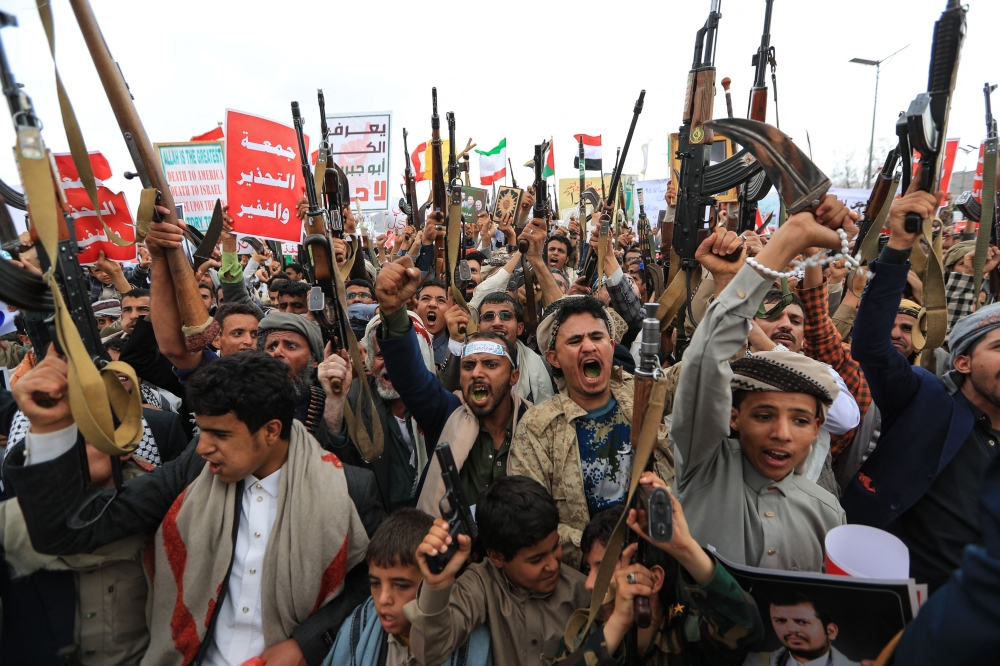
Iran has issued a sharp warning to Saudi Arabia as fighting around Yemen and the wider Middle East continues to escalate, saying Riyadh will struggle to contain the Houthi movement or protect itself from further attacks.
Iran’s Islamic Revolutionary Guard Corps spokesman Hossein Mohebi told Defa Press that Saudi Arabia would be unable to contain Yemen’s Houthi movement, also known as Ansarullah. He argued that continued Saudi military action could lead to further retaliation from the Iran-backed group.
“Saudi Arabia will certainly be unable to contain Yemen and Ansarullah or remain safe from their attacks,” Mohebi said.
His comments come as Yemen has emerged as another major front in the wider Middle East conflict that began on February 28 with US-Israeli strikes on Iran. Houthi attacks and attempts to threaten Saudi Arabia’s Red Sea ports have added another layer of uncertainty to an already fragile regional security situation.
The latest escalation follows exchanges of strikes in early July after an Iranian aircraft arrived in Yemen’s capital, Sanaa. The developments have raised renewed concerns about the security of the Red Sea and the strategically important Bab al-Mandab Strait, one of the world’s key maritime passages.
Yemen has already endured more than a decade of conflict. The latest fighting has also disrupted the relative calm established by a 2022 truce between the Houthi movement and forces aligned with Yemen’s internationally recognised government, which is backed by Saudi Arabia.
Concerns are now growing that the conflict could expand further. A Yemeni minister told AFP this week that Houthi forces were allegedly preparing to seize territory near the Bab al-Mandab Strait. Control of areas around the waterway could give the group greater leverage over one of the world’s most important shipping routes.
Three Houthi military sources, along with a spokesman for Yemeni government forces fighting the group near the waterway, also told AFP that the Houthis were preparing to advance south from their existing positions.
Why this matters beyond Yemen
The developments in Yemen are not simply another chapter in the country’s long-running conflict. Any serious escalation around the Bab al-Mandab Strait could have consequences far beyond the region.
The waterway connects the Red Sea with the Gulf of Aden and serves as a critical route for international shipping. Increased military activity could therefore create new risks for commercial vessels, regional economies and global supply chains.
For Saudi Arabia, the challenge is particularly sensitive because instability along its southern neighbour could create security risks while also placing additional pressure on the kingdom’s economic and strategic interests.
For Iran, support for the Houthis remains part of a broader regional power struggle. Tehran’s latest warning signals that the conflict in Yemen is increasingly connected to the wider confrontation involving Iran, Saudi Arabia, Israel and the United States.
For ordinary Yemenis, however, another escalation carries a much more immediate cost. Years of war have already damaged infrastructure, displaced communities and created deep humanitarian challenges. Further fighting could make an already difficult situation even more painful for civilians.
The coming weeks will show whether the latest escalation remains contained or develops into a broader regional confrontation. What happens around Yemen’s ports and the Bab al-Mandab Strait could become an important indicator of where the wider Middle East crisis is heading.