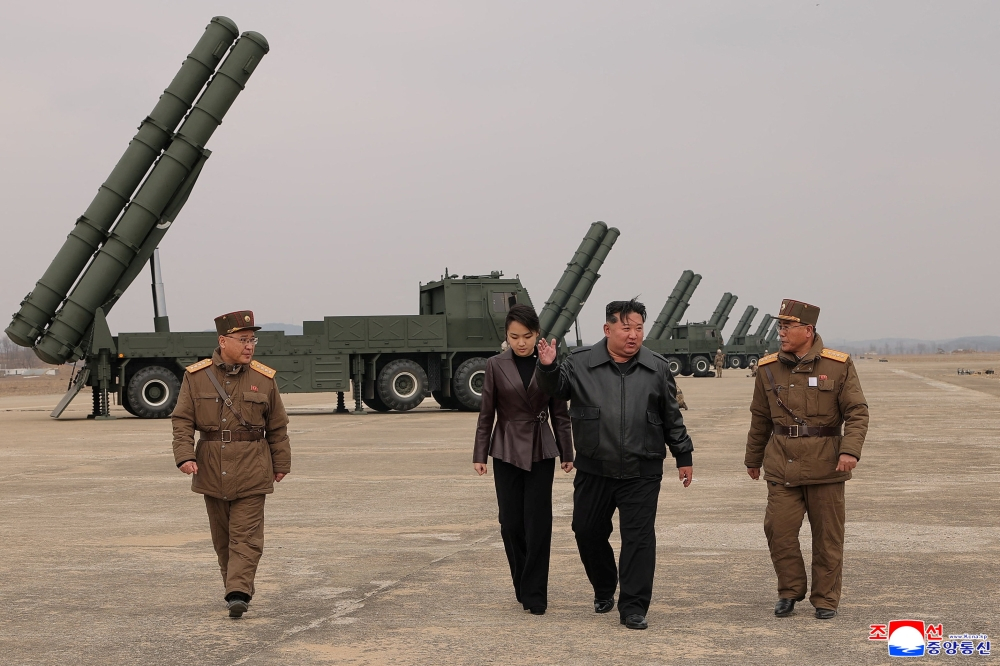
The head of the International Atomic Energy Agency has issued a serious warning: North Korea is rapidly increasing its ability to produce atomic weapons.
Speaking during a visit to Seoul, IAEA chief Rafael Grossi highlighted what he described as a “very serious increase” in the country’s nuclear capabilities.
A Growing Nuclear Network
North Korea, officially known as the Democratic People’s Republic of Korea, is believed to be operating multiple uranium enrichment facilities—an essential process for building nuclear warheads.
One of the most closely monitored locations is the Yongbyon Nuclear Scientific Research Center. Although Pyongyang once claimed it had shut down parts of this site during diplomatic talks, it reportedly reactivated operations in 2021.
According to the IAEA, there has been a noticeable surge in activity at Yongbyon’s reactor, reprocessing unit, and light-water reactor. Additional facilities are also believed to be active, further strengthening the country’s nuclear production infrastructure.
Grossi stated that these developments point toward a significant expansion in North Korea’s nuclear weapons program—potentially adding to an already estimated stockpile of several dozen warheads.
Limited Access, Rising Uncertainty
Since conducting its first nuclear test in 2006, North Korea has faced heavy international sanctions. Despite global pressure, the country has firmly stated it will not give up its nuclear weapons.
The situation is further complicated by the fact that North Korea expelled IAEA inspectors in 2009, leaving international agencies to rely on satellite imagery and indirect assessments.
The agency has also observed the construction of a new facility similar to existing enrichment plants at Yongbyon, suggesting even greater production capacity in the near future. However, without direct access, precise estimates remain difficult.
Global Concerns and Geopolitical Tensions
While questions have been raised about potential foreign assistance, particularly from Russia, the IAEA has not confirmed any direct involvement in North Korea’s nuclear development.
At the same time, North Korea’s reported military support to Russia in the ongoing Russian invasion of Ukraine has added another layer of geopolitical complexity. Observers suggest that in exchange, Pyongyang may be gaining access to advanced military technologies.