
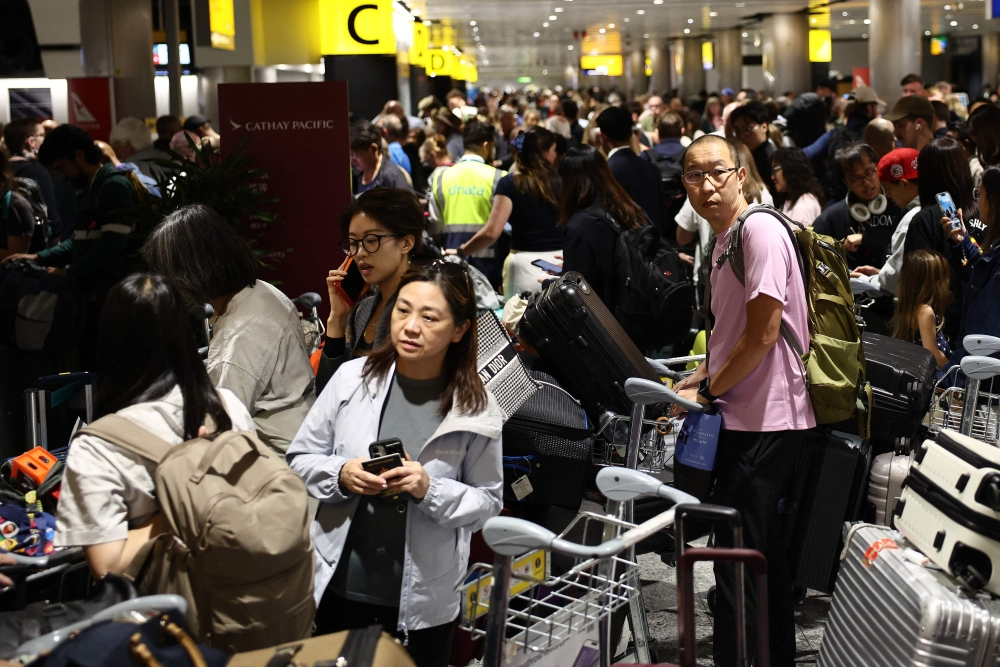
Travel plans across the UK were thrown into chaos yesterday after a technical problem at the country’s air traffic control service led to the cancellation of nearly 1,100 flights.
By 8pm local time, 1,055 flights travelling to and from British airports had been cancelled, according to flight-tracking website FlightRadar24. The disruption affected thousands of passengers at some of the UK’s busiest airports, leaving travellers facing long delays, cancelled journeys and hours of uncertainty.
The UK’s air traffic control provider, NATS, said the technical issue had been resolved and that normal operations had resumed. However, clearing the backlog created by the disruption was expected to take time.
NATS acknowledged the frustration caused to travellers, saying recovery from the system problem had taken longer than expected and issuing an apology to affected passengers.
Major UK Airports Among Those Affected
The disruption was felt at several major airports across the country, including Heathrow and Gatwick in the London area.
For many passengers, the experience quickly became exhausting.
Healthcare worker Josie Donoghue described her experience at Gatwick as an “absolute nightmare” after she spent around three hours stuck on the runway before having to leave her flight to Ireland.
She later described navigating the airport as extremely difficult, highlighting just how frustrating the situation became for passengers caught in the disruption.
Other airports affected included Liverpool, Birmingham and Edinburgh. The disruption also crossed the Irish Sea, with Dublin Airport reporting dozens of cancelled flights.
Airlines Forced to Cancel and Divert Flights
Airlines were also hit hard by the technical failure.
British Airways said it had been forced to cancel or divert more than 100 flights, affecting tens of thousands of passengers.
Ryanair reported that more than 65,000 of its passengers had been disrupted, while more than 50 of its flights were cancelled.
The disruption also created problems beyond ordinary holiday and business travel. Arsenal, scheduled to face Napoli in the Champions League in southern Italy, had to cancel a planned press conference after the team’s flight was delayed.
Government Demands Answers
The latest incident has once again raised questions about the reliability and resilience of the UK’s aviation infrastructure.
British Transport Secretary Heidi Alexander said she was seeking assurances that lessons would be learned and that the systems supporting the country’s aviation network were capable of handling the demands placed on them.
The incident is particularly significant because it follows previous disruptions.
A technical problem in July last year also resulted in a significant number of flights being cancelled to and from the UK, prompting criticism from airline executives.
The UK experienced an even more serious air traffic systems failure in 2023, when hundreds of flights were delayed or cancelled and more than 700,000 passengers were affected.
Growing Pressure on NATS
The latest disruption has renewed criticism from the airline industry.
Ryanair Chief Operating Officer Neal McMahon again called for NATS Chief Executive Martin Rolfe to be removed, arguing that the latest failure represented another major breakdown for UK travellers.
He called on the UK government to intervene and ensure that the country’s aviation system is placed under stronger leadership.
For passengers, however, the debate over responsibility matters less than getting home, reaching their destination or simply knowing when their flight will leave.
A Reminder of How Fragile Air Travel Can Be
Modern air travel depends on a huge network of interconnected systems. When one critical part of that network fails, the consequences can spread rapidly across airports, airlines and thousands of individual travel plans.
A technical issue that may appear small from a systems perspective can mean missed meetings, cancelled holidays, lost connections, overnight stays and hours spent waiting inside crowded airports for information.
For travellers caught up in yesterday’s disruption, the problem was not just a technical failure. It was time lost, plans disrupted and uncertainty that continued long after the original issue occurred.
The NATS system has now returned to normal operations, but the bigger question remains: how can the UK make sure that a similar technical problem does not once again turn into nationwide travel chaos?
As airlines, government officials and aviation authorities examine what went wrong, passengers will be hoping the lessons are more than promises. They will want stronger systems, faster recovery and, most importantly, an aviation network they can trust when they book their next flight.