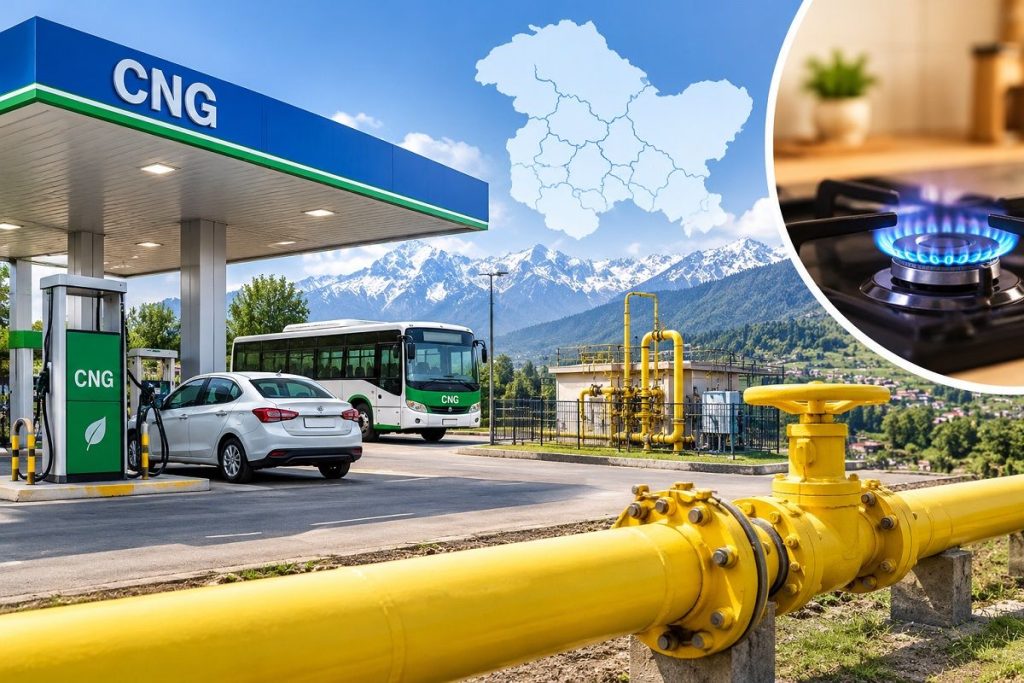
The Jammu and Kashmir government has introduced the City Gas Distribution (CGD) Policy, 2026, a major move aimed at expanding access to Piped Natural Gas (PNG) and Compressed Natural Gas (CNG) across all 20 districts of the Union Territory.
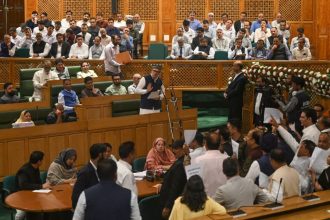
Approved by the Council of Ministers, the new policy is designed to create a clearer, faster and more investor-friendly framework for expanding natural gas infrastructure. The initiative is expected to benefit households, businesses, industries and the transport sector while supporting Jammu and Kashmir’s wider transition toward cleaner energy.
The Office of Chief Minister Omar Abdullah described the policy as an important step toward improving clean-fuel access, strengthening industrial development and modernising the region’s energy infrastructure.
One of the key features of the policy is its focus on faster and more predictable approvals. The framework introduces single-window and time-bound clearances, simplified procedures for establishing CNG stations and standardised Right of Way norms. These measures are intended to make gas infrastructure projects easier to plan and implement.
The policy also gives priority to gas connectivity in major industrial areas, particularly in Kathua, Samba and Pulwama. Better access to natural gas could help industries manage energy requirements more efficiently while potentially reducing dependence on more expensive conventional fuels.
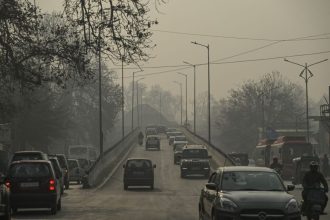
For ordinary consumers, the expansion of PNG networks could eventually mean greater access to a convenient and cleaner household cooking fuel. For the transport sector, wider CNG availability could encourage more vehicles and commercial operators to consider cleaner alternatives.
The government expects the policy to support access to safe, affordable and cleaner energy, while helping reduce fuel-related costs and improving the competitiveness of local industries. Beyond infrastructure, the initiative could also create new opportunities in areas such as green investment, employment, apprenticeships and technical skill development.
Chief Minister Omar Abdullah congratulated Food, Civil Supplies and Consumer Affairs Minister Satish Sharma and the department for notifying the policy, highlighting the government’s focus on building a stronger and more sustainable energy ecosystem in Jammu and Kashmir.
At a broader level, the CGD Policy 2026 is not simply about laying gas pipelines or increasing the number of CNG stations. Its real significance will depend on how quickly the infrastructure reaches people and businesses across the Union Territory. If implemented effectively, the policy could improve energy choices for households, support industries and contribute to a cleaner and more modern transport system.
For Jammu and Kashmir, the next phase will be about turning the policy framework into visible infrastructure on the ground. Wider PNG connectivity, accessible CNG stations, faster project approvals and stronger industrial gas networks could make clean energy a more practical part of everyday life and economic activity.
The initiative therefore represents an important step toward cleaner growth, stronger industrial infrastructure and sustainable development in Jammu and Kashmir, while creating a framework that could attract new investment and generate employment opportunities across the region.