
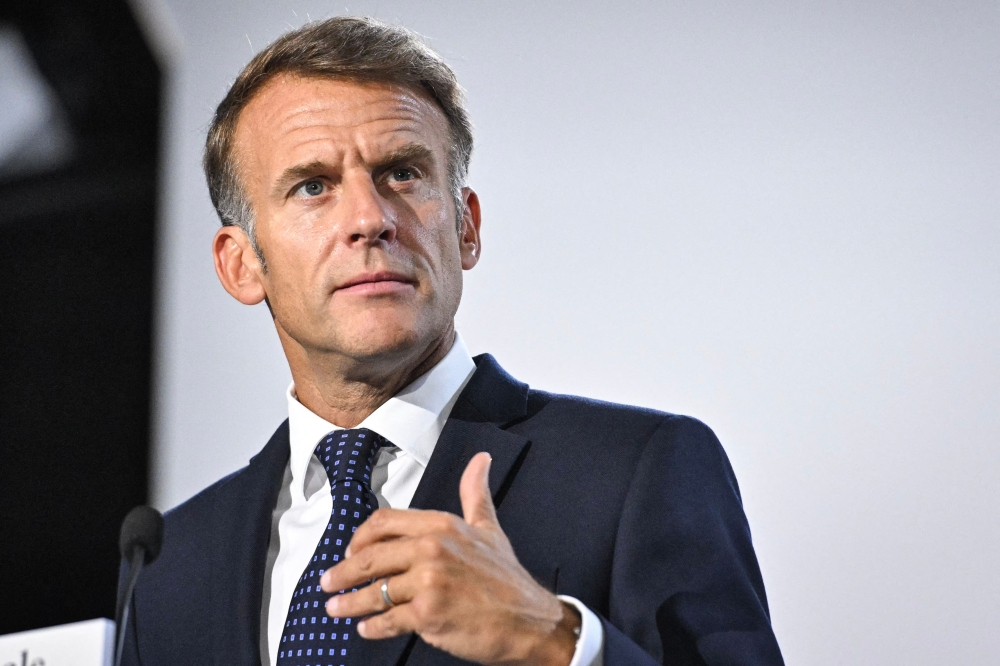
French President Emmanuel Macron is pushing for a Europe-wide approach to restricting children’s access to social media, calling on the European Union to introduce legislation that would prevent those under 15 from using social media platforms.
In a letter sent to European Commission President Ursula von der Leyen on August 29, Macron urged the European Commission to move toward a common European law aimed at protecting children across the bloc.
Macron said it is no longer enough for individual countries to tackle the issue separately. He called for a harmonised European framework that would apply across the European Union and help create stronger protections for children online.
The push comes after France’s Constitutional Council rejected a French proposal in August that sought to ban social media access for children under 15. Despite that setback, Macron has indicated that France could revisit the issue with revised legislation that complies with both European Union law and the French Constitution.
Now, Macron wants the discussion to go beyond France.
He has asked von der Leyen to work toward what he described as a new European legislative text designed to protect children throughout the Union.
The debate reflects a growing concern among governments about how social media affects young users. Questions around children’s online safety, exposure to harmful content, privacy, excessive screen time and the wider impact of social platforms have increasingly become part of the political conversation.
For parents, educators and policymakers, the issue is becoming more complicated. Social media is deeply woven into how young people communicate, learn and interact, but concerns about the risks children may face online continue to grow.
Macron’s latest call could therefore become part of a much larger European debate: how to give children access to the digital world while ensuring that their safety and wellbeing do not get left behind.
The coming months will show whether Europe can agree on a common approach or whether individual countries will continue creating their own rules.
At its heart, this is not simply a debate about social media. It is a debate about how much protection children need in an increasingly digital childhood, and who should be responsible for providing it.
Source: AFP