More than 30,000 people affected by Nepal’s devastating floods may not be able to return to the places they once called home, as authorities prepare to relocate communities living in areas now considered too dangerous for permanent settlement.
Nepal’s National Disaster Risk Reduction and Management Authority estimates that around 33,000 people will need to resettle in safer locations following last month’s catastrophic flooding and debris flows. The disaster damaged more than 7,500 buildings and left thousands of people missing, according to Kyodo News.
Dharam Raj Uprety, chief of Nepal’s National Disaster Risk Reduction and Management Authority, said areas showing evidence of extreme flooding will be officially designated as “danger zones.” In some locations, flood levels reached around 13 metres above normal river levels, highlighting the scale of the destruction and the risks communities could face if they return.
“We know there is a possibility of future disaster. So, we don’t want to take more risk,” Uprety told Kyodo News in an interview earlier this week.
The decision to relocate people is not simply about moving houses from one place to another. For many families, the affected areas represent generations of memories, family histories, livelihoods and a deep connection to the land. Leaving behind a home built over decades can be an emotionally painful decision, particularly when people have already lost so much.
Uprety acknowledged that emotional attachment could make relocation difficult. However, authorities say they are working to identify safer locations close to the affected communities. Teams from the disaster authority, the Department of Survey and relevant government ministries have already surveyed potential sites where displaced families could establish new settlements.
The goal, officials say, is to help people move to safer communities while allowing them to rebuild their lives with dignity.
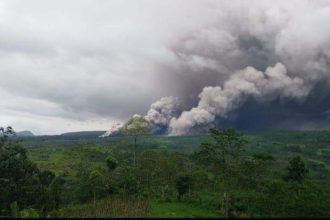
The disaster itself has left a staggering human toll. According to the Nepalese government, the August 26 flood and debris flow was triggered by an ice-and-rock avalanche in the upper Lhende Khola watershed in Tibet. The disaster killed 1,451 people and left approximately 5,700 people missing in Nepal, including more than 600 foreign nationals. Five Japanese nationals are among those reported missing.
Meanwhile, rescue teams are gradually ending search operations at tunnels belonging to some of the 12 hydropower projects severely damaged by avalanche debris. Authorities are expected to formally conclude those operations and shift their focus toward long-term recovery by the end of this week.
“There is very, very little chance or no chance of getting any survivor,” Uprety said.
For families who have lost their homes, the government has announced immediate financial assistance. Each affected family is expected to receive approximately US$2,600, equivalent to 400,000 Nepalese rupees, as a housing grant. Families of up to four people will also receive 15,000 rupees per month to help with living and rental expenses, while an additional 2,000 rupees will be provided for each member beyond four.
But rebuilding Nepal’s devastated communities will require far more than emergency assistance.
Earlier this month, the Nepalese government estimated that approximately US$4.77 billion would be needed for the initial recovery effort. Uprety warned that the actual cost could be significantly higher because the initial estimate did not include compensation for privately owned land that may have to be taken over by the government after being classified as a danger zone.
“The final recovery need could very easily be double the initial estimate,” Uprety told Kyodo News.
That potential increase places an enormous financial burden on a country already facing economic constraints. Nepal is therefore looking toward international development partners, including Japan, China, India, Britain, the World Bank and the Asian Development Bank, for assistance with the long and difficult recovery process.
For the thousands of families affected, however, recovery will ultimately mean more than rebuilding roads, bridges and buildings. It will mean starting again in unfamiliar surroundings, rebuilding livelihoods and accepting that some places they once considered home may no longer be safe to live in.
The decision to relocate more than 30,000 people reflects a difficult reality after a disaster of this scale: sometimes rebuilding does not mean returning to where you were. It means finding a safer place to begin again.