US President Donald Trump is set to arrive in Beijing this week for a major summit with Chinese President Xi Jinping, where trade, technology, Taiwan, and the ongoing Iran conflict are expected to dominate discussions.
Before departing Washington, Trump signaled that one of his key priorities would be pushing China to further open its economy to American companies. In a social media post, he praised Xi as “a Leader of extraordinary distinction” and expressed optimism about expanding opportunities for US businesses inside China.
The visit is already drawing global attention not only because of the political stakes involved, but also due to the powerful group of business leaders accompanying the president. Among them are Nvidia CEO Jensen Huang and Tesla chief Elon Musk, both of whom reportedly travelled aboard Air Force One during a stop in Alaska. Apple CEO Tim Cook and several other major executives are also expected to attend meetings in Beijing.
The summit marks the first visit by a US president to China in nearly a decade and is seen as a crucial moment for both nations as tensions continue over trade competition, artificial intelligence, Taiwan, and global influence.
While Trump appears eager to strengthen economic ties, geopolitical concerns remain unavoidable. The US president confirmed that he expects to have an extended discussion with Xi regarding Iran, especially as China remains one of the largest buyers of Iranian oil despite US sanctions.
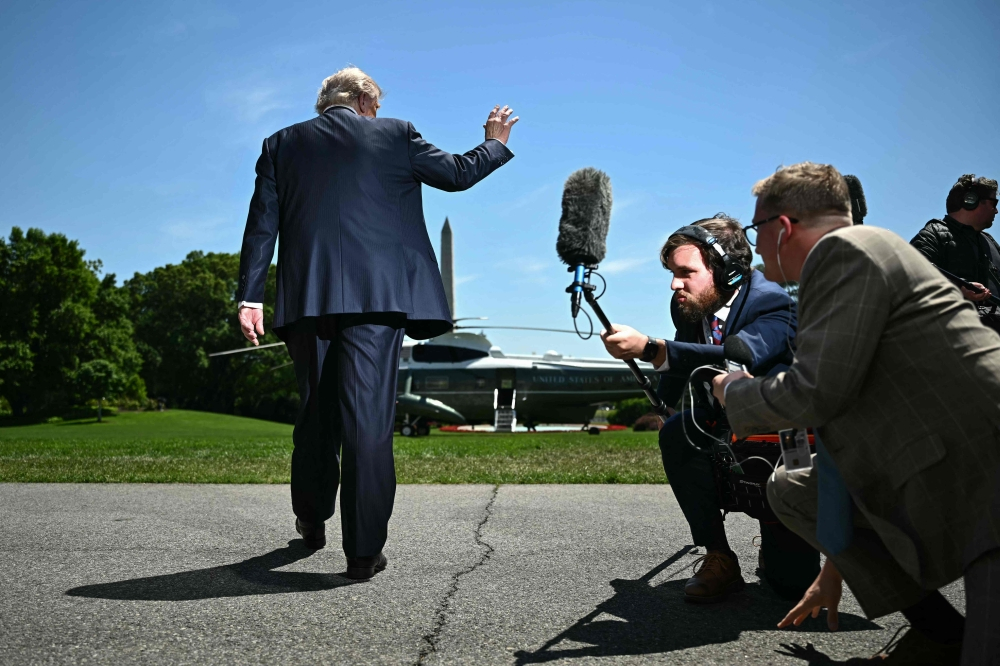
Even so, Trump attempted to soften concerns about disagreements between the two powers, telling reporters that he believes relations with Xi remain strong and cooperative.
The high-profile visit will include formal talks, a state banquet at Beijing’s Great Hall of the People, and ceremonial events designed to showcase the importance of the meeting between the world’s two largest economies.
One particularly sensitive issue expected to arise is Taiwan. Trump recently indicated he may discuss US arms sales to Taiwan directly with Xi — a move that signals a shift from Washington’s traditional approach of avoiding consultation with Beijing on the matter.
Trade negotiations are also expected to focus on extending a temporary tariff truce reached between the two leaders during previous talks in South Korea. Rare earth exports, semiconductor technology, artificial intelligence competition, and market access are likely to be major topics as both sides attempt to manage an increasingly complex relationship.
Security in Beijing has already tightened ahead of the summit, with increased police presence and transport checks visible across the city.
Many observers believe the meeting could shape the future direction of global politics and economics. For China, the summit comes at a time when its economy faces slower domestic spending and continued challenges in the property sector. For the United States, the talks represent a balancing act between economic cooperation and strategic rivalry.
Despite the tension surrounding several global issues, there remains cautious optimism that both leaders may find common ground and prevent further instability between the two superpowers.